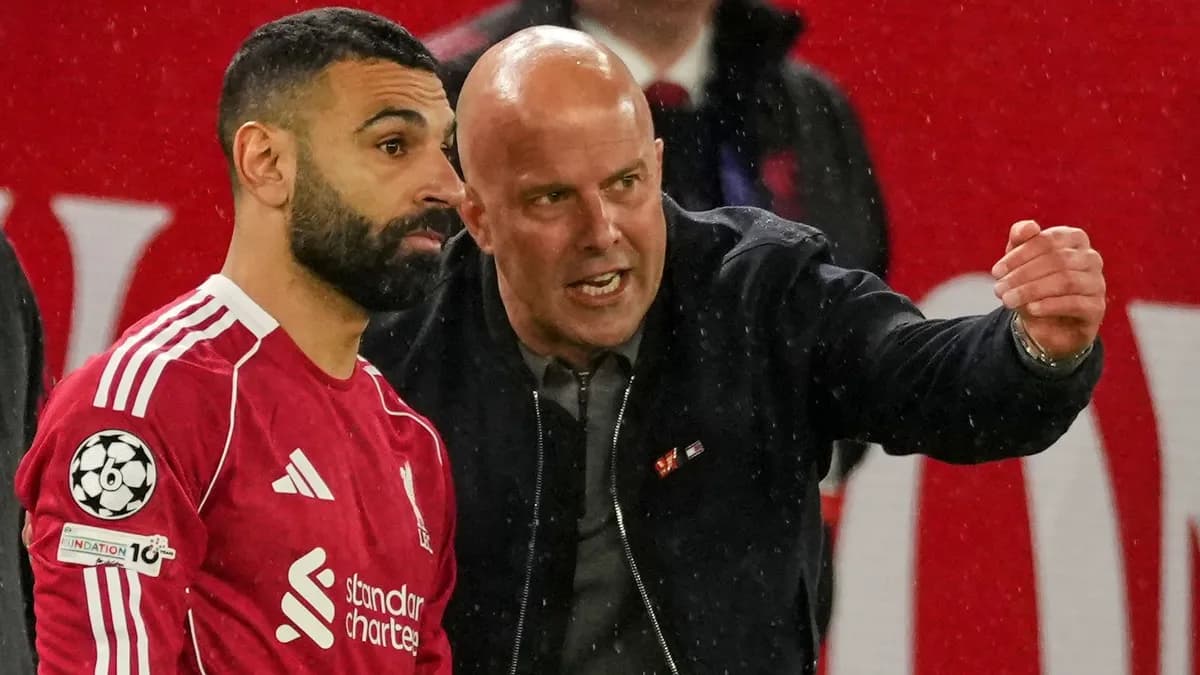
Analysis: Gary Neville Criticizes Mohamed Salah's Comments on Liverpool's Premier League Season
Gary Neville expressed his dissatisfaction with Mohamed Salah's statements about Liverpool's season, believing that a Manchester United player would not have been able to publicly make such criticisms. An in-depth analysis of these tensions and their impact on the dynamics of Premier League clubs.
Mohamed Salah, star forward of Liverpool, recently made public remarks expressing some dissatisfaction with his club's current season. These comments, reported by Sky Sports Transfers, sparked reactions in the football world, notably from Gary Neville, former player and now renowned analyst.
Gary Neville stated that he would be "furious" if a Manchester United player adopted the same attitude as Salah, highlighting a difference in approach to managing internal criticism depending on the club. This statement sheds light on the tensions between players' expectations, fan pressure, and public communication regarding performances in the Premier League.
The primary reason behind Salah's comments seems to be frustration related to Liverpool's results this season. While the club has long been a serious title contender, disappointing performances or encountered difficulties can generate internal tensions visible through statements from key players.
Gary Neville, as a Premier League expert, points out that players' attitudes in the public sphere are often dictated by each club's unique culture. Manchester United, a club with a tradition of discipline and strict communication management, would not tolerate such open criticism.
Finally, the historic rivalry between Liverpool and Manchester United adds an additional angle to the analysis. Salah's comments, perceived as legitimate among the Reds, would have a different impact if they came from a Red Devil player, thus reinforcing the sensitivity around managing players' images.
How Does It Work?
In professional football, players' communication is carefully managed by clubs and their communication staff. When a player publicly expresses frustrations, it can affect team dynamics and supporters' perception, especially during periods of mixed results.
The media strategy of clubs like Liverpool and Manchester United differs notably. Liverpool tends to allow a certain degree of expression to its players, which can encourage more spontaneous but also riskier communication. Manchester United, on the other hand, favors a more rigorous management to preserve unity and the club's image.
This difference is reflected in Gary Neville’s reaction, who, as a former United player, perceives these remarks as a breach of the tacit communication rules specific to his former club. It also highlights the importance of leaders in the locker room to channel these messages and avoid unnecessary public tensions.
Numbers That Shed Light
According to available data, Liverpool has experienced a Premier League season marked by ups and downs, which may explain Mohamed Salah's frustration. Gary Neville, with his Premier League experience, provides perspective on club cultures and the expectations weighing on players.
Gary Neville expresses strong dissatisfaction with Salah’s comments, indicating he would be "furious" if a Manchester United player behaved similarly.
Salah’s remarks reflect an apparent discomfort, which is rare for a player of his caliber and stature at a club like Liverpool.
What Changes
Salah’s statements and Gary Neville’s reaction highlight a potential divide in how clubs manage their players' communication. This could push Liverpool to consider stricter management of its spokespersons or strengthen the role of senior players to prevent public remarks that could destabilize the team.
For Manchester United, Neville’s reminder underscores the importance of maintaining strict communication discipline, especially in a context where the club seeks to stabilize its performances and image after turbulent periods.
Finally, this situation offers insight into the growing tensions in Premier League clubs, where media pressure and supporters’ expectations are higher than ever, making the management of players’ public statements crucial for team cohesion and sporting success.
A Weighty Historical Context
Liverpool and Manchester United are two of the most decorated and emblematic clubs in the Premier League, with a historic rivalry dating back several decades. This rivalry goes beyond the pitch and is embedded in a social and economic context specific to northwest England. Since the Premier League's creation, the two clubs have embodied different philosophies, both in player management and media communication.
Liverpool’s historical context, with recent successes under Jürgen Klopp, has allowed some flexibility in managing egos and frustrations, often seen as a more human and transparent approach. Conversely, Manchester United has long favored an image of strict discipline, inherited from the Sir Alex Ferguson era, where internal and external communication was perfectly controlled, thus limiting risks of public division.
This historical duality therefore influences reactions to Salah’s comments. What is acceptable and sometimes encouraged at Liverpool would be considered a serious breach at Manchester United, reinforcing the sensitivity of leaders and former players like Gary Neville.
Tactical Stakes and Their Influence on Discourse
Tactically, Liverpool often plays with an offensive and intense style, based on high pressing and quick execution. This philosophy demands total commitment from all players and sometimes exposes the team to more vulnerable phases of play, which can generate visible frustrations, especially when results do not follow.
Mohamed Salah, as a key attacking piece, is particularly exposed to this pressure. His comments may thus reflect frustration linked to this high tactical demand, where every mistake or underperformance is heavily scrutinized. This dynamic also influences communication, as the player feels authorized to express his feelings publicly to try to catalyze change or draw attention to internal difficulties.
At Manchester United, tactics and collective discipline are traditionally valued equally with emotional management. This translates into more measured player discourse, even in difficult moments, to preserve group balance and avoid any controversy that could destabilize the coach or club.
Outlook for the Rest of the Season
As the season nears its conclusion, managing these internal tensions and public communication will be crucial for Liverpool. A balance must be found between players’ transparency like Salah’s and the need to present a united image to remain competitive in the Premier League. The club may intensify the role of senior players and staff to frame statements and prevent further declarations that could affect group dynamics.
For Manchester United, Gary Neville’s remarks serve as a reminder that communication discipline remains an essential pillar, especially during a period when the club seeks to consolidate its performances and regain its historic stature. This situation could strengthen media management strategies and enhance player training in public communication.
Finally, this case illustrates the growing complexity of modern football, where media pressure, supporters’ expectations, and sporting stakes intertwine, making control over players’ speech as important as their performance on the pitch.
In Summary
Mohamed Salah’s comments reveal a discomfort that goes beyond the sporting framework, touching on communication and ego management in a top-level club. Gary Neville, by criticizing these remarks through the lens of his Manchester United experience, highlights cultural differences between major English clubs. This analysis emphasizes the importance of controlled communication to preserve internal balance and public image, a key factor in the quest for success in the Premier League.