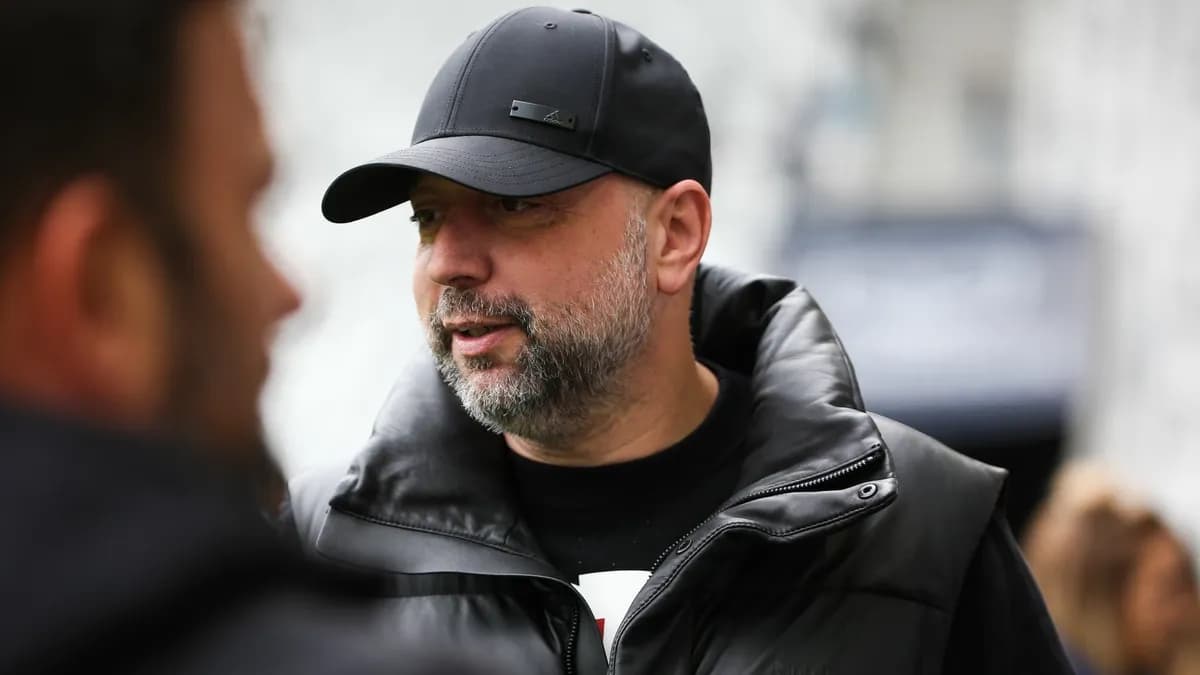
Gérard Lopez is reportedly in talks with Franck Tuil to sell a majority stake in Girondins de Bordeaux. This ownership transfer could reshape the club's future in Ligue 1, with major financial and sporting implications.
The situation: what is happening
According to information reported by RMC Sport and Sud Ouest, a transaction is underway concerning the Girondins de Bordeaux club. Gérard Lopez, the current owner, is reportedly in discussions with Franck Tuil, who represents the investment fund Sparta Capital Management, with a view to acquiring a majority stake.
This operation could lead to a significant change in Bordeaux's governance, as Sparta Capital Management would become the main shareholder. The club, currently under Lopez's leadership for several years, is thus at a decisive turning point in its management and development strategy.
The economic and sporting context of the club, which competes in Ligue 1, requires a thorough reflection on the reasons and consequences of such a sale.
Why is this happening?
Gérard Lopez's decision to negotiate the sale of a majority stake is probably linked to several factors. On one hand, the need to strengthen the club's financial means in the face of the growing demands of Ligue 1, particularly regarding competitiveness and human resource management.
On the other hand, the constant pressure on French clubs to adopt more solid and sustainable economic models makes the arrival of an investment fund like Sparta Capital Management relevant. The latter could inject fresh capital essential to stabilize and revive Bordeaux's sporting project.
Finally, the professional football market is marked by strong competition among investors, and selling to an external actor can offer new momentum for a club that has struggled to regain a high standing in Ligue 1.
How does it work?
Concretely, this majority stake acquisition consists of transferring the majority of the club's share capital to Sparta Capital Management, via Franck Tuil. This means the investment fund will hold more than 50% of the shares, granting it strategic and decision-making control over the club's directions.
This operation could involve financial restructuring, potentially including a recapitalization of the club to support recruitments, infrastructure improvements, or training projects. Gérard Lopez, by retaining a minority stake, could remain involved in management but with less influence.
The legal and regulatory framework of Ligue 1 imposes strict validations for this type of ownership change, notably through the DNCG, ensuring the club's economic viability. These discussions should therefore be closely followed as they evolve.
Numbers that shed light
Although precise financial details of the transaction have not been disclosed, it is known that the targeted stake is majority, implying control of more than 50% of the shares. Gérard Lopez has been president of the Girondins since November 2023, a period marked by efforts to stabilize the club.
The club still competes in Ligue 1, a championship where competitiveness relies as much on sporting quality as on financial solidity. The arrival of an investment fund such as Sparta Capital Management can therefore represent an important economic lever.
- Gérard Lopez, president since November 2023
- Franck Tuil, owner of Sparta Capital Management, negotiating for a majority stake
What changes
The transition under the majority control of Sparta Capital Management should modify the governance and strategy of Girondins de Bordeaux. An investment fund is generally focused on maximizing value in the medium and long term, which can lead to changes in recruitment policy, human resource management, and sporting orientation.
On the sporting level, this change could allow the club to better compete with its rivals in Ligue 1 thanks to additional resources. It could also be a strong signal to supporters and partners, demonstrating renewed ambition.
However, the transition will need to be managed carefully to avoid the classic risks linked to a change of shareholder: instability, strategic divergences, or increased pressure on immediate results.
Historical and sporting context of the Girondins
The Girondins de Bordeaux, a historic French football club, have experienced periods of glory alternating with more complex phases. Founded in 1881, the club has a rich history marked by national titles and European adventures. However, in recent years, Bordeaux has gone through a transitional period characterized by fluctuating results in Ligue 1 and significant financial challenges.
This situation has led to sporting and managerial instability, impacting the club's ability to position itself sustainably among the elite of French football. The current context, with a possible sale, thus fits into a broader dynamic of reconstruction both on the sporting and administrative levels.
Ligue 1 itself is a championship in full mutation, where clubs must reconcile sporting demands and economic constraints, a balance often difficult to maintain. For Bordeaux, regaining a stable and ambitious position is crucial for its future.
Beyond financial aspects, this change of ownership could have a direct impact on the club's sporting and tactical policy. An injection of new capital could allow attracting more competitive player profiles and strengthening the technical staff.
Moreover, the sporting strategy could evolve towards a more ambitious approach, with the desire to rely on a better-structured team capable of competing in a demanding championship. This change could also favor the development of young talents and the implementation of a more effective training policy.
On the tactical level, a better-funded club can afford to adopt more flexible and innovative game plans, relying on the quality and depth of its squad. This could thus contribute to better competitiveness in Ligue 1.
Perspectives for the ranking and the club's future
The arrival of Sparta Capital Management as majority shareholder opens interesting prospects for the future ranking of Girondins de Bordeaux in Ligue 1. With reinforced means, the club could aim for better stability in the upper half of the table, or even aspire to regain qualifying spots for European competitions in the medium term.
However, this ambition will also depend on the ability to manage the transition well and integrate changes in governance without creating imbalances. The coherence between the sporting project and economic ambitions will be a key factor for Bordeaux to become a major player in the championship again.
Supporters, as well as partners, expect concrete signs of effective takeover that allow the club to reconnect with success and national and international recognition.
Our verdict
This possible sale of Girondins de Bordeaux to an investment fund fits into a current trend in French professional football, where external capital injection is often necessary to maintain clubs' competitiveness. Gérard Lopez thus seems to opt for a pragmatic solution, entrusting the keys to a potentially solid financial partner.
If this operation materializes, it could reshape the Girondin club's landscape in Ligue 1, with major implications in its management and ambitions. The challenge will now be to ensure a smooth transition and strategic coherence so that Bordeaux regains a sustainable upward trajectory.