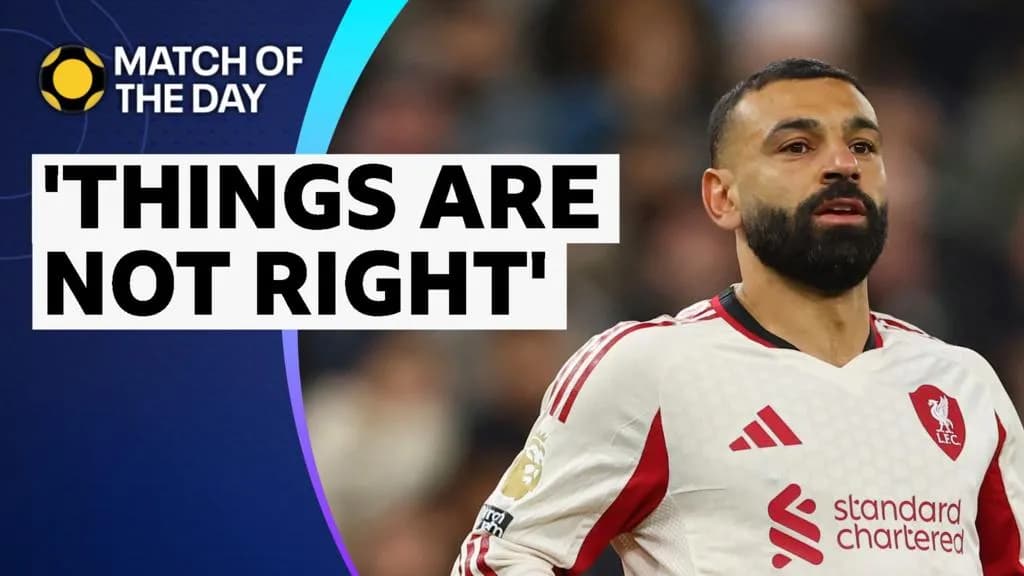
Analysis: Mohamed Salah and the Tactical Tensions Disrupting Liverpool in the Premier League
Mohamed Salah's recent statements about Liverpool's playing style under Arne Slot reveal deep unrest within the squad. Match of the Day experts highlight a lack of harmony, reflecting a team losing its tactical bearings.
Mohamed Salah, an iconic figure of Liverpool, recently expressed on social media his dissatisfaction with the playing style adopted by the Reds under the direction of new coach Arne Slot. This message, relayed and analyzed by Match of the Day experts Mark Schwarzer and Dion Dublin, highlights a latent disagreement within the squad.
This public stance by a key player reflects a situation of disunity that seems to affect Liverpool's cohesion and collective performance. The club, accustomed to a clear and fluid playing identity, now appears disoriented, which has repercussions on its performance in the Premier League.
According to comments from BBC Sport Football analysts, this situation reveals a lack of happiness and harmony within the dressing room, a crucial element for a team aspiring to national and European ambitions.
Why Is This Happening?
The arrival of Arne Slot at the helm of Liverpool introduced a significant tactical change, notably in the way offensive play and ball management are approached. These modifications may have destabilized some senior players in the dressing room, accustomed to a different system under previous coaches.
Mohamed Salah, as a technical and moral leader, feels these upheavals more intensely. His role in the team is closely linked to a playing style based on offensive freedom, quick execution, and a certain individual creativity, elements that seem less valued in the new imposed scheme.
The lack of collective adherence to this new playing identity can generate frustrations, even internal tensions. These translate into a loss of fluidity in play, inconsistent performances, and a heavy atmosphere within the team.
Arne Slot's tactical system favors a more rigid structure, focused on defensive organization and controlling the match's tempo. This approach requires strict discipline and rapid adaptation of players to new instructions.
Offensively, the style implemented limits individual initiatives, which can frustrate players like Salah, used to exploiting their creativity in freer spaces. The redefinition of roles and responsibilities on the pitch disrupts acquired landmarks, affecting players' confidence.
Moreover, this tactical transition occurs in an intense competitive context where every result counts, amplifying pressure on the squad and increasing the risk of internal disagreements.
Numbers That Illuminate
Although precise performance data is not detailed in the brief, the BBC Sport Football source clearly highlights the impact of tactical choices on Liverpool's dynamics.
Experts Mark Schwarzer and Dion Dublin emphasize that the lack of harmony is evident, a factor often correlated with a drop in results and poorer management of key matches.
Mohamed Salah, a key player, has publicly criticized the current playing style.
Match of the Day experts mention a lack of happiness and harmony in the dressing room.
Historical Context of the Club and Competition
Liverpool is a club with a rich and prestigious history, known for its offensive playing style and ability to dominate matches through fluid and collective attack. For several decades, the Reds have established themselves as one of the major references in English and European football, with a strong identity centered on speed, creativity, and solidarity on the pitch.
In the Premier League, the competition is particularly high-level, with constant demands in terms of results and quality of play. Liverpool has often been a serious title contender, relying on exemplary team cohesion and solid tactical balance. Any profound change in playing style can therefore have significant repercussions, especially in a championship where every point is crucial.
The club has also recently experienced periods of transition, both in staff and players, making maintaining a positive dynamic even more complex. Managing these evolutions is crucial to keep a place among the best and meet supporters' and management's expectations.
Tactical Stakes and Prospects for Evolution
The main challenge for Arne Slot lies in his ability to get his tactical project accepted by a group accustomed to a different style. The defensive rigor and tempo control he imposes require total collective commitment and significant mental and physical adaptation. This process takes time and transparent communication to avoid frustrations.
One avenue for evolution would be to integrate more flexibility into the system, allowing more freedom for offensive players like Salah to express their creative potential. Finding a balance between tactical discipline and individual initiatives could help restore confidence and motivation within the group.
Finally, human management will be just as crucial. Arne Slot will need to strengthen dialogue with his players, value their personal strengths, and create an environment conducive to solidarity and collective happiness. This work is essential to build a team capable of meeting the challenges of the Premier League and international competitions.
Potential Impact on the Standings
In a season where competition is tight, even the slightest internal imbalance can lead to notable consequences on the final standings. A disunited team lacking tactical bearings is more likely to string together inconsistent performances, which can be costly against highly competitive opponents.
The loss of collective confidence can also affect the management of key matches, where mentality and cohesion often make the difference. The risk is that Liverpool loses ground to rivals, thus compromising its ambitions for a podium finish or qualification for European competitions.
It is therefore imperative for the club to react quickly to prevent the situation from deteriorating further. Maintaining a positive dynamic is essential to secure a respectable league position and calmly prepare for the future.
What This Changes
This situation exposes Liverpool to a risk of performance decline in the Premier League, a competition where consistency and team cohesion are essential to achieve set objectives. The absence of tactical and moral unity could compromise the club's competitiveness.
Moreover, this unrest may influence group management by Arne Slot, who will have to find a balance between his tactical choices and players' expectations, especially those of major offensive profiles like Salah.
From a sporting perspective, the need to restore cohesion and collective happiness could involve adjusting working methods, strengthening communication, and more finely considering individualities within the playing system.
Our Verdict
Mohamed Salah's statements are not merely an individual expression of frustration but a warning signal about the state of a team undergoing tactical transition. Liverpool is at a crossroads where success will depend on Arne Slot's ability to reconcile his project with the expectations and talents of his players.
The club must urgently restore harmony and happiness within the dressing room to regain efficiency and maintain its status in English football. This tactical and human challenge will be decisive for the rest of the season.
In Summary
Mohamed Salah has highlighted, through his remarks, the tensions arising from a major tactical change at Liverpool under Arne Slot. This disagreement reflects deep unrest affecting cohesion and collective performance. The club, rich in prestigious history and accustomed to fluid offensive football, faces a complex strategic and human challenge. Future success will depend on the ability to reconcile tactical rigor and creative freedom while restoring a climate of trust and happiness within the dressing room. Maintaining strong unity will be essential to face the demands of the Premier League and preserve the club's ambitions.