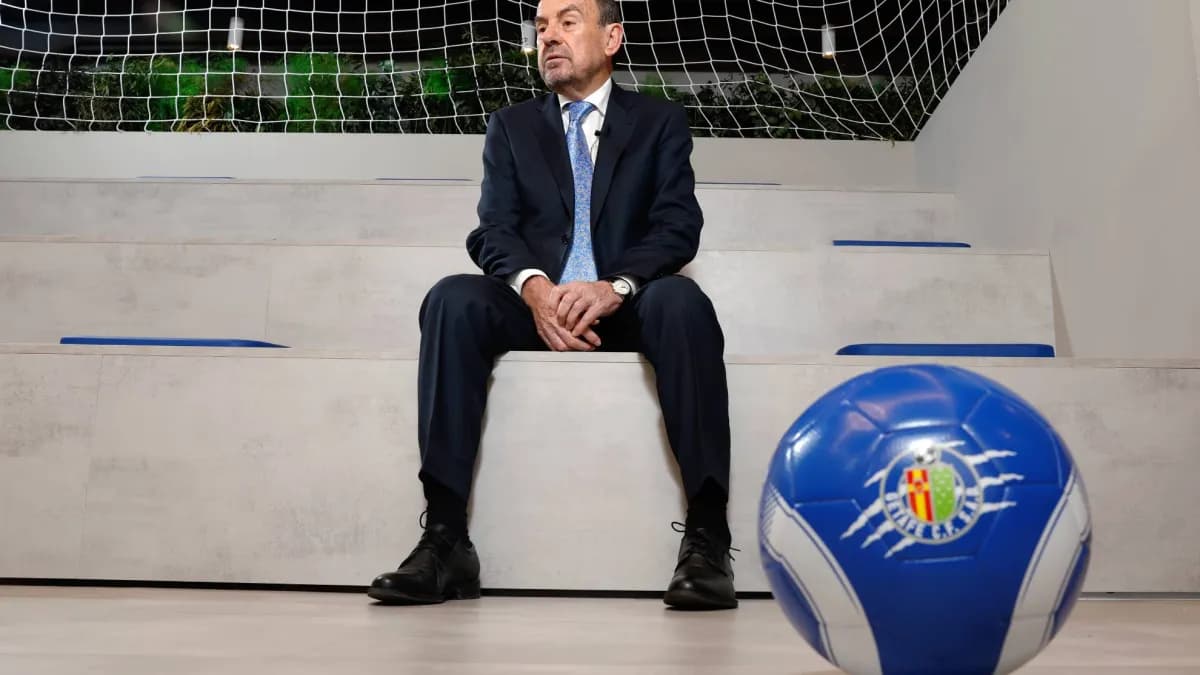
Ángel Torres denounces the deterioration of the Real Madrid locker rooms in 2026
Ángel Torres, president of Getafe, openly criticizes the negative evolution of locker rooms in modern football. According to him, Real Madrid illustrates this harmful change that impacts team spirit and club management.
A scathing critique of the behind-the-scenes of professional football
Ángel Torres, the emblematic president of Getafe, recently expressed his concern about the transformation of football, particularly regarding the internal dynamics of clubs. During the show "El Programa de Ortega" on Marca, he mentioned the recent troubles in the Real Madrid locker room, highlighting an evolution he considers negative for the king of sports.
According to Torres, today's football is very different from what he knew, and this mutation is happening "for the worse." He believes that tensions and internal conflicts, once rare or better managed, are now becoming commonplace, affecting team cohesion and performance.
The Real Madrid locker rooms, a revealing microcosm
Real Madrid, a historic club of La Liga and European football, has experienced several dry spells in recent seasons linked to disagreements between players, coaches, and executives. Ángel Torres specifically points to these disorders, which have sometimes been publicized and which, according to him, reflect a deeper malaise in contemporary football.
This situation within the Madrid club is not isolated, but it serves as an example to illustrate broader abuses. The impact on the atmosphere in the locker rooms, a traditional place of camaraderie and strategy, is particularly worrying. These tensions can spill over into sporting performances and team stability.
Professional football in mutation, between financial stakes and media pressure
Torres' observation takes place in a context where football undergoes constant pressure related to economic stakes, the influence of agents, and the heightened media coverage of players' behavior. These factors contribute to weakening internal relationships and intensifying conflicts.
The role of presidents, coaches, and sporting directors thus becomes more complex, having to manage not only technical and tactical aspects but also psychological and human balances within teams. Ángel Torres, drawing on his experience at the head of Getafe, emphasizes the importance of restoring a healthy and respectful climate to preserve clubs' competitiveness.
By denouncing these abuses, Ángel Torres invites deep reflection on the values and practices of modern football. He suggests that measures must be taken to reclaim an authentic team spirit and limit internal conflicts that harm collective performance.
The president of Getafe, who recently celebrated his club's anniversary, remains a committed observer of Spanish football. His testimony, relayed by Marca, echoes current debates on locker room management and the evolution of professional football.
Implications for Spanish and European football
This critique fits into a context where La Liga, like other major European leagues, seeks to reconcile sporting success and internal cohesion. Real Madrid, despite its historical successes, must face these challenges to maintain its standing.
In 2026, clubs must rethink their human and organizational management in the face of an increasingly competitive and media-driven environment. Ángel Torres' testimony highlights the importance of this adaptation to guarantee football's sustainability and quality.
Tactical issues and contemporary sporting challenges
Beyond internal tensions, modern football also imposes high tactical demands requiring perfect harmony among players. Coaches face the challenge of managing often heterogeneous groups, where strong personalities can sometimes conflict with collective strategy. In this context, locker room management becomes a key element to ensure fluidity of play and cohesion on the field.
For a club like Real Madrid, accustomed to competing on multiple fronts, these tactical challenges are all the more crucial. The ability to maintain unity in the group conditions not only league results but also success in European competitions. It is within this framework that disagreements and conflicts can weigh heavily, making coaches' work even more complex.
Historical context and the role of Real Madrid in La Liga
Founded in 1902, Real Madrid is a historic pillar of Spanish and European football. With a rich tradition of victories in La Liga and the Champions League, the club symbolizes excellence and permanent ambition. Its influence far exceeds the national framework, making the club a major player in the dynamics of world football.
This stature imposes constant pressure on players and staff, who must constantly meet the high expectations of supporters and the media. Historically, Real Madrid has often been able to overcome internal crises thanks to rigorous management and strong leadership. However, the current context, marked by heightened media exposure and colossal financial stakes, seems to make this management more delicate.
Perspectives for the ranking and the future of Spanish clubs
Tensions in locker rooms can have a direct impact on teams' competitiveness in the La Liga standings. A club plagued by internal conflicts risks seeing its performance decline, thus offering opportunities to rivals. For Real Madrid, maintaining a leading position therefore requires more than individual talents: cohesion and collective discipline are essential.
Moreover, the prospects for the evolution of Spanish clubs involve better consideration of human aspects, alongside technical and financial investments. The development of psychological support structures and the promotion of a team culture could be avenues to strengthen stability and long-term performance.
Our analysis
Ángel Torres' statement highlights an often underestimated aspect in club strategy: the management of human relations. While performance analysis technologies and financial investments intensify, the human factor remains decisive. A locker room in crisis can quickly weaken a team, regardless of its sporting potential or resources.
Torres' remarks thus call for dual vigilance: preserving the integrity of locker rooms and promoting a more balanced football, where collective values prevail over individual interests. This approach is essential for the sustainable development of clubs and the quality of the sporting spectacle.
In summary
In short, Ángel Torres' testimony reveals a often little-known but crucial facet of professional football: human management within teams. Faced with growing economic and media challenges, it appears essential to reaffirm the values of unity and respect to guarantee clubs' competitiveness and sustainability, especially in emblematic institutions like Real Madrid. This reflection opens the way to a more balanced approach to sport, reconciling performance and collective harmony.