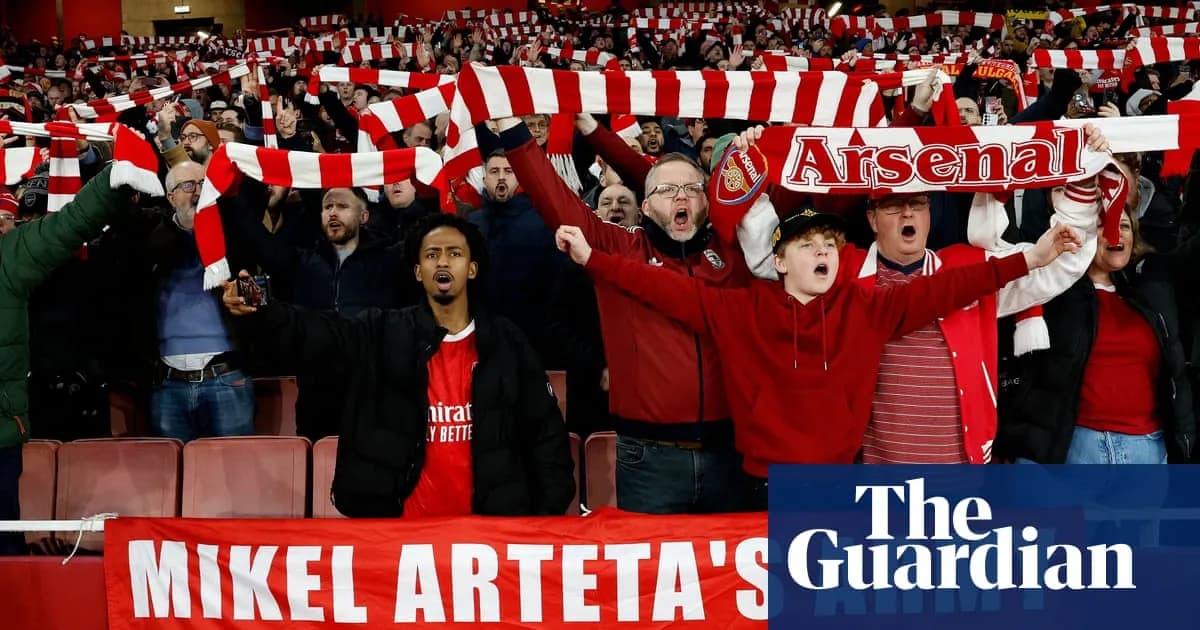
Mikel Arteta's journey at Arsenal, marked by difficult beginnings and doubts, is put under the microscope. The board's confidence was a key factor in his resilience against criticism.
Mikel Arteta's tenure at the helm of Arsenal has been far from smooth sailing. Upon his arrival in December 2019, the Spanish manager had to contend with a club in full reconstruction, marked by the departure of Arsène Wenger and the failure of his successor, Unai Emery. The club's CEO, Vinai Venkatesham, was convinced by the ambitious five-year plan presented by Arteta, despite his young age and lack of managerial experience at this level.
The decision to appoint Arteta, then 36 years old, was a bold gamble for Arsenal's management. While his charisma and playing past were appealing, many doubted his ability to manage the complex transition of a historic club. The first seasons confirmed these apprehensions, with mixed results and intense media pressure.
Internal sources reveal that Arteta's perseverance and vision were supported by unwavering confidence from the club's owners. Despite initial setbacks, harsh criticism, and even boos directed at the manager, the board chose to stay the course, prioritizing the long-term project proposed by the Spaniard. This managerial stability, often rare in modern football, allowed Arteta to work calmly on his playing style and recruitment strategy.
The reconstruction plan outlined by Arteta from his arrival aimed to restore Arsenal's lost identity and competitiveness. It was about building a team capable of competing at the highest level, based on a clear strategy and a defined playing philosophy. The early years were dedicated to laying these foundations, often away from immediate results, but with the conviction of a promising future.
This resilience demonstrates a different managerial approach, where patience and confidence in the project take precedence over short-term reactions. In an environment where coaches are often judged on immediate results, Arsenal's management's decision to support Arteta despite initial difficulties is an interesting case study. It created an environment conducive to innovation and the long-term building of a solid team.
The impact of this strategy is evident today in Arsenal's current dynamic. Despite the obstacles encountered, the club seems to have found its way back to success, driven by a generation of talented players and a recognizable style of play. Arteta's ability to overcome crises and turn doubts into strengths has been decisive for the Gunners' revival.
Arteta's journey at Arsenal is often cited as an example of how stability and vision can pay off. Football observers recognize the difficulty of staying the course in the face of criticism and disappointing results, and they praise the management's strategy of believing in their manager. This approach contrasts with the volatility often seen in the football world, where frequent managerial changes can harm the consistency of a project.
Historical Context and Initial Challenges
Mikel Arteta's arrival at Arsenal marked a pivotal moment for the London club. After the iconic reign of Arsène Wenger, which defined an era of success and innovation, the succession proved complex. Unai Emery, despite respectable results in the Europa League, failed to instill the expected momentum in the Premier League, leaving a sense of incompletion and a team searching for direction. The club, historically among the giants of English football, saw its aura erode in the face of rivals' dominance. Expectations were immense, but the resources and structure in place required a deep overhaul. Arteta, though young and new as a head coach, inherited a titanic mission: to revive a sleeping giant.
The first seasons were the scene of this arduous reconstruction. The Spanish manager had to work with a mixed squad, blending promising young talents with experienced players who were sometimes in decline. The need to refresh part of the team while maintaining immediate competitiveness represented a delicate balance. League results often reflected these difficulties, oscillating between flashes of brilliance and periods of doubt. Direct confrontations against the Big Six teams, once a formality for Arsenal, became mountains to climb, increasing the pressure on the young coach and his players. The task was all the more arduous as disappointing performances were accompanied by virulent criticism from supporters and the media, eager to see the return of the Gunners' offensive and conquering DNA.
Tactical Strategy and Evolution of Play
Beyond the raw results, Mikel Arteta quickly sought to impose his own playing identity, partly inherited from his time alongside Pep Guardiola at Manchester City. His vision was clear: to build a defensively solid team, capable of controlling possession and quickly advancing forward with intelligence and precision. The initial phase of his tenure was marked by tactical experimentation, aiming to find the right balance between defensive rigor and offensive fluidity. The emphasis was placed on pressing intensity, high ball recovery, and patient build-up from the back, while exploiting the speed and creativity of the wingers.
Over the seasons, this philosophy has been refined, and the players have increasingly seemed to embrace its principles. The arrival of targeted reinforcements, matching Arteta's desired profiles, played a crucial role in this evolution. The defense gradually solidified, while the midfield gained control and attacking impetus. The offensive play, initially sometimes predictable, gained variety and unpredictability, with coordinated movements and better exploitation of space. The development of young talents like Bukayo Saka and Emile Smith Rowe, gradually integrated into the starting lineup, also reflects Arteta's desire to build for the long term, nurturing a generation of loyal players adapted to his system.
Impact on Standings and Future Prospects
The early years under Mikel Arteta saw Arsenal navigate relatively calm waters in terms of league standings, often far from Champions League qualification spots. However, this transition period, while frustrating for supporters, laid the groundwork for a gradual climb. Subsequent seasons marked a clear improvement, with increasingly respectable final positions in the Premier League, reflecting the team's growing strength. The goal of returning to the highest European level became more concrete, fueling fans' hopes.
Today, Arsenal, under Arteta's guidance, has once again become a serious contender for the top spots in the English league. The confidence instilled by the board, coupled with the manager's hard work and the emergence of a new generation of talent, has transformed the club. The prospects are now focused on competing for the title and a sustained return to the Champions League. The challenge will be to confirm this trend, maintain the current momentum, and continue building a team capable of competing with Europe's best, while managing the pressure inherent in high expectations.
What's Next
Arsenal's current trajectory under Mikel Arteta suggests that the confidence placed in him by the board has been justified. The club continues to aim for the top, capitalizing on the solid foundations laid during the transition years. The objective remains to consolidate success and continue raising the team's performance level on the domestic and European stage.