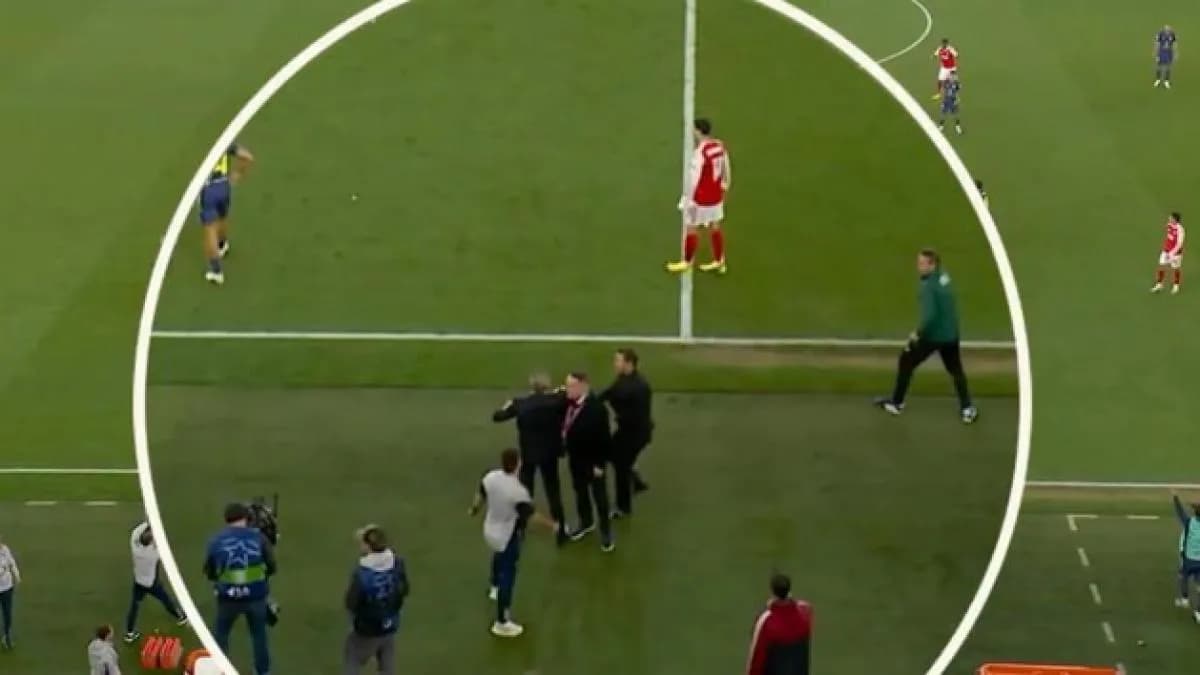
Atlético Madrid 2026: Tensions Between Simeone and Berta During the Match Against Arsenal
During the match against Arsenal, repeated time-wasting in the second half and a penalty not awarded on Griezmann sparked a heated tension between Diego Simeone and Andrea Berta. This altercation reflects the growing stakes of the Spanish club in the 2026 Liga.
Growing tension fueled by controversial refereeing decisions
During the match between Atlético de Madrid and Arsenal, the second half was marked by repeated time-wasting by the English side. This strategy, particularly visible in the final minutes, was tolerated by referee Daniel Siebert, according to Mundo Deportivo. This tense context heightened stress within the Madrid club, especially for coach Diego Simeone and sporting director Andrea Berta.
The climax of this frustration was a penalty not awarded to Atlético on an action involving Antoine Griezmann. This disputed incident quickly triggered an intense verbal altercation between Simeone and Berta, illustrating the pressure and nervousness surrounding the team during this crucial phase of the season.
The role of referee Daniel Siebert in the escalation of tension
Daniel Siebert, the match referee, was at the center of debate for allowing several obvious time-wasting incidents during the second half. This permissiveness was perceived as a lack of strictness in time management by Atlético, which was trying to maintain its intensity and game rhythm.
The non-awarding of the penalty on Griezmann also sparked strong criticism. For Atlético, this decision had a direct impact on the course and result of the match, amplifying the coaching staff's annoyance and the players' frustration. According to the Spanish source, this context led to a notable verbal clash between Simeone and Berta, highlighting internal tensions within the club.
Sporting stakes and psychological impact for Atlético in Liga 2026
This confrontation between key club figures occurs at a pivotal moment of the 2026 season, where every result and refereeing decision can influence the final Liga standings. Repeated interruptions and contested decisions can affect the team's concentration and cohesion, two essential elements to maintain a positive momentum.
Managing these internal tensions will be crucial for Atlético, which must handle both external championship pressures and internal disagreements. Simeone and Berta's ability to channel these frustrations and strengthen their collaboration will be a key factor in the continuation of the club's sporting campaign.
Analysis of consequences on club management and sporting strategy
This public altercation between the coach and the sporting director may reveal disagreements on how to handle critical situations, especially against opponents seeking to waste time. It raises questions about internal communication within Atlético de Madrid and the strategies adopted to cope with unfavorable refereeing decisions.
In a football environment where time management and emotional control are vital, this situation highlights the need for the technical staff to work in perfect harmony. This will ensure solid leadership and an appropriate response to challenges faced on the field, a sine qua non condition to achieve the season's objectives.
Outlook and upcoming challenges for Atlético de Madrid
According to Mundo Deportivo, this altercation between Simeone and Berta is symptomatic of increased tensions within Atlético Madrid in 2026. The rest of the season, especially upcoming Liga fixtures, will reveal the club's ability to overcome these internal and external obstacles.
Maintaining strong cohesion and a common strategy between the coach and sporting management will be a determining factor in the club's quest for excellence. In an increasingly competitive league, every detail counts, and managing conflict situations can make the difference between success and failure.
A heavy historical context for Atlético
Atlético de Madrid is a club with a rich history marked by notable resilience and fighting spirit, especially under Diego Simeone's leadership for more than a decade. The 2026 season comes at a time when the club seeks not only to maintain its place among the elites of Spanish football but also to assert itself in European competitions. The current internal tensions, exacerbated by contested refereeing decisions, add to an already strong historical pressure inherited from high expectations of supporters and management.
In this context, every match carries vital importance, and internal conflicts like the one between Simeone and Berta reflect an intense will to not give up. However, this climate can become destabilizing if the protagonists fail to channel their emotions for the collective good. Atlético, accustomed to overcoming obstacles, will have to rely on its fighting past to turn this tension into a driver of success.
Tactical challenges facing a provocative opponent strategy
Tactically, Atlético de Madrid faces opponents like Arsenal who adopt very aggressive time management strategies, notably through repeated time-wasting. This approach aims to break Atlético's game rhythm, known for its intensity and tactical discipline. The referee's tolerance of these behaviors forced Simeone to rethink match management in real time, including the need to maintain concentration and offensive fluidity despite interruptions.
The non-awarding of the penalty on Griezmann heightens this frustration, as it deprives Atlético of a potential opportunity to take the lead. Tactical choices then become more complex, especially in balancing defensive aggression and offensive creativity. The technical staff's ability to adapt their plans to these provocations will be crucial to prevent nervousness from turning into errors on the pitch.
Potential impact on standings and end-of-season momentum
Controversial refereeing decisions and internal tensions can have direct repercussions on Atlético's Liga standings. In a season where the fight for European spots is tight, every point counts, and a loss or dropped draw due to contested refereeing could weigh heavily. The psychological pressure generated by these events risks affecting collective performance in upcoming matches.
Moreover, end-of-season momentum is often decisive for the club's ambitions. If tensions between Simeone and Berta are not quickly eased, they could lead to a loss of cohesion and harm group effectiveness. Conversely, skillful management of these conflicts could strengthen internal solidarity, turning adversity into motivation to reach set goals.
In summary
The match between Atlético de Madrid and Arsenal highlighted internal tensions exacerbated by controversial refereeing decisions, notably tolerance of time-wasting and a penalty not awarded to the Madrid team. These elements led to a strong verbal clash between coach Diego Simeone and sporting director Andrea Berta, symbolizing the intense pressures weighing on the club during this crucial phase of the 2026 season.
Beyond immediate emotions, this situation underlines complex tactical challenges facing provocative opponents, as well as potential consequences on standings and end-of-season momentum. Atlético, drawing on its history and fighting culture, must manage these tensions intelligently to preserve its cohesion and ambitions. The staff's ability to overcome these internal and external obstacles will be decisive for the season's success.