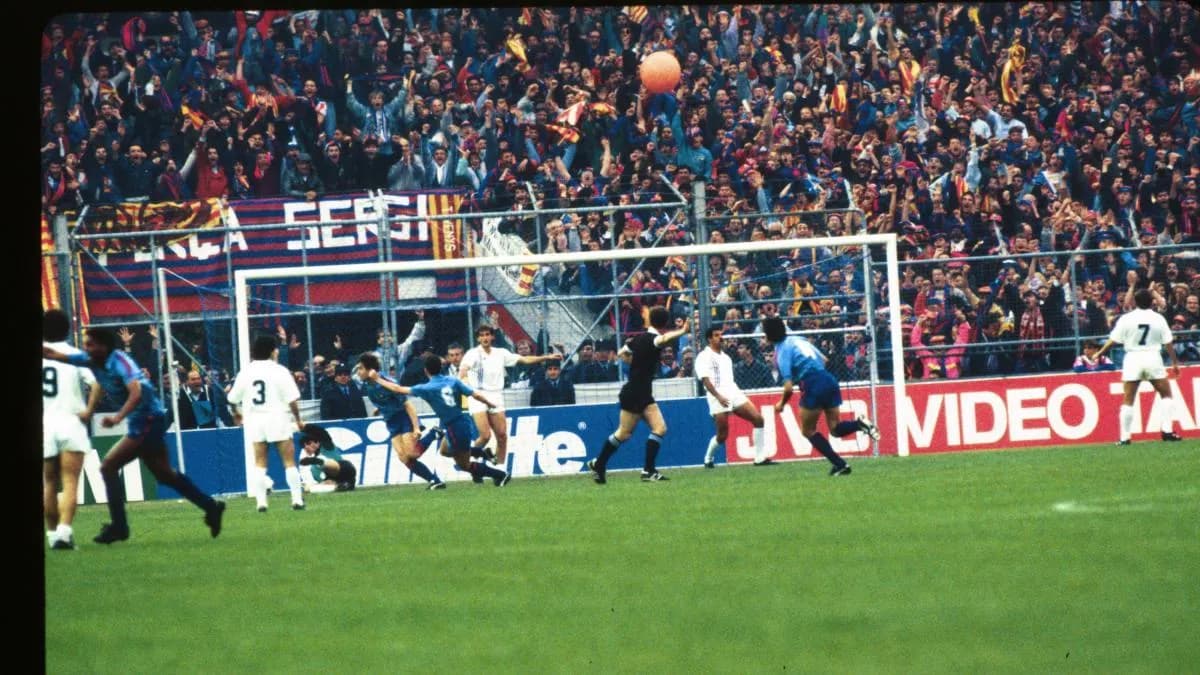
Barça: The Historic Impact of the Two Decisive Goals for the European Cup Winners' Cup under Johan Cruyff
On May 10, 1989, FC Barcelona secured its third European Cup Winners' Cup at the Wankdorf Stadium in Bern, also marking Johan Cruyff's first European title as a coach. A feat that catalyzed the club's golden era under his leadership.
A Foundational European Triumph at the Wankdorf Stadium
On May 10, 1989, FC Barcelona wrote a major chapter in its history by winning the European Cup Winners' Cup at the legendary Wankdorf Stadium in Bern. This success, representing the club's third title in this competition, holds particular significance as it was also the first continental trophy won under the leadership of Johan Cruyff, then newly appointed coach of Barça. This victory marked a turning point in the blaugrana era, laying the foundations for a period of European dominance.
According to Mundo Deportivo, the two goals scored during this match were decisive in clinching the title, symbolizing the offensive efficiency and tactical solidity instilled by Cruyff. This double offensive success illustrates Barça's ability to combine creativity and rigor, characteristics that would become the team's trademark in the years to come.
Johan Cruyff, a former iconic player of the club, brought to his team an innovative and ambitious style of play from the moment he took office. His philosophy was based on ball control, intense pressing, and a flexible offensive organization that valued individual technique while strengthening collective cohesion. The triumph in the European Cup Winners' Cup in Bern is a concrete illustration of this approach: the two goals that sealed the victory testify to the effectiveness of this system, capable of adapting to the demands of continental football.
This victory also established a standard for the Catalan club, which gradually imposed itself as a reference in Europe. Cruyff's tactical impact was felt far beyond this final, influencing subsequent generations and the training of young talents within the club. The success in the Cup Winners' Cup thus served as a catalyst for Barça's rise to the heights of European football.
FC Barcelona's third European Cup Winners' Cup title, won in 1989, consolidated the club's position as one of the major players in international competitions. This victory is all the more significant as it was achieved in a stadium steeped in history, the Wankdorf in Bern, reinforcing the symbolic dimension of the triumph. For Cruyff, this success represented a first consecration as a coach, validating his methods and football vision.
Beyond the trophy, this episode injected new momentum into the Catalan institution, which would translate into a prosperous period marked by numerous titles. The style of play and tactical rigor introduced during this European campaign have had a lasting influence on the club's trajectory, contributing to its prominence on the international stage and the development of its talents.
A Victory with Multiple Sporting and Cultural Repercussions
The 1989 European Cup Winners' Cup triumph had effects far beyond the pitch. It strengthened FC Barcelona's identity, embodying the values of creativity, determination, and sporting excellence that Cruyff wished to promote. This victory also served as a springboard for the club's rise in the 1990s, a period during which Barça established itself as an essential power in Europe.
Furthermore, this success laid the foundations for a winning culture that has endured, nurturing the ambition of players and management alike. The continental recognition gained thanks to these two decisive goals thus contributed to the club's attractiveness, facilitating the recruitment of talents and the expansion of its influence worldwide.
Historical Context of the Club and the Competition
At the time of this triumph in 1989, FC Barcelona was entering a new era after a decade marked by uneven performances on the European stage. The European Cup Winners' Cup, a prestigious competition bringing together national cup winners, was the ideal opportunity for Barça to confirm its status among the elite of continental football. This victory was therefore not only a sporting success but also a response to the high expectations of supporters and observers eager to see the club regain its former glory.
The competition itself had gained importance over the years, offering a unique platform for national cup-winning clubs to demonstrate their value. For FC Barcelona, winning this trophy was an essential step in building a strong European identity, distinct from its domestic successes. It was also a signal sent to rivals, announcing renewed ambition under Johan Cruyff's leadership.
Tactical Stakes and Meticulous Preparation
From a tactical standpoint, the final at the Wankdorf Stadium was the scene of an intense confrontation where Cruyff's preparatory work fully paid off. The coach had managed to instill rigorous discipline combined with creative freedom, allowing his players to express themselves fully while respecting a solid defensive framework. The two decisive goals resulted from a collective organization designed to unbalance the opponent while maximizing attacking opportunities.
Match management also reflected remarkable adaptability. Cruyff knew that success depended on balancing game control with rapid exploitation of the opponent's weaknesses. This balanced approach, combined with careful preparation, allowed Barça to impose its rhythm and control key moments, sine qua non conditions to prevail in such a demanding European competition.
Perspectives and Impact on the Club's Future
This success in the European Cup Winners' Cup had a catalytic effect on FC Barcelona's trajectory in the following years. It strengthened confidence within the squad and validated the playing philosophy advocated by Cruyff, which would become the cornerstone of the club's sporting project. This victory also influenced recruitment and training policies, emphasizing technical and versatile profiles capable of adapting to the blaugrana style.
In the longer term, this triumph helped establish Barça's international reputation, facilitating its influence beyond Spanish borders. It also inspired a generation of players and coaches who perpetuated and enriched the legacy left by Cruyff. Thus, the 1989 European Cup Winners' Cup remains a fundamental milestone in building the modern Barça, blending sporting success with the assertion of a unique identity.
Our Analysis: An Essential Milestone in Building the Modern Barça
FC Barcelona's victory in the European Cup Winners' Cup at the Wankdorf Stadium, driven by two decisive goals, stands as a key moment in the club's and European football's history. This triumph validated Johan Cruyff's philosophy, initiating a tactical and cultural revolution within Barça. It also paved the way for a succession of successes and the emergence of a distinctive playing style that continues to influence contemporary football.
Considering the available data, this success remains a historical landmark, highlighting the importance of a clear and coherent vision to build a competitive team on the international stage. The role of these two goals, in this context, goes beyond the purely sporting framework to become a strong symbol of the successful transformation of the Catalan club.