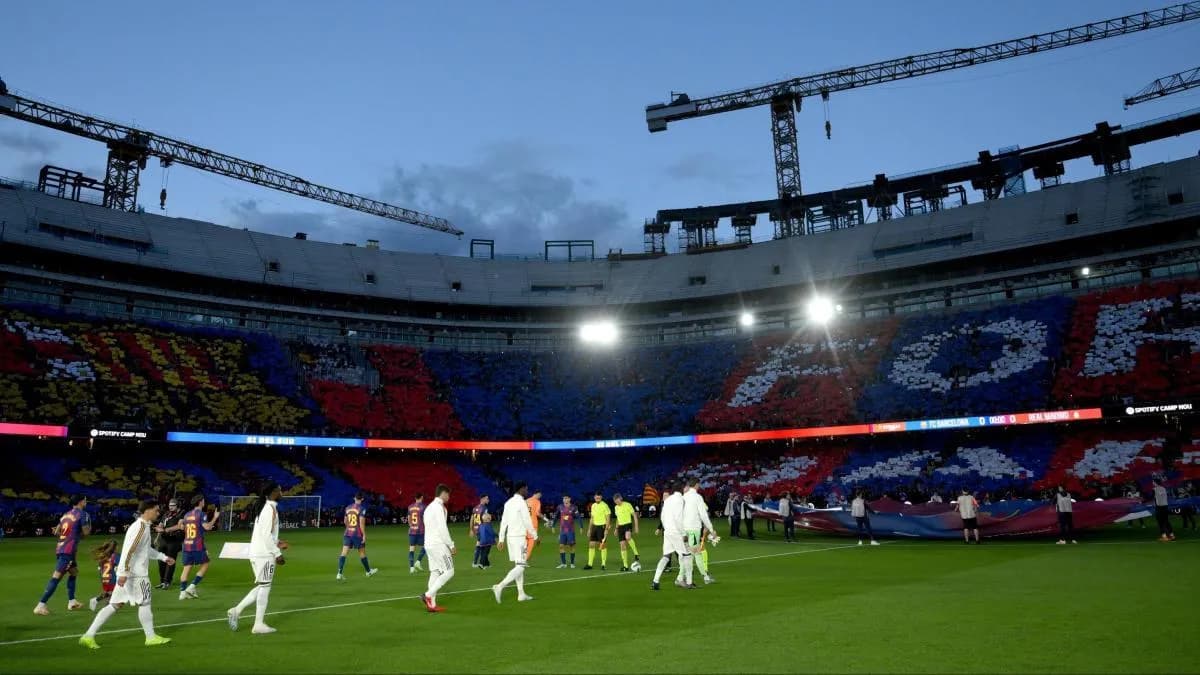
Barça-Real Madrid: Attendance Record at Spotify Camp Nou After the Reopening of the North Goal in 2026
The May 2026 Clásico attracted 62,213 spectators at Spotify Camp Nou, setting a record since the stadium's partial reopening. This strong attendance illustrates the renewed interest and commercial potential of FC Barcelona in its modernized venue.
An Unprecedented Attendance Record Since the Partial Reopening of Spotify Camp Nou
The match between FC Barcelona and Real Madrid this Sunday confirmed the still very strong appeal around the "Clásico" in La Liga. According to Mundo Deportivo, 62,213 spectators attended the game at Spotify Camp Nou, making it the highest attendance recorded since the reopening of the North Goal on March 15. This reopening is part of phase 1C of the stadium's development works, authorized by the authorities.
This figure is significant in the context of the gradual modernization of the Barcelona stadium, which aims to increase capacity and improve the spectator experience. It also reflects the massive enthusiasm generated by a historic clash between the two giants of Spanish football, despite recent changes in the championship.
The Spotify Camp Nou: A Stadium in Full Transformation
The partial reopening of the North Goal marks an important milestone in the renovation works of Spotify Camp Nou, an ambitious project aimed at strengthening the hosting capacity and modernizing the infrastructure. This phase 1C, approved in March 2026, has allowed more supporters to be welcomed, thereby increasing attendance at key matches.
The attendance record of 62,213 spectators reached during the Clásico highlights the success of this operation. This high attendance, the best since the reopening, exceeds initial expectations in terms of fan mobilization. It also reflects the Catalan club's desire to reconnect with a strong sporting and commercial dynamic.
Historically, Camp Nou has always been an emblematic place of European football. The current challenge is to maintain this attractiveness while optimizing the stadium's capacity and comfort, to remain competitive against other major modern venues.
Impact on Fan Experience and Commercial Prospects
The increase in hosting capacity thanks to the reopening of the North Goal allows FC Barcelona to welcome more supporters, which has a direct impact on ticketing and merchandising revenues. The attendance record during such a highly publicized event as Barça-Real Madrid is a valuable indicator for the club's commercial strategy.
Beyond financial aspects, greater attendance improves the atmosphere during matches, which can positively influence player performance and supporter engagement. The Spotify Camp Nou, in full transformation, thus positions itself as a stadium capable of competing with Europe's greatest in terms of hosting and experience.
This dynamic is essential in a context where football is digitalizing and clubs seek to maximize their impact on and off the pitch. The attendance record is concrete proof that FC Barcelona is capitalizing on its historic assets while integrating innovations linked to the modernization of its stadium.
Consequences for La Liga and European Football
This attendance record at Spotify Camp Nou comes at a time when La Liga is seeking to strengthen its international appeal amid competition from other European championships. A modernized stadium with a strong hosting capacity helps maintain a high level of interest for flagship matches, notably the Clásico.
The success of this attendance also shows that infrastructure improvement projects can have a direct effect on the popularity of clubs and competitions. By increasing capacity and offering a better experience, FC Barcelona positions itself favorably to attract both local and international supporters.
A New Era for Camp Nou and Barça
The partial reopening of the North Goal and the attendance record observed during the match against Real Madrid are important milestones in the modernization of Spotify Camp Nou. They illustrate the club's ability to combine tradition and innovation to strengthen its place in world football.
According to available data, this new dynamic could have positive repercussions on both sporting and economic levels. It allows FC Barcelona to capitalize on its mythical image while adapting its infrastructure to the demands of contemporary football.
At this stage, sporting results and the progress of the works will determine the sustainability of this trend, but the record of 62,213 spectators remains a strong signal of the club's vitality and its emblematic venue.
Historical Context and Stakes of the Clásico
The duel between FC Barcelona and Real Madrid goes far beyond the sporting framework to be part of a deep historical and cultural rivalry. This match, often called the Clásico, is one of the most followed events in the football world, symbolizing much more than a simple confrontation between two teams. For Barça, this meeting is a major opportunity to demonstrate its resilience and identity against a historic adversary, in a championship where the dynamic can be disrupted by this type of confrontation.
On a tactical level, these encounters require meticulous preparation and an ability to manage the pressure of the event. The strategic choices of the coaches, management of key players, and in-game adaptation are decisive. The intensity of the sporting stakes is reinforced by the need to capitalize on points gained for the title race, as well as by the psychological impact a victory over a long-time rival can have.
Impact on the Standings and Sporting Prospects
In a La Liga where every point counts, the Clásico result can have significant consequences on the championship race. Although the exact score is not mentioned here, the strong attendance and media pressure around this match testify to its importance for the final standings. For FC Barcelona, successfully leveraging this encounter is crucial to maintaining or improving its position in the table.
This meeting is also a test for squad depth and the group's ability to meet calendar demands. With the stadium modernization and increased attendance, the club benefits from strengthened support, a non-negligible factor in player motivation. The coming weeks will be decisive to confirm this positive dynamic on the pitch and consolidate the club's sporting ambitions.
Economic Prospects and Innovations to Come
Beyond the sporting aspect, the attendance record highlights the strategic importance of the renovation works at Spotify Camp Nou for the club's economy. Infrastructure improvements attract a wider audience, notably international supporters, and optimize revenues related to ticketing, VIP areas, and ancillary services.
The modernization project also includes technological innovations, such as improved connectivity for spectators, sustainable solutions for energy management, and advanced security systems. These advances are essential to offer a high-quality experience while meeting current environmental and regulatory requirements.
In the long term, these initiatives should strengthen FC Barcelona's position in the global football market, consolidating its image as an innovative and forward-looking club, capable of appealing to both historic fans and new generations.
In Summary
The attendance record of 62,213 spectators during the Clásico at Spotify Camp Nou perfectly illustrates the progressive rebirth of the Catalan venue through its modernization. This figure testifies not only to the still powerful attraction of this mythical duel but also to the positive impact of renovation works on supporter experience and the club's commercial performance. In a context of increased competition and profound transformations in European football, FC Barcelona seems well engaged in a new era combining tradition, innovation, and sporting ambition.