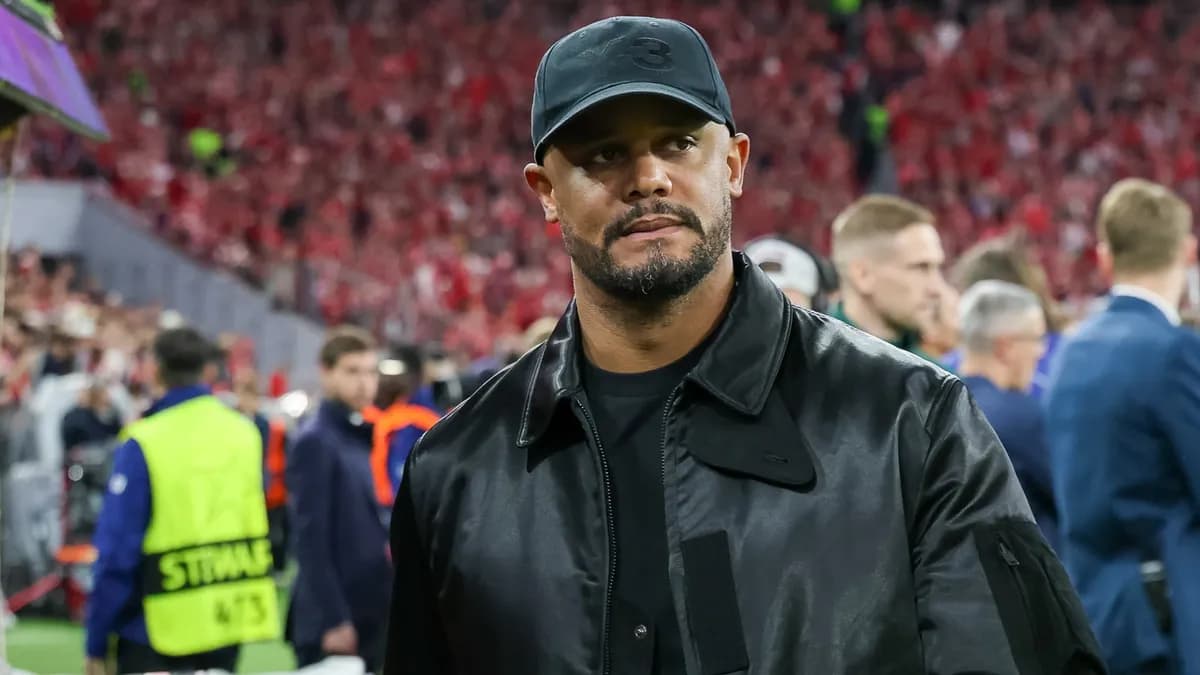
Bayern-PSG 2026: Kompany and CEO's Anger Over Controversial Refereeing in Champions League Semi-Final
After Bayern Munich's elimination against PSG in the Champions League semi-final, Vincent Kompany and the Bavarian CEO denounce refereeing decisions that weighed heavily. Their anger highlights a tense atmosphere and major technical controversies.
On May 6, 2026, Bayern Munich was eliminated from the Champions League by Paris Saint-Germain after a tight two-legged tie (1-1 in the first leg, 6-5 on aggregate). This defeat left a bitter taste for the Bavarian club, which strongly criticized certain refereeing decisions deemed unfavorable. According to RMC Sport, this frustration was forcefully expressed in a press conference by Vincent Kompany, Bayern’s coach, and the club’s CEO.
These statements reflect a deep unease regarding the impact of refereeing on the course of high-stakes matches. The management and technical staff’s intention is clear: to denounce what they consider a decisive factor in their elimination, hoping for an evolution of practices in future editions.
The criticisms mainly focus on several key phases where video refereeing and rule interpretation allegedly influenced the matches’ outcome, according to the Bavarians. Coach Vincent Kompany, an emblematic figure of the club, expressed his “great anger” at what he sees as a series of errors that could call into question sporting fairness.
The Bayern Munich CEO also took a stand, emphasizing that the club expects the governing bodies to notably improve the quality and consistency of refereeing. This official position shows that the disagreement goes beyond the sporting realm to touch on institutional aspects of European football.
This situation is not isolated in recent high-level football history, where video refereeing, despite its progress, still sparks passionate debates about its application and limits.
The Sporting and Technological Context
Bayern Munich, accustomed to high-level performances, has always relied on rigorous preparation and detailed match analysis. Video-assisted refereeing, introduced to reduce clear errors, sometimes proves a source of controversy, especially when it comes to subjective or complex decisions.
In this context, the anger expressed by Kompany and the CEO illustrates the technical difficulty of reconciling sporting justice and refereeing speed. Modern football must deal with these challenges, which raise questions about possible evolutions of technological tools and refereeing protocols.
Stakes for Bayern and European Football
This elimination against PSG, with a 6-5 aggregate score, highlights the high intensity and balance between these two giants of European football. For Bayern, contesting the refereeing could serve as leverage to influence medium-term discussions about rules and their application in the Champions League.
PSG, for its part, confirms its status as a major competitor on the continental stage, benefiting from solid tactical and technical management. This confrontation strengthens the rivalry between the two clubs, who will undoubtedly continue to face each other in coming seasons.
Analysis: Refereeing and Increased Pressure in Modern Football
Bayern Munich’s reaction sheds light on a major issue in contemporary football: how to guarantee impeccable sporting justice in a context where every decision is scrutinized and can have a decisive impact. While technology provides valuable tools, it does not completely eliminate gray areas and disputes.
This situation calls for a thorough reflection by governing bodies on referee training, rule clarity, and decision transparency. Dialogue between clubs, federations, and supporters will be crucial to building a fairer and calmer sporting environment.
A Heavy Historical Context for Bayern Munich
Bayern Munich is one of the most decorated and respected clubs in European football, with a rich history in the Champions League. Yet, despite past successes, the club has often faced refereeing controversies during the final stages of major competitions. This elimination against PSG fits into a long tradition of fierce confrontations where the smallest detail, including refereeing decisions, can tip the balance. The weight of the club’s history amplifies the disappointment and frustration felt, as expectations are always very high in Munich, both among supporters and management.
Moreover, the Champions League has over the years become a stage for extremely intense clashes, where pressure on referees is also growing. Bayern, used to dominating tactically and physically, here sees the stakes go beyond mere sporting performance to touch the credibility of refereeing at the highest level.
Tactical Stakes of a Tight Two-Legged Tie
From a tactical perspective, this two-legged tie between Bayern and PSG highlighted both teams’ ability to adapt and react quickly to game situations. Bayern, under Vincent Kompany’s leadership, tried to impose high pressing and a rigorous defensive organization to contain Parisian initiatives. However, the emotional context of the match and refereeing decisions perceived as unfair may have disrupted the initial game plan and players’ mindset.
PSG, on their side, managed to exploit their strong moments and take advantage of the slightest opponent error, while benefiting from smoother management of the match’s highs and lows. The fragile balance of the aggregate score intensified tension on the pitch, where every action was meticulously analyzed, notably by video refereeing. This heightened tactical context increases Bayern’s frustration, which feels refereeing did not always accompany this intensity with the necessary fairness.
Impact on the Ranking and Future Prospects
Sportingly, this elimination has significant consequences for Bayern Munich, not only in the Champions League but also for the club’s momentum in the current season. Exiting at this stage of the competition is a hard blow to the club’s European ambitions, which systematically target the final victory. This setback could also influence the national ranking, as players’ focus and confidence are sometimes affected after such disappointment.
Looking ahead, Bayern will need to capitalize on this experience to strengthen certain aspects, notably pressure management and adaptation to sometimes contested refereeing decisions. Management and technical staff will be keen to thoroughly analyze this two-legged tie to prepare upcoming European campaigns with even more rigor. Furthermore, the public contestation of refereeing could open a broader dialogue with European football authorities to improve decision quality and transparency in coming seasons.
In Summary
Bayern Munich’s elimination against PSG in the Champions League semi-final has revived debates on refereeing in modern football. Between anger, frustration, and a desire for change, the Bavarian club highlights the technical and institutional challenges surrounding sporting justice today. In a particularly tense historical and tactical context, this two-legged tie underscores the importance of thorough reflection to guarantee fairness and transparency in European competitions. Bayern and PSG, two football giants, thus continue to shape the dynamics and stakes of continental football in a climate where every detail counts.