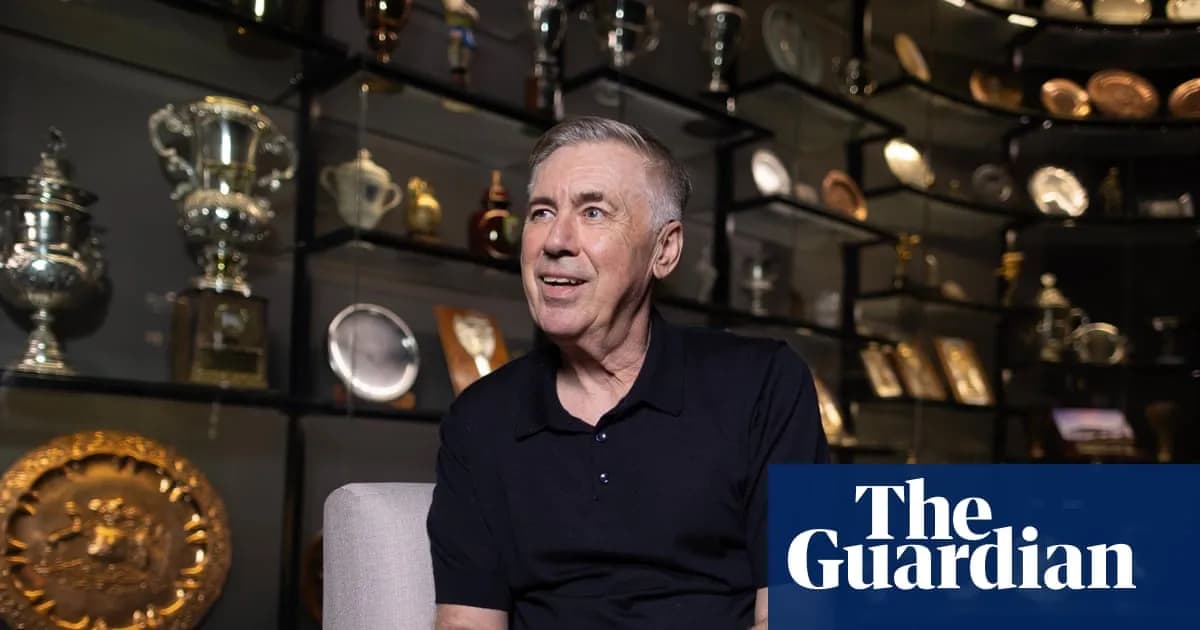
Carlo Ancelotti: Neymar's Future in the National Team Depends on His On-Field Performances
On the sidelines of his appointment as head coach of Brazil, Carlo Ancelotti emphasizes the importance of individual performances to join the Seleção, particularly regarding Neymar. He also discusses the management of Vinícius Júnior and his experience at Real Madrid.
Carlo Ancelotti, at 66 years old, has joined the ranks of iconic national team coaches by taking charge of the Brazilian national team. Boasting an exceptional career highlighted by five Champions League victories and major titles in five different European leagues (England, France, Germany, Italy, and Spain), the Italian embodies a figure of success in world football. His appointment last May marks a major milestone for the Seleção, with a clear ambition: to win the World Cup.
However, Ancelotti tempers his approach by telling The Guardian that he is "not obsessed with winning" but rather savors the privilege of leading "the most important national team in the world." This philosophy illustrates his desire to prioritize the joy of the game and human management over exclusive pressure on results.
The Neymar Case: Selection Conditioned on Performance
In this perspective, Neymar's fate in the national team remains dependent on his sporting performances. Ancelotti explicitly states that the call-up of the Brazilian captain "depends solely on him and what he shows on the field." This stance marks a turning point in the management of the player, whose recent seasons have been marked by injuries and questions about his real influence at the highest level.
This position highlights management based on merit and current form, without favoritism. It fits within a context where the Seleção must renew itself and rely on the players in the best shape to aim for the world title.
Valuing Vinícius Júnior, a Tactical and Psychological Challenge
Beyond Neymar, Ancelotti also discusses Vinícius Júnior, one of the major revelations of Brazilian and international football in recent years. The coach knows the player well, having managed him at Real Madrid, and he emphasizes the need to optimize his potential. His Madrid experience allowed him to understand how to channel the young winger's offensive qualities while strengthening his consistency and discipline on the pitch.
This fine management of individual talents is crucial for the national team's competitiveness, especially during a preparation phase ahead of the next World Cup.
Carlo Ancelotti draws valuable lessons from his time at Real Madrid regarding squad management and tactical balance. His ability to unite stars and establish a climate of trust greatly contributed to the successes achieved at the club, notably his five Champions League titles.
This expertise is now at the service of Brazil, which must combine an exceptional talent pool with the team cohesion necessary to win the world title. It is a major challenge in an environment where expectations are always very high.
Towards a New Era for the Seleção
With Ancelotti, the Seleção adopts a pragmatic and demanding approach. The emphasis on individual performance, intelligent management of young talents like Vinícius Júnior, and the questioning of historical leaders like Neymar reflect a desire to build a competitive and balanced team.
The groundwork laid by the Italian coach could thus prepare the way for major success, relying on tactical rigor and renewed player motivation. According to available data, this strategy fits a long-term vision rather than a mere immediate quest for results.
A Heavy Historical Context and a Global Challenge
Brazil is historically the most successful nation in the World Cup with five titles, and the pressure around the Seleção is therefore immense. Every coach who takes charge must deal with this legacy while innovating to adapt to a constantly evolving global football landscape. Ancelotti, with his experience in the biggest European clubs, arrives in a context where Brazil must both preserve its offensive identity and integrate modern defensive and game management strategies.
From a tactical standpoint, the challenge is to adopt sufficient flexibility to counter opponents who now closely study the Brazilian style. Ancelotti will thus have to combine creativity and discipline, especially with a squad where established stars coexist with emerging young players. The challenge is significant, but the Italian seems ready to take it on, relying on his ability to unite a heterogeneous group.
Potential Impact on the World Ranking and Future Prospects
Ancelotti's appointment could have a significant impact on Brazil's FIFA ranking, often leader or near the top spots, but which must maintain this position amid increasingly tough competition. By betting on a pragmatic approach and a balance between experience and youth, the Seleção can hope to consolidate its dominance on the international stage.
In the medium term, the upcoming World Cup will be a decisive test for Ancelotti's method. If he manages to create a coherent and effective team, it could usher in a new golden era for Brazil, capable of competing with the best nations. At the same time, this dynamic could positively influence the development of young Brazilian talents by offering them a stable and demanding framework for their rise.
In Summary
Carlo Ancelotti embodies a new dynamic at the head of Brazil, where experience and rigor meet passion for football. His stance on Neymar reveals a clear desire to impose a criterion of merit and form, an essential condition to be considered for selection. The integration of Vinícius Júnior and the highlighting of his qualities illustrate essential groundwork.
This pragmatic approach, far from any obsession, could offer the Seleção the tactical and mental stability it lacked, in view of a World Cup where every detail counts.