
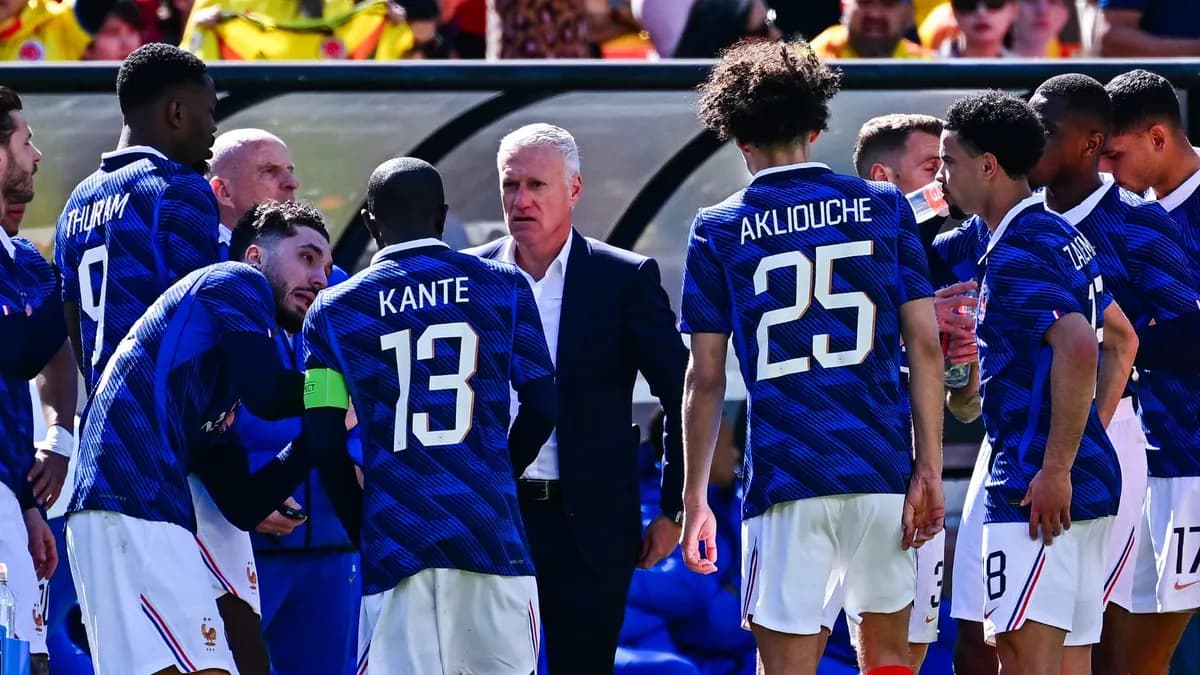
The cool breaks during the preparation of the French team for the 2026 World Cup have sparked mixed reactions. Supporters and viewers have expressed their opposition to these cuts in the middle of the game, while coaches see them as a boon.
The defeat of the French team against Côte d'Ivoire also allowed for the (re)discovery of cool breaks. According to RMC Sport, cool breaks can be useful for players and coaches, but supporters and viewers perceive them as unpleasant interruptions.
Coaches, for their part, believe that cool breaks can allow them to give precise instructions to their players and prepare them for upcoming game situations. However, supporters and viewers prefer a fluid game and believe that cool breaks disrupt the rhythm of the match.
It is important to note that cool breaks are scheduled to be introduced during the 2026 World Cup, and it will be interesting to see how supporters and coaches react to these changes.
To understand the implications of these cool breaks, it is necessary to look back at the history of the negotiations that led to their introduction. The instances of world football have long debated the need to allow players to rest and hydrate during matches, especially in extreme weather conditions. Cool breaks have been tested in several friendly matches and regional competitions, with mixed results.
Competing clubs of the French team, such as Côte d’Ivoire, have also expressed their opinions on cool breaks. Some believe that these breaks can give an unfair advantage to teams that use them strategically, while others see them as an opportunity to recharge and better prepare their players.
From a sporting point of view, cool breaks can have a significant impact on the course of matches. Coaches can use these breaks to adjust their strategy and give precise instructions to their players, which can change the course of the match. However, supporters and viewers may feel frustrated by the repeated interruptions, which can affect their match experience.
Financially, cool breaks can also have significant implications. Match broadcasters can take advantage of these breaks to broadcast additional advertisements, which can generate additional revenue. However, supporters and viewers may feel disturbed by these advertising interruptions, which can affect their loyalty to broadcasters and sponsors.
It is therefore important to find a balance between the needs of players and coaches, and the expectations of supporters and viewers. The instances of world football must work to establish clear and fair rules regarding cool breaks, to ensure that matches are played fairly and that supporters can enjoy a high-quality match experience.
In the meantime, supporters and coaches must adapt to these changes and find ways to use them to their advantage. Coaches can use cool breaks to give precise instructions to their players and prepare them for upcoming game situations, while supporters can take advantage of these breaks to recharge and prepare for the rest of the match.
In conclusion, cool breaks are an important element of the French team's preparation for the 2026 World Cup, and it is necessary to use them strategically to maximize the chances of success. Supporters and coaches must work together to find a balance between the needs of players and the expectations of supporters, and the instances of world football must establish clear and fair rules to ensure that matches are played fairly.
It will be interesting to see how cool breaks are used during the 2026 World Cup, and how supporters and coaches react to these changes. The coming weeks and months will be crucial in determining the impact of cool breaks on world football, and it is important to follow developments closely to understand the implications of these changes.
Cool breaks are therefore a key element of the French team's preparation for the 2026 World Cup, and it is necessary to use them strategically to maximize the chances of success. Supporters and coaches must work together to find a balance between the needs of players and the expectations of supporters, and the instances of world football must establish clear and fair rules to ensure that matches are played fairly.
Finally, it is important to note that cool breaks are not the only innovation that will be introduced during the 2026 World Cup. Other changes, such as the use of technology to improve refereeing and player safety, will also be implemented. It will be interesting to see how these changes are received by supporters and coaches, and how they affect the course of matches.
The coming weeks and months will therefore be crucial in determining the impact of cool breaks and other changes on world football. Supporters and coaches must be prepared to adapt to these changes and use them to their advantage, while the instances of world football must work to ensure that matches are played fairly and that supporters can enjoy a high-quality match experience.
In the meantime, supporters and coaches can prepare for the 2026 World Cup by following developments closely and staying informed of the latest news and changes. It will be interesting to see how cool breaks and other changes are received by supporters and coaches, and how they affect the course of matches.
Cool breaks are therefore an important element of the French team's preparation for the 2026 World Cup, and it is necessary to use them strategically to maximize the chances of success. Supporters and coaches must work together to find a balance between the needs of players and the expectations of supporters, and the instances of world football must establish clear and fair rules to ensure that matches are played fairly.
In conclusion, cool breaks are a key element of the French team's preparation for the 2026 World Cup, and it is necessary to use them strategically to maximize the chances of success. Supporters and coaches must work together to find a balance between the needs of players and the expectations of supporters, and the instances of world football must establish clear and fair rules to ensure that matches are played fairly.