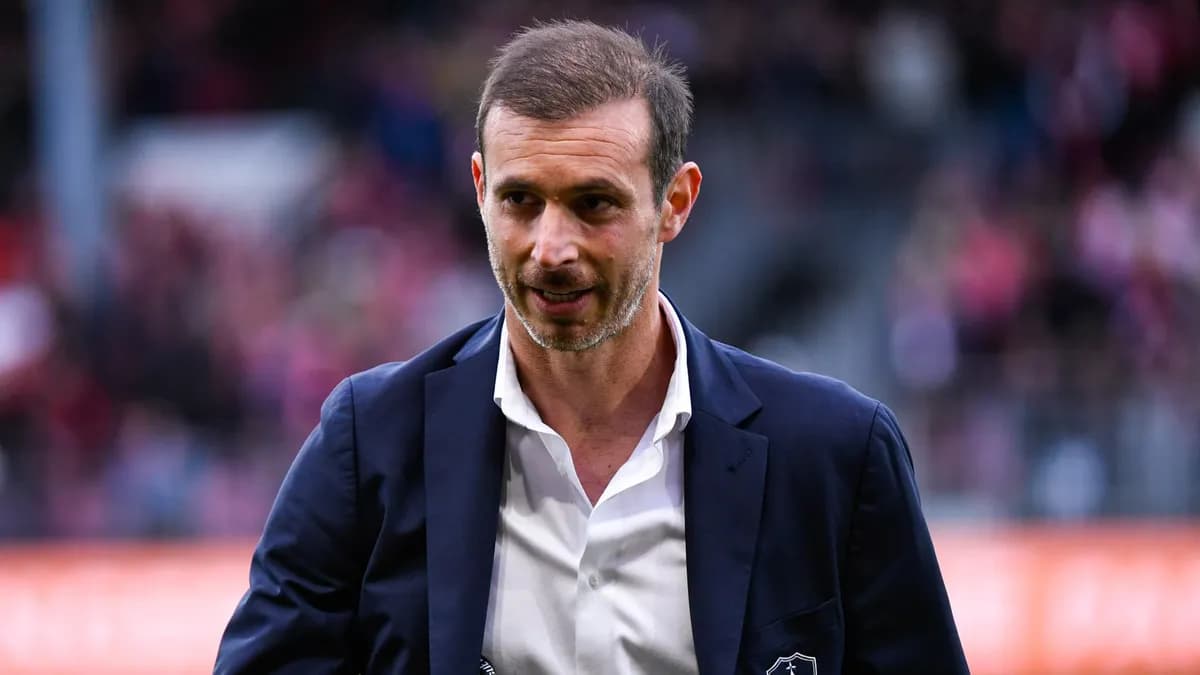
Decoding: Grégory Lorenzi and his challenge at OM after ten years at Brest in Ligue 1
After ten years in the sporting direction of Brest, Grégory Lorenzi is about to join OM. This move to a club of higher stature raises questions about his ability to transpose his successful model into a more demanding environment.
Grégory Lorenzi has left Stade Brestois after a decade spent leading the sporting direction of the Breton club. His departure was marked by a warm ovation at the Francis Le Blé stadium, reflecting the esteem he has built. Now, Lorenzi is about to join Olympique de Marseille (OM), a club with a profile and ambitions very different from those of Brest.
This transfer represents a real qualitative leap in Lorenzi's career, who will have to adapt to a more media-focused environment, with increased sporting and economic pressure. Despite this change of scale, he does not intend to change the way of working that made him successful at Brest, which raises questions about his ability to succeed at OM.
According to RMC Sport, Lorenzi is ready to take on this challenge and change dimension, without denying the methods that allowed Brest to stabilize and progress in Ligue 1.
Why is this happening?
Lorenzi's departure from Brest is explained by a natural desire for professional progression after ten years at the same club. Brest, with its limited resources, allowed Lorenzi to develop a model based on stability, rigor, and measured recruitment management. This framework offered him an ideal field of expression but limited in terms of sporting ambition and visibility.
By joining OM, Lorenzi enters a club that regularly aims for the top places in Ligue 1 and qualification for European competitions. The context is therefore more demanding, with higher expectations from supporters, media, and management. This change requires deep tactical and strategic adaptation, especially in talent management and the transfer market.
Lorenzi's profile, a former defender turned sporting director, fits into a tradition of cautious and methodical management. His arrival in Marseille also reflects a search for continuity in reasoned sporting management, following turbulent precedents within the club. The challenge will be to combine this rigor with the demands of a higher-profile club.
At Brest, Lorenzi managed to implement a coherent sporting policy based on fine talent scouting, player development, and balanced financial management. He was praised for stabilizing the club in Ligue 1, maintaining a balance between competitiveness and budget constraints.
His working style favors the long term, building a competitive team around a solid core rather than resorting to media coups or spectacular signings. This approach allowed Brest to regularly compete in the championship despite limited means compared to big clubs.
The move to OM will however require adapting this way of working. The Phocaean club has a larger budget for transfers but also higher sporting demands. Lorenzi will therefore have to reconcile caution and ambition in recruitment management while integrating into a more complex structure, with strong media pressure and expectations for immediate results.
Numbers that shed light
According to available data, Grégory Lorenzi spent ten years as sporting director of Stade Brestois, a club competing in Ligue 1. During this period, he helped stabilize the team within the elite of French football, demonstrating effective and sustainable sporting management.
His next challenge is to succeed at a club like OM, one of the most popular and ambitious clubs in France. The move from Brest to Marseille represents a significant change of scale, both in sporting and media demands.
10 years as sporting director of Stade Brestois
Departure celebrated at Francis Le Blé stadium
Next position at Olympique de Marseille, a leading Ligue 1 club
What changes
Lorenzi's arrival at OM could mark a turning point in the sporting management of the Phocaean club. His methodical profile and ability to stabilize a team in the elite could bring new rigor to a club sometimes shaken by frequent changes and excessive expectations.
This transition also opens the way to a possible internal reorganization of OM's operations, with a sporting direction focused on continuity and long-term building rather than impulsive decisions. This could have a positive impact on recruitment quality and talent management, key elements to regain sustainable competitiveness in Ligue 1 and Europe.
Finally, this transfer highlights Lorenzi's rise in the French football landscape, offering him a broader platform and a role with greater responsibility in a club with strong potential.
Our verdict
Grégory Lorenzi's choice to join OM after ten years at Brest illustrates an ambitious and thoughtful professional trajectory. His ability to transpose his expertise into a more demanding context will be decisive for his success. Relying on his experience and rigor, he has the means to drive a new dynamic in Marseille.
According to RMC Sport, Lorenzi is aware of the challenges and intends to keep his working methods, which could be a strength if well adapted to the Marseille context. This change of scale will therefore be a true test of maturity for him and a major challenge for OM in its quest for stability and performance.