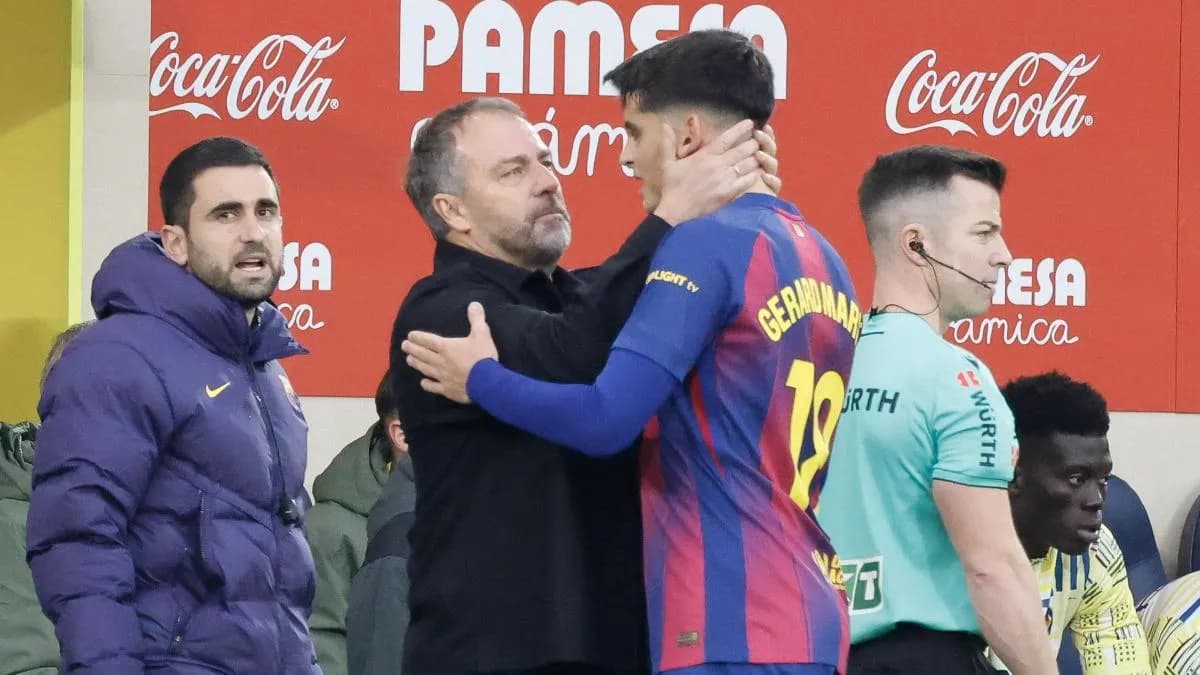
FC Barcelona: Tactical Evolution Under Flick to Reconnect with Success in La Liga
Flick's Barça has reconnected with the La Liga title by adapting its style without abandoning its principles. This tactical update has enriched its play and marked a major evolution in the trajectory of the Catalan club.
FC Barcelona led by Hans-Dieter Flick has managed to combine tradition and innovation to secure a new La Liga title, as highlighted by Mundo Deportivo. Without giving up its historical football convictions, the German coach introduced tactical nuances that revitalized the club's offensive and defensive approach. This evolution allowed Barça to stand out while remaining true to its DNA.
Last season, the discovery of this new approach generated strong enthusiasm among supporters, almost irrational, to the point of creating some apprehension about the sustainability of this renewal. However, the current success testifies to the solidity and viability of this update to Barcelona's game.
Historically, FC Barcelona is recognized for its style based on possession and combinative play. With Flick, this pattern has been preserved but enriched by subtle tactical adjustments, notably in managing transitions and positional flexibility. These modifications helped avoid the rigidity that had handicapped the club in recent years.
The work on details, such as midfield mobility and the ability to vary tempos, gave the team a new dimension. This blend between Barcelona tradition and German methodological contributions allowed the team to regain collective solidity and increased offensive efficiency.
According to Mundo Deportivo, this update is not a mere flash in the pan but an evolutionary process that could define a new standard for the club.
The Context of a Strategic Rebirth
FC Barcelona experienced periods of tactical uncertainty in recent seasons, marked by inconsistent results and internal questioning. The arrival of Flick, with his experience and rigor, provided a structuring framework to stabilize the team.
While respecting the club's fundamentals, he managed to inject a necessary dose of adaptability in the face of modern football's evolution. This calculated pragmatism allowed combining attractive style and concrete results.
This approach was validated by winning the national title, a strong indicator of the effectiveness of this renewed tactical project.
Impact and Perspectives for Spanish Football
Barça's success under Flick could inspire other La Liga clubs to revisit their playing philosophy. The combination of a strong identity and adaptability appears to be a key to remaining competitive in an increasingly demanding championship.
This dynamic comes in a context where La Liga seeks to regain its shine against the rise of other European leagues. Flick's Barcelona shows that it is possible to evolve without denying its history, a potentially exportable model.
Critical Analysis: Towards Sustainable Stabilization?
While the tactical update led by Flick has borne fruit, its medium-term durability remains to be confirmed. The club will have to manage high supporter expectations and the pressure inherent to its status.
Moreover, maintaining this tactical coherence will require continuous work integrating young talents and adapting to the evolutions of European football. Nevertheless, this first victorious step constitutes a solid foundation to build the future.
A Historical Legacy Shaping the Present
Founded in 1899, FC Barcelona is much more than a football club: it embodies a strong cultural and political identity in Catalonia. This dimension goes beyond the pitch and strongly influences how the club builds its sporting project. Through the decades, Barça has always sought to develop aesthetic and collective football, favoring possession and creativity. This style, popularized notably during the Guardiola era, has left a lasting mark on world football history. Today, the tactical update operated by Flick fits within this continuity while taking into account the contemporary demands of the game, which strengthens the coherence of the Barcelona project.
La Liga, for its part, has long been dominated by the rivalry between FC Barcelona and Real Madrid, two clubs that have shaped the Spanish and European football landscape. In this context, reconnecting with the national victory is a major challenge for Barça, which must both honor its glorious past and meet the challenges of a championship that has become more competitive and diversified.
Tactical Stakes and Key Innovations
Flick's tactical approach is based on a subtle balance between maintaining founding principles and adapting to new football trends. The integration of greater positional flexibility allows the team to adapt to different phases of the match without losing its identity. For example, increased midfield mobility facilitates space creation and disrupts opposing defenses. Furthermore, in-depth work on quick transitions has allowed Barça to better exploit counterattacks, a dimension sometimes neglected in the past.
These innovations are not the result of chance but stem from rigorous analysis of performances and group needs. The psychological aspect, notably the players' regained confidence in this system, also plays a key role. This methodical approach, blending tradition and modernity, has allowed Barça to overcome tactical limits that had slowed its success in recent years.
Medium and Long-Term Perspectives for the Club
Beyond immediate success, the challenge for FC Barcelona now lies in consolidating this project over the long term. The club will need to continue investing in the training of its young talents, who are essential to maintaining a strong identity and ensuring effective rotation within the squad. The ability to attract players who adhere to the club's philosophy while bringing complementary qualities will also be decisive.
On the sporting level, competition within La Liga and Europe pushes Barça not to rest on its laurels. Maintaining a positive dynamic requires constant adaptation to tactical and physical evolutions of modern football. Finally, managing supporter expectations and communication around this renewed project will be crucial to sustain the enthusiasm generated by this recent victory and avoid another phase of uncertainty.
In Summary
Hans-Dieter Flick's FC Barcelona illustrates how a historic club can successfully evolve without denying its identity. Thanks to an intelligent tactical update, combining tradition and innovation, Barça has found the path to success in La Liga, validating the German coach's approach. This evolution potentially marks a lasting turning point for the Catalan club, which positions itself as a model of adaptability and coherence in a constantly changing football landscape. However, the sustainability of this project will require continuous work on sporting, institutional, and human levels to meet future challenges with the same ambition and rigor.