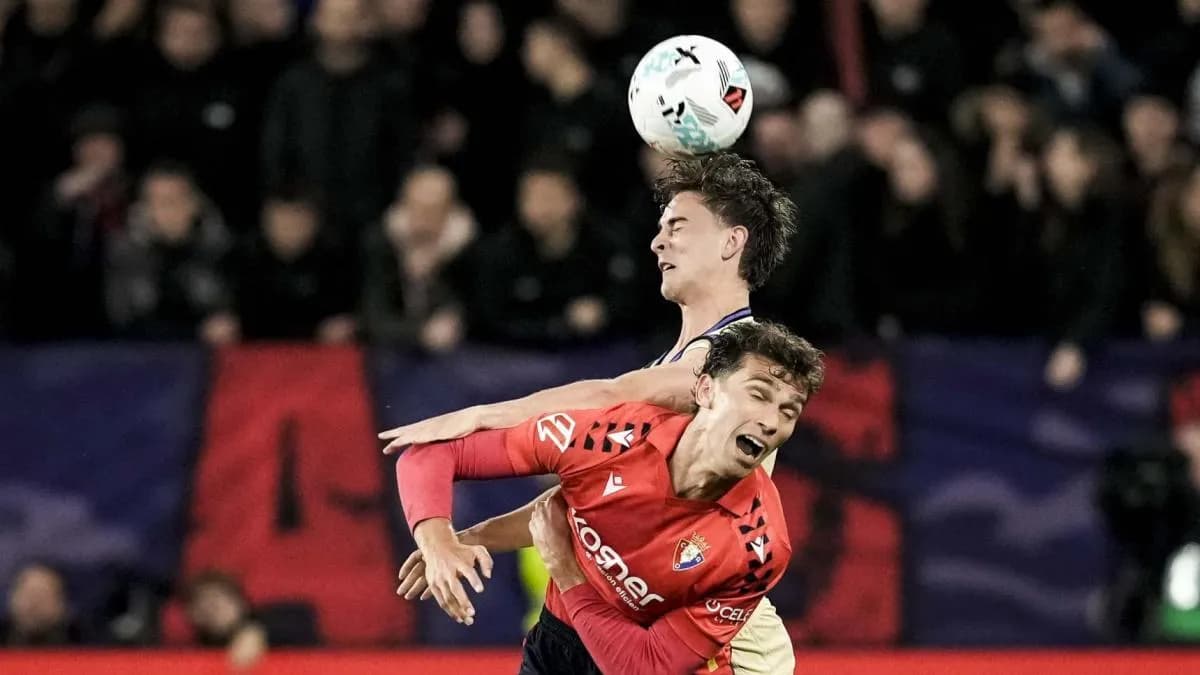
Gavi: The Gradual Return of FC Barcelona's Rising Star After His Long Injury in 2026
After a long period of recovery, Gavi is gradually regaining his form at FC Barcelona under Flick's supervision. Although he has not yet played a full match, the young midfielder is rebuilding his football identity.
Midfielder Gavi is gradually returning to his best form at FC Barcelona following a difficult period marked by a serious injury. According to Mundo Deportivo, he has passed the convalescence phase and is progressively reintegrating into competition, but has not yet played a full match. Coach Flick is carefully managing his playing time to avoid any relapse.
This comeback takes place in a context where Gavi must rediscover his playing identity, still somewhat affected by his physical ordeal. His journey illustrates the necessary caution required to reintegrate a key player after a long absence, while preserving his technical and physical qualities.
FC Barcelona's technical staff places Gavi's health at the core of their priorities. Flick, who knows the player's potential well, adjusts the workload to facilitate a smooth return. This method helps avoid risks of relapse, especially after a prolonged injury, and aims to optimize his long-term performance.
This cautious approach explains why Gavi has not yet been able to play a full match, although his presence on the pitch is becoming increasingly regular. It is a delicate balance between recovery, physical preparation, and the club's tactical demands.
Moreover, this gradual return resembles that of Eric Garcia, another FC Barcelona player who experienced a period of absence and had to rebuild his playing level step by step. The comparison highlights the club's overall strategy to manage its fragile players.
Challenges for Barça in the Race for the Liga
Gavi's return comes at a crucial time for FC Barcelona, which remains engaged in the fight for the national title. According to available data, the Catalan club must manage a squad where every key player counts, especially in a busy schedule.
Optimal management of Gavi could thus have a significant impact on the team's dynamics. His profile as a versatile midfielder capable of creating gaps and ensuring the transition between defense and attack remains a valuable asset for Flick and his tactical plans.
In this sense, Gavi's steady progress, even without full matches, is an encouraging sign for the rest of the season. FC Barcelona is counting on his ability to quickly regain his influence on the game to strengthen the collective.
Outlook and Expectations for the Future
Gavi's situation clearly illustrates the challenges related to managing young talents after significant injuries. The Catalan club seems to favor a long-term approach by avoiding any rush. This strategy could promote a complete and lasting recovery, essential for a player still in full development.
According to Mundo Deportivo, there is still a way to go before Gavi fully regains his pre-injury level, particularly in terms of endurance and consistency over 90 minutes. The coach's growing confidence and medical monitoring are key elements in this process.
Finally, the comparison with Eric Garcia helps better understand FC Barcelona's method of supporting its players in their comebacks. This caution reflects an ambition to preserve the club's human capital, indispensable for medium-term sporting objectives.
A Heavy Historical Context for Gavi and Barça
FC Barcelona, an iconic club in world football, has always had a strong tradition in developing and promoting its young talents, notably from La Masia, its renowned academy. Gavi, trained at the club from a very young age, perfectly embodies this philosophy. However, the club's recent history has been marked by difficult periods both sportingly and financially, which places considerable pressure on every player expected to make a difference.
In this context, Gavi's return takes on a particular dimension. The club, engaged in a fierce battle for the Liga, relies on its young leaders to regain its former glory. The fact that the club adopts a cautious approach to injury management also demonstrates a desire to build a sustainable team capable of competing on multiple fronts in the medium term.
This strategy is part of a broader ambition to rebuild a competitive collective around a young and talented core, with Gavi being part of this promising generation expected to carry the blaugrana ambitions in the coming years.
Tactical Stakes and Gavi's Key Role in Flick's Setup
From a tactical point of view, Gavi occupies a central position in the system deployed by Flick. His profile as a versatile midfielder, capable of pressing high, recovering the ball, and creatively restarting play, is essential to smooth transitions between defense and attack. His prolonged absence forced the coach to adapt his scheme, sometimes to the detriment of collective coherence.
Gavi's gradual return helps rebalance this organization. His ability to create spaces and accelerate the game offers the team a new offensive dimension, especially against well-organized opponents. This tactical influence also translates into better management of the game's tempo, a crucial aspect in the decisive phases of the championship.
Moreover, the on-field relationship between Gavi and other club leaders fosters better ball circulation and greater game control, indispensable elements to contend for the title in an increasingly competitive Liga.
Potential Impact on the Standings and Team Dynamics
As the season enters its final phase, even the smallest positive contribution from players like Gavi can have a decisive weight on the final standings. La Liga, known for its tight battles, rewards teams able to maintain consistent performance, notably thanks to a deep and balanced squad.
Gavi's return provides Barcelona with an additional midfield option, strengthening rotation and preventing physical overload for other key players. This represents a significant strategic advantage in a often congested schedule where managing human resources is paramount.
Beyond purely technical aspects, Gavi's progressive inclusion in the team also helps boost collective motivation. His energy and commitment on the pitch can inject new momentum, an important psychological factor in the title quest.
In Summary
Gavi's return to FC Barcelona after his major injury is an encouraging sign for the club, which is relying on a smooth comeback under Flick's attentive supervision. This process illustrates the necessary caution to preserve the potential of a young talent in a demanding sporting context and a fierce fight for the Liga.
Through meticulous management and gradual rehabilitation, Barça seeks not only to avoid relapses but also to optimize Gavi's tactical impact, whose role proves crucial in the team's setup. His progress is also a key element to energize the collective and strengthen the club's ambitions in the national competition.
Finally, the comparison with Eric Garcia's journey highlights a coherent and humane strategy in managing fragile players, a sign of a club mindful of its human capital and its long-term sporting success.