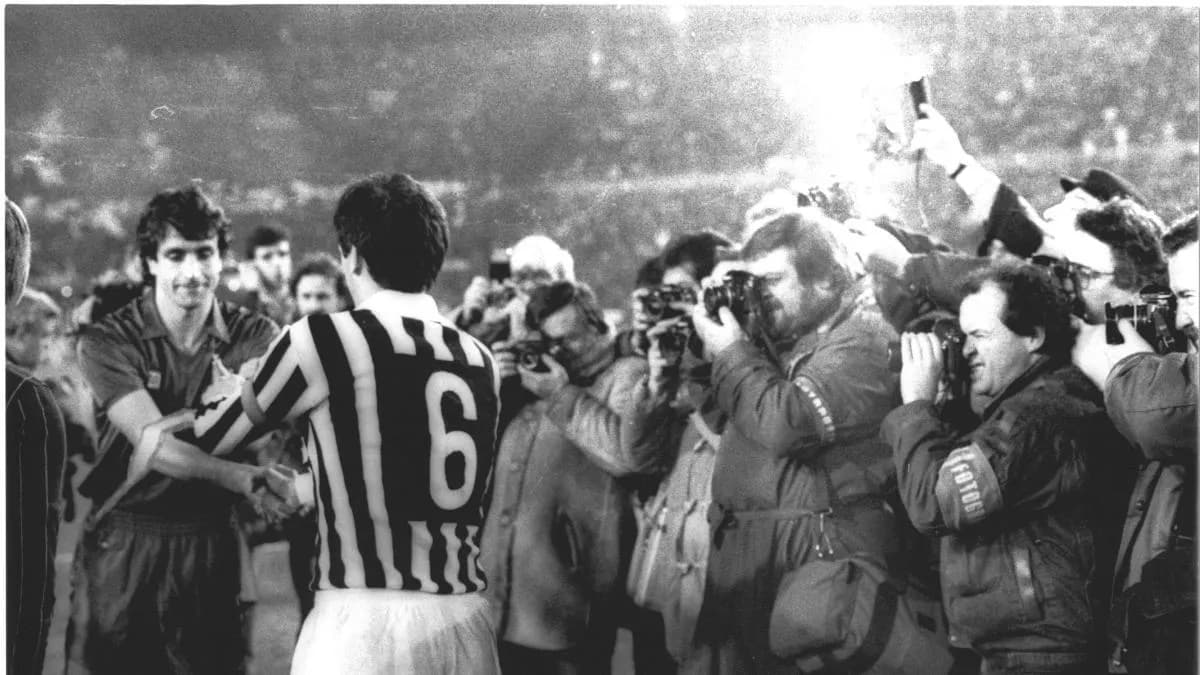
Julio Alberto and Steve Archibald against Juventus: the impact of missed chances in the European Cup
During the European Cup quarter-final between FC Barcelona and Juventus, Julio Alberto and Steve Archibald scored but several clear chances were missed, permanently affecting the careers of some players. A look back at this legendary match full of anecdotes.
A historic confrontation marked by decisive and controversial moments
Forty years ago, the clash between Juventus led by Michel Platini, freshly crowned European champions, and FC Barcelona in the European Cup quarter-finals remains etched in memory for its remarkable anecdotes and intense stakes. Barça, in search of its first major continental trophy, was eager to bring down the Turin team. During the first leg at Camp Nou, Julio Alberto Moreno opened the scoring for the Catalan club, offering a crucial advantage in an electrified atmosphere. His celebration, hinting at a promise to throw himself into the stadium moat, fueled popular fervor, even though he ultimately stopped short of carrying out this extreme gesture.
The return leg in Turin retained all its drama. The Comunale stadium, engulfed in the smoke of flares, was the scene of an intense and fiercely contested match. Steve Archibald also scored a goal for Barcelona, a moment famous for the urban legend claiming he scored it "with his ear," highlighting the uniqueness of this achievement. However, it was mainly the missed chances that marked this two-legged tie, with several clear opportunities squandered during the return match.
Missed chances: a turning point for players and the club
In an interview reported by Mundo Deportivo, a key player of that era, Pacione, acknowledged that these missed chances against Juventus had a considerable impact on his career: "Those who missed those goals in Juventus-Barça saw their careers take off." These words underline the immense pressure exerted on players during the knockout stages of the European Cup, where every opportunity can change the sporting trajectory of an athlete and that of their club.
Despite a sustained performance, Barça never managed to convert these moments of opportunity into additional goals, which allowed Juventus to maintain their advantage and progress in the competition. This lack of clinical finishing was perceived as a major obstacle to Catalan ambitions, contributing to delaying their conquest of the long-awaited European trophy. The episode also illustrates the difficulty of managing pressure in high-intensity matches, where the slightest mistake or hesitation can have serious consequences.
Behind the scenes of a legendary match in the context of European football
The context of this two-legged tie falls within a pivotal period of European football. Juventus had just won their first Champions League in a tragic final at Heysel against Liverpool, which reinforced their status and confidence. FC Barcelona, for its part, was seeking to establish itself on the continental stage, a major objective that would shape its future identity. These encounters were therefore much more than simple matches: they were crucial steps in the evolution of both clubs.
Beyond the score and technical actions, collective memory also retains images of passion, such as the smoke from flares in the Turin stadium, and the rarity of goals scored in such a tense context. The mention of a goal "scored with the ear" by Steve Archibald contributes to this folklore, giving an almost mythological dimension to this epic duel.
What this series of matches reveals about managing pressure in competition
This encounter perfectly illustrates the psychological stakes weighing on players in the European Cup. Finishing errors, often attributed to a lack of composure or excessive pressure, can permanently compromise a career, as Pacione acknowledged. This mental dimension, sometimes underestimated, is now at the heart of professional clubs' preparations, which employ specialists to help their players manage these critical moments.
Moreover, the confrontation between Barça and Juventus highlights the importance of details in high-level football: a missed goal, a celebration, the atmosphere in a stadium can influence the course and outcome of a match. These elements help shape the history of clubs, player legends, and the experience of supporters.
A significant episode in FC Barcelona's history in the European Cup
This two-legged tie thus left a lasting mark on FC Barcelona's history. Despite the frustration linked to missed chances, it was also a moment of learning and evolution for the Catalan club in its European quest. The weight of these eliminations undoubtedly fueled the determination of subsequent generations, who eventually conquered the Champions League.
According to available data, this episode is a reminder of the fine line between success and failure in international competition, where every action counts. It also testifies to the rich history of confrontations between major clubs, which continue to fuel passion and reflection around European football.
Tactical stakes and strategies deployed during the two-legged tie
On the tactical level, this confrontation highlighted the crucial choices made by the coaches of both teams. Juventus, strong in their European experience, opted for defensive solidity combined with fast and precise attacks, taking advantage of spaces left by Barça. On their side, FC Barcelona sought to impose a more fluid and offensive game, relying on the creativity of key players like Julio Alberto and Archibald to destabilize the Turin defense.
This clash of styles created an intense duel on the pitch, where each team tried to exploit its strengths while adapting to the opponent's reactions. Barça notably tried to press high to limit Juventus' build-up play, but the Italian efficiency in tempo management and organized defense often thwarted these plans. These tactical choices contributed to the tension and unstable balance that characterized these memorable matches.
Impact of this elimination on FC Barcelona's ranking and future prospects
This elimination against Juventus had significant repercussions on FC Barcelona's sporting trajectory in the short term. Failing to overcome this hurdle, the club saw its European ambitions slowed, which affected its ranking and international image. However, this defeat also served as a lever to rethink strategies and strengthen the squad, aware of the demands of the highest continental level.
The lessons learned from this two-legged tie fed the Catalan club's reflection on the need to combine individual talent and collective discipline. In the medium and long term, this contributed to building a more solid project, capable of competing with the best European teams. This journey, albeit marked by painful defeats, allowed FC Barcelona to evolve towards winning its first major trophy in the Champions League, confirming the historical importance of this episode.
In summary
This two-legged tie between Juventus and FC Barcelona forty years ago remains an emblematic moment of European football, mixing anecdotes, tactical stakes, and psychological pressure. The missed chances had a profound impact on the players and the Catalan club, delaying their European conquest but also forging their future determination. This match illustrated the complexity of high-level football, where every detail counts, and helped write an important page in the history of these two football giants.