Marcus Rashford at FC Barcelona: An Example for Jadon Sancho and the Stakes of the 2026 Loan
Marcus Rashford impresses at FC Barcelona with 13 goals and 13 assists in 2026, sparking debates about his future and a possible loan extension amid the cost of a permanent transfer.
Rashford impresses at FC Barcelona despite a non-starting role
Marcus Rashford, the 28-year-old English winger, is having a remarkable season at FC Barcelona, where he has scored 13 goals and provided 13 assists. Despite limited playing time and a substitute status, his offensive statistics draw attention, especially within the environment of Manchester United, his original club. According to Mundo Deportivo, his performance even causes some surprise within the Manchester club, which sees him transition from a youth prospect at Old Trafford to a player recently encouraged to explore other horizons.
This evolution comes after a difficult period marked by an injury that kept him off the pitch for half a season at Aston Villa. His current loan at FC Barcelona is therefore closely monitored, as he could extend his stay in Catalonia beyond the current season.
FC Barcelona wishes to extend Rashford's loan rather than commit to a permanent transfer, which would involve a payment of 30 million euros to Manchester United. This situation creates a debate within the English club, divided between supporters and opponents of the player's extension in La Liga. Barça's financial situation plays a key role in this dilemma, as the club prefers to avoid a significant immediate expense.
For Manchester United, Rashford's performance in another league is also a valuable indicator, both sporting and financial. The club could thus revise the player's valuation upward or downward depending on his performances in Spain, while observing the effects of his extended loan on his level and form.
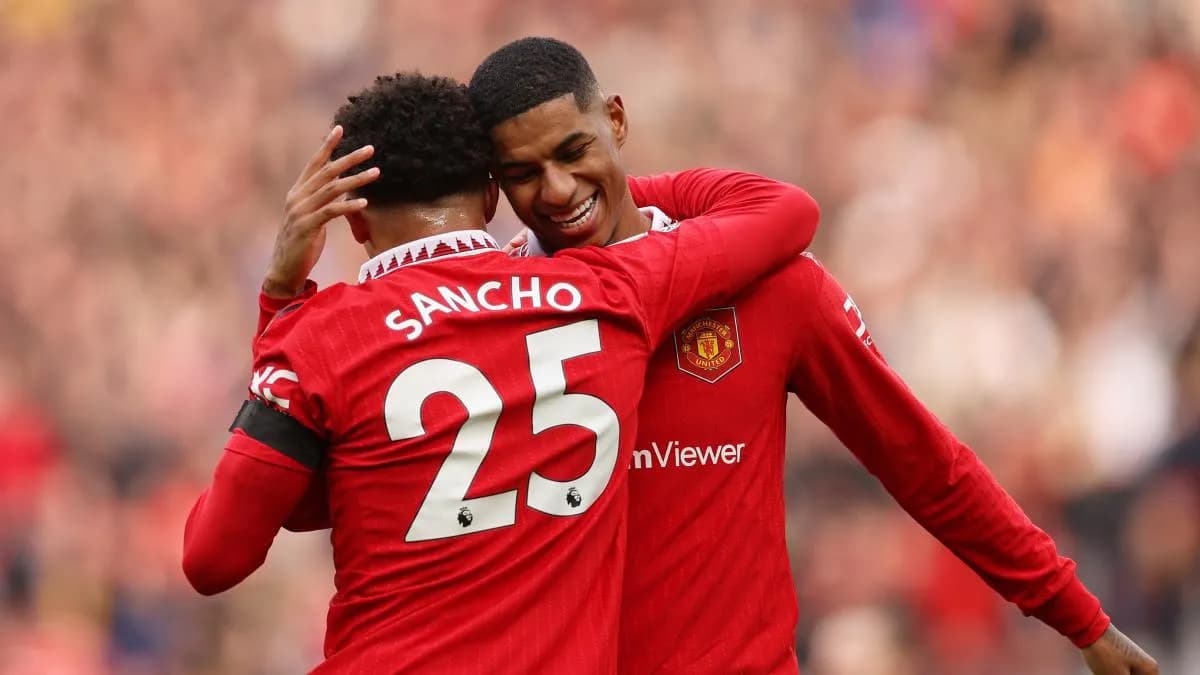
In this context, some voices within Manchester United recommend that Jadon Sancho, another English winger, take inspiration from Rashford's journey at Barcelona. Indeed, Rashford has managed to reinvent himself and regain a high performance level despite a secondary role, which could serve as a model for Sancho, who is also going through a difficult period.
This comparison highlights the importance for players struggling at their original clubs to fully seize their opportunities during loans or temporary transfers. Rashford thus demonstrates how a successful adaptation in a top-level club can revive a career and enrich tactical and mental experience.
With the season's imminent end, the Rashford case remains central to discussions for the summer transfer window. FC Barcelona must decide whether it is better to bet on an extended loan or commit to a permanent purchase, while Manchester United must anticipate the player's valuation and his prospects for future integration or resale.
These choices will have direct consequences on the offensive setup of both clubs, as well as on investment possibilities during the transfer window. It is also likely that Rashford's situation will influence decisions regarding other English players like Sancho, insofar as their trajectories and performances are now compared.
The historical weight of FC Barcelona and its current challenges
FC Barcelona, a legendary club in European and world football, has always been recognized for its youth development and playing style based on possession and collective play. However, recent years have been marked by major financial difficulties, forcing the club to revise its recruitment methods and favor loans over direct purchases. In this context, Rashford's arrival fits into a cautious but ambitious strategy aimed at strengthening the squad without increasing the wage bill.
Sportingly, Barça seeks to regain its dominant place in La Liga and on the European stage, a goal that requires tactical flexibility and the rapid integration of players capable of making a significant offensive contribution, even off the bench. Rashford, with his dynamic profile and versatility on the wings, meets this need, offering varied solutions to the coach.
Tactical stakes and impact on the standings
From a tactical standpoint, Rashford has adapted to the Barcelona system, which often relies on high pressing and patient build-up of attacks. Even as a substitute, his speed, ability to get past opponents, and precision in assists have allowed Barça to maintain a constant offensive threat. His 13 goals and 13 assists testify to a formidable efficiency for a player who does not regularly start matches.
This offensive output has a direct impact on FC Barcelona's standings, as the club fights to remain competitive against formidable opponents in La Liga. The squad depth, reinforced by players like Rashford, is a significant asset to maintain pressure throughout the season and aim for a return to the top spots, or even title wins.
Outlook for next season and beyond
If FC Barcelona manages to extend Rashford's loan or sign him permanently, it could mark a turning point in the club's talent management policy. Rashford could become a key element in the offensive rebuild, bringing experience, versatility, and leadership on the field. This would also send a strong signal to other players struggling at their respective clubs, illustrating that Barça remains an attractive destination to revive a career.
Moreover, Manchester United will have to take this dynamic into account in its medium-term planning. The club could choose to recall Rashford based on his progress or, conversely, capitalize on his valuation to invest in new recruits. The Rashford case thus highlights the importance of smart loans and strategic decisions in managing a modern squad.
In summary
Marcus Rashford's case at FC Barcelona perfectly illustrates the complex dynamics of the modern transfer market, where sporting performance, financial constraints, and talent management intertwine. His significant impact in a rotational role proves that a player can reinvent himself and deliver high output without being an undisputed starter, a valuable lesson for his peers.
Finally, this situation also highlights the stakes related to loans with purchase options, which allow clubs to evaluate players on the field before committing financially. By refusing for now to pay the agreed 30 million euros, FC Barcelona shows justified caution in an economic context still fragile for European football.