OM in Europa League: Medhi Benatia explains his departure and harshly criticizes Kita
OM secured a spot in the Europa League thanks to their 5th place finish in Ligue 1. Medhi Benatia, sporting director, reflects on his departure while delivering strong criticisms of Waldemar Kita, revealing internal tensions.
A European qualification that crowns a solid season
Olympique de Marseille secured their ticket to the Europa League by finishing 5th in the Ligue 1 championship, following a convincing victory against Rennes. This major success allowed the Phocaean club to ensure its presence in a prestigious European competition, thereby strengthening its attractiveness and visibility on the continental stage. This performance is a strong signal in the club's sporting and economic momentum.
At the heart of this success, sporting director Medhi Benatia recently spoke out to explain the reasons for his departure from the club. His statement comes amid internal tensions, notably with Waldemar Kita, president of Nantes, against whom he expressed himself vehemently, as reported by RMC Sport.
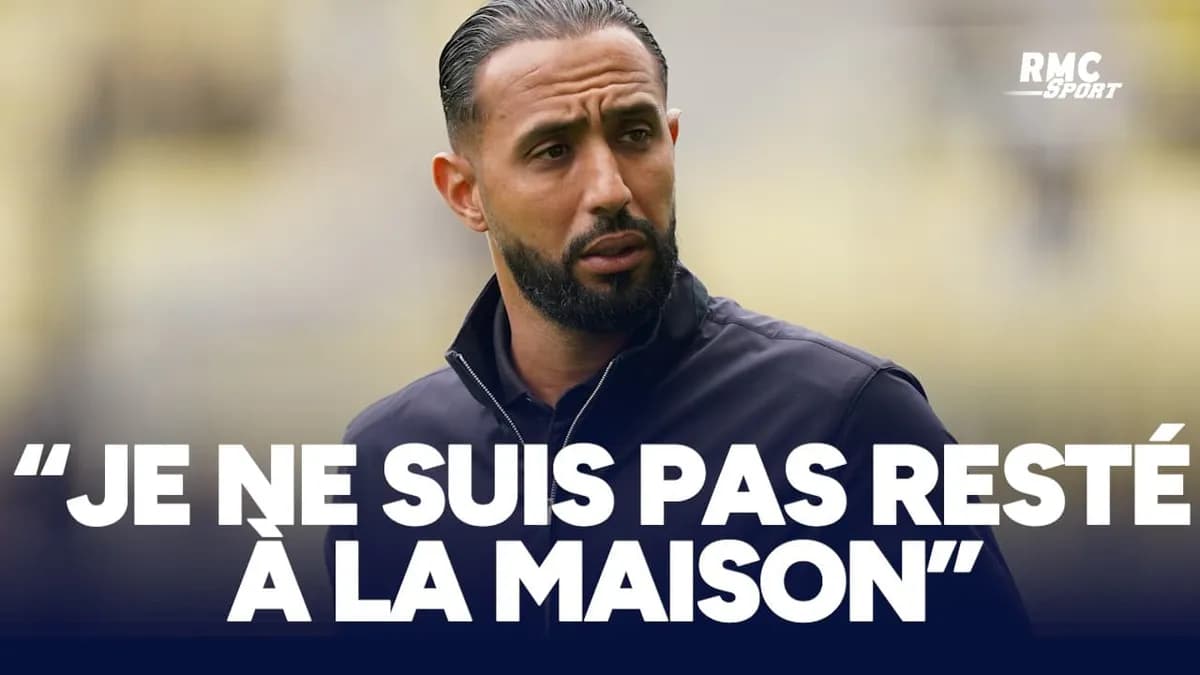
Medhi Benatia wanted to clarify his commitment during his tenure at OM. "I did not stay at home," he affirmed, emphasizing his full involvement in the club's sporting management despite the difficulties encountered. His speech reveals a desire to separate his work from the perception some may have had of his investment.
This explanation comes as criticisms had circulated about his role and effectiveness. Benatia also mentioned deep disagreements with Waldemar Kita. The criticism towards Kita highlights a notable rift between major figures in French football, marking a conflictual episode in the sphere of sporting management.
These tensions illustrate the complex challenges OM must face, notably in managing relationships with other leaders and building a coherent long-term sporting policy.
A sporting and economic context under high pressure
Maintaining OM in the top 5 of Ligue 1 is crucial to ensure financial stability through European revenues. Qualification for the Europa League brings additional resources via TV rights, ticket sales, and merchandising, essential elements for the club's competitiveness.
However, the internal dynamic seems weakened by personal and strategic conflicts, as evidenced by Benatia's statement. These disagreements risk impacting the preparation of the transfer window, a crucial phase to strengthen the squad and aim for higher ambitions in the championship and Europe.
Implications for club management and the transfer window
Medhi Benatia's departure opens a period of uncertainty for OM's sporting management. Finding a successor capable of continuing the recruitment policy and development of young talents will be decisive for the upcoming season. Qualification for the Europa League adds extra pressure to build a competitive team able to compete on two fronts.
Moreover, the tensions revealed with Waldemar Kita could influence future negotiations, notably regarding transfers between French clubs. OM's ability to maintain solid professional relationships will be a key factor for its influence.
A European season to prepare with rigor
Confirmation of the Europa League spot is a major opportunity for Marseille. It not only allows attracting quality players but also strengthens the OM brand internationally. However, the club must ensure to stabilize its sporting organization and prevent internal divisions from hindering its ambitions.
In conclusion, this qualification is a springboard for Marseille, but it is also a warning regarding the need for better internal cohesion. Benatia's departure and his public criticisms of Kita illustrate a transition phase that will require fine strategic management to confirm and surpass the results achieved.
Historical context and OM's place in European competition
Olympique de Marseille, an emblematic club of French football, has a rich history in European competitions. Winner of the Champions League in 1993, OM has always aimed to establish itself on the continent despite some downturns. Qualification for the Europa League marks a return to European regularity that had sometimes been lacking in recent years. This competition is often considered a stepping stone for French clubs wishing to regain their place among Europe's best. For Marseille, it is an opportunity to reconnect with a tradition of international performances and to restore its reputation after seasons marked by ups and downs.
On the sporting level, the Europa League offers a demanding challenge, confronting OM with varied opponents, often experienced in this competition. This exposure is also a chance to test tactical qualities and squad depth against different playing styles, which is essential for the club's progression.
Tactical challenges and team adaptation
Participation in the Europa League imposes specific tactical demands. The sustained pace of European matches, combined with Ligue 1 fixtures, requires rigorous management of human resources and the ability to vary game plans according to opponents. OM will therefore have to rely on a solid and balanced group, capable of combining defensive intensity and offensive creativity.
Successive coaches have often emphasized the importance of flexible tactical organization, able to switch from a 4-3-3 system to a 3-5-2 depending on match needs. This adaptability will be crucial to face European teams, often tactically well prepared. Furthermore, the need to rest key players to avoid injuries throughout the season is another major challenge, especially since the Europa League can extend over several months.
Perspectives for the ranking and future ambitions
The 5th place in Ligue 1 obtained this season constitutes an encouraging foundation for OM. It is a sign that the club is on the right path to regain a place among the heavyweights of the championship. However, competition is intensifying, with several teams seeking European qualification. Maintaining or even improving this ranking will be a priority objective for the coming seasons.
Beyond the ranking, this qualification opens the way to higher ambitions both nationally and in Europe. OM will have to succeed in combining sporting performances and institutional stability, a sine qua non condition to attract talents and build a sustainable project. The challenge will also be to establish a winning culture, essential to take a step forward and aspire to higher-level competitions like the Champions League.
In summary
Olympique de Marseille managed to secure its place in the Europa League thanks to a solid season and a decisive victory against Rennes. Medhi Benatia's departure, accompanied by criticisms of Waldemar Kita, reveals internal tensions that could influence the club's sporting and economic future. European qualification represents a major opportunity to strengthen OM's attractiveness, but also an important tactical and strategic challenge. The club's history, its ambitions on the European stage, as well as the perspectives for the national ranking, underline the need for coherent management and regained stability to ensure a promising future. In this context, Marseille must capitalize on this positive momentum while overcoming internal divisions to reaffirm its place among the elite of French and European football.