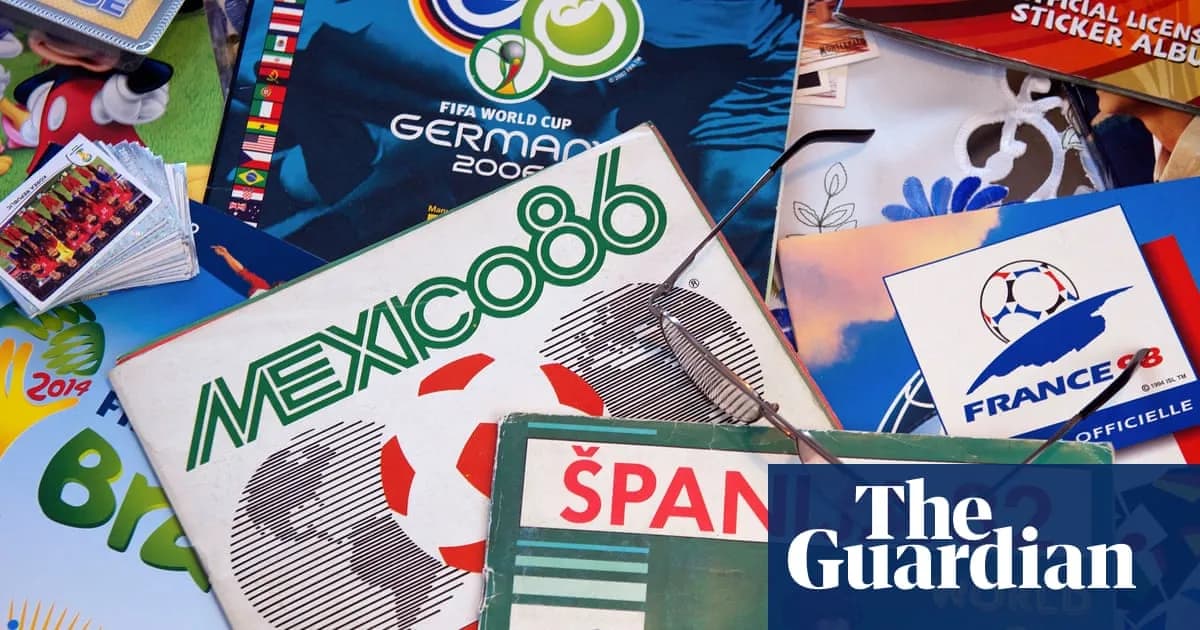
Panini and the World Cup: Why the Legendary Sticker Album Will End After 2030
After decades of passion surrounding Panini sticker albums during the World Cups, a major announcement disrupts this tradition: the end of their production after 2030. A look back at this football icon and what this decision means for fans.
Last week, a thunderbolt struck the world of football and collectors: the famous Panini sticker album, inseparable from the World Cups for decades, will be discontinued after the 2030 competition. This announcement, reported by The Guardian, comes in a context already marked by major controversies surrounding the tournament, notably heightened politicization, travel bans for some African countries, and a significant rise in ticket prices worldwide.
For generations of fans, this album represented much more than a simple collectible. It embodied the joys of the tournament, exchanges in the schoolyard, and a communion around football. The news of its disappearance on the horizon of 2030 therefore leaves a bitter taste, highlighting a profound shift in the way supporters interact with their passion.
A Cultural and Social Heritage Around the Collection
The Guardian contributors shared their personal memories related to Panini albums, recalling in turn the excitement of unwrapping packs, the relentless quest for rare stickers, and moments of friendship and rivalry around exchanges. The album was not just a commercial object, but a vector of emotions and individual and collective stories.
These memories highlight the social and cultural importance of this object. In an era where digital is gaining ground, the gradual shift towards virtual experiences seems inevitable, at the risk of losing a tangible form of conviviality, unique to physical exchanges and personal collections.
While the official announcement attributes this decision to a new partnership strategy between FIFA and other merchandising players, Panini’s halt also reflects market changes and consumption patterns. The digitalization of media, the rise of virtual merchandise, and evolving fan expectations towards more interactive experiences play a key role.
Moreover, the economic environment of football, marked by cost inflation and increasing complexity of commercial rights, contributes to this evolution. FIFA’s decision to favor new formats and partners could also be part of a desire to optimize its revenues and innovate in capturing the attention of new generations.
Consequences for Fans and the Football Memorabilia Market
The end of the Panini album could create a significant void in the football-related collectibles sector. This product, now emblematic, was an accessible entry point for children and families, fostering a first playful and educational approach to the sport.
In the long term, collectors might turn more towards NFTs (non-fungible tokens) and other forms of digital collectibles, where rarity and traceability are guaranteed by blockchain. This transition raises questions of accessibility and sustainability, especially for fans less familiar with digital technologies.
A Symbolic Change for the World Cup
Beyond the commercial aspect, the end of Panini albums marks a symbolic break in the history of the World Cup. Since 1970, this album accompanied each edition, creating a collective ritual and a shared memory across generations. Its disappearance announces a new era, where nostalgia meets technological innovation.
As FIFA faces an already controversial 2026 World Cup on several fronts, this decision highlights the challenges global football faces in its quest for balance between tradition, modernity, and economic demands.
The Historical and Cultural Context of the Panini Album
The Panini album, launched during the 1970 World Cup in Mexico, quickly became a global cultural phenomenon. It symbolized a unique way to experience football, bringing together thousands of young people around a common passion. Each sticker pasted represented a moment of hope, a celebration of a player or a team, and above all an encouragement to share and exchange. Panini’s success was built on this ability to create social bonds beyond the simple hobby of collecting. The album has crossed eras, generations, and conflicts, remaining an unchanging landmark in a constantly evolving world.
The album also accompanied major changes in football, from the first great names to contemporary stars, capturing the evolution of styles and national identities. It allowed fans to follow competitions with both a playful and passionate eye, giving an extra breath to the World Cup beyond the pitches.
Tactical Stakes and Impact on the Tournament’s Popularity
As football evolves tactically with increasingly sophisticated game systems and in-depth analyses, the Panini album has always favored the visual and symbolic representation of players and teams. This simplicity helped democratize access to football by offering an immediate and accessible reading for all. However, with the rise of digital technologies and interactive platforms, fans now seek more immersive content capable of explaining in detail strategies, individual and collective performances.
In this context, Panini’s disappearance can be seen as a reflection of evolving expectations. Supporters want to experience the tournament differently, through enriched experiences, real-time data, and amplified social interactions. This trend could change the way football is perceived, prioritizing tactical analysis and personalized experiences at the expense of traditional rituals.
Perspectives for the Future of Football Memories and Heritage
The announced end of the Panini album opens a debate on preserving collective memory around the World Cup. As digital takes an increasing place, it is crucial to consider how memories and emotions related to football will be passed on to future generations. NFTs and other digital collectibles offer unprecedented possibilities but also raise questions about accessibility and authenticity of collectibles.
Moreover, the role of physical media in building popular culture should not be underestimated. These tangible objects, carriers of history and identity, help create a lasting emotional bond between fans and the sport. The challenge will therefore be to find a balance between technological innovation and respect for traditions, to continue to keep the magic of the World Cup alive in new forms.
In Summary
The announcement of the end of the Panini album after the 2030 World Cup marks a major turning point for global football. This change reflects economic, technological, and cultural shifts affecting the world’s leading sport. While nostalgia is palpable among fans, it is also an opportunity to rethink ways of interacting with football by integrating digital innovations while preserving the spirit of sharing and passion that made the album a success. The World Cup, in full mutation, will thus have to combine tradition and modernity to continue bringing together millions of supporters around a common dream.