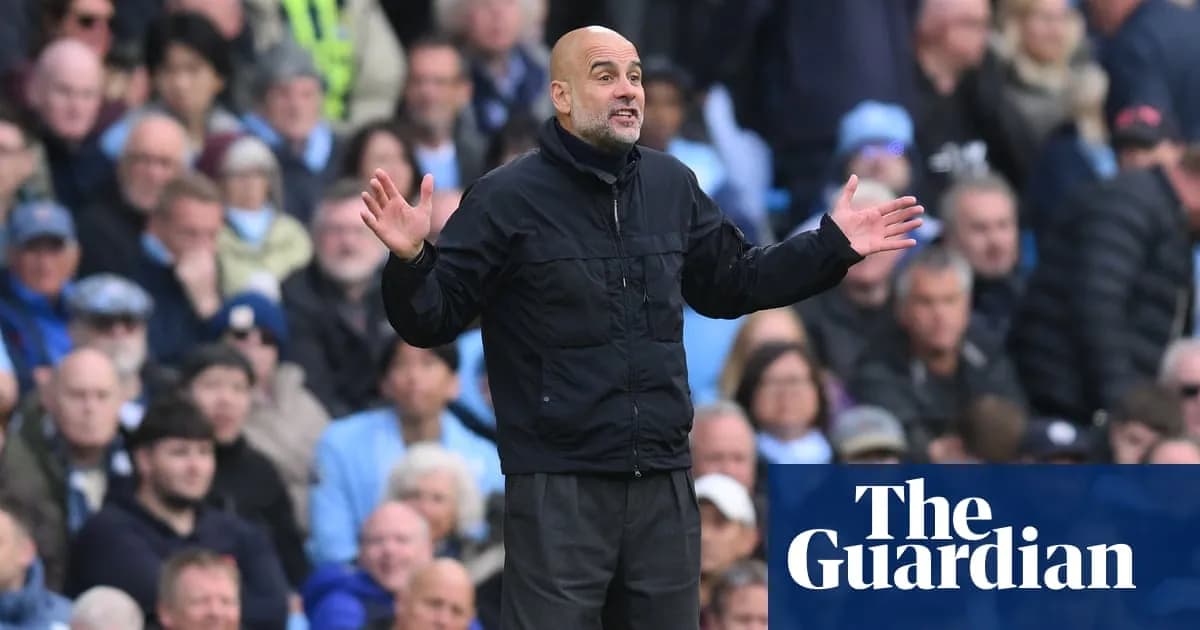
Pep Guardiola criticizes refereeing and calls on his players to raise their level in the FA Cup
Pep Guardiola denounces the random nature of refereeing decisions and insists that his Manchester City players improve their performance to compensate for these uncertainties, especially after the FA Cup final. Doubts also hang over the availability of Khusanov and Rodri for the upcoming crucial match against Crystal Palace.
Guardiola denounces refereeing as a "flip of a coin"
Pep Guardiola recently expressed his deep dissatisfaction with refereeing, describing some decisions as a "flip of a coin." This criticism follows the FA Cup final during which, according to him, the referees "did not do their job." These remarks illustrate growing frustration among Premier League coaches regarding the quality and consistency of refereeing decisions, especially in key moments of major competitions.
The Manchester City manager highlights the current limitations of refereeing, even with the support of VAR. He points out that relying solely on refereeing decisions can amount to chance, which cannot be a reliable basis for a club aspiring to the highest standards of performance and results.
Consequences and context: the Wilson-Raya controversy
This controversy takes place in a context where the use of the video assistant referee (VAR) is once again being questioned. A recent example is the disallowed goal for Callum Wilson during West Ham's defeat against Arsenal, following a VAR intervention that led referee Chris Kavanagh to cancel a goal initially awarded. The goal was disallowed for an alleged foul on Arsenal goalkeeper David Raya, illustrating the complexity and subjectivity of refereeing interpretations even with technology.
These decisions are scrutinized by fans, media, and football stakeholders, raising questions about the reliability of VAR and referee training. For Guardiola, this uncertainty reinforces the imperative for his players not to rely on external decisions but rather to raise their level of play.
Sporting stakes: uncertainties over Khusanov and Rodri before Crystal Palace
Beyond refereeing issues, Manchester City must also deal with doubts about the availability of some key players for an important match against Crystal Palace. Midfielders Khusanov and Rodri are uncertain, which could complicate Guardiola's tactical plans. This situation adds a layer of pressure on the team to overcome both internal and external difficulties.
The match against Crystal Palace is crucial for Manchester City's ambitions. The possible absence of major players combined with refereeing uncertainties makes Guardiola's approach even more pragmatic: relying primarily on the intrinsic quality of his players.
Analysis: the impact of limited trust in refereeing
Guardiola's sharp criticism reveals a broader trend in modern football, where trust in refereeing, despite technological advances, remains fragile. This mistrust encourages coaches to focus more on collective and individual performance, thus reducing the margin of error linked to external decisions.
For Manchester City, a club accustomed to standards of excellence, this strategy of "total control" of the game is essential to maintain their leader status. Guardiola therefore pushes his players not to rely on luck or refereeing decisions but to take control of their sporting destiny.
Perspectives for Manchester City facing current challenges
The current situation, marked by uncertainties about players and refereeing decisions, could influence Manchester City's dynamics in the coming weeks. The team's ability to adapt and raise its level of play will be decisive, especially in competitions like the FA Cup and Premier League confrontations.
According to available data, the pressure is therefore on Guardiola and his players to turn these constraints into a performance driver, without depending on refereeing sometimes perceived as arbitrary. This philosophy illustrates a pragmatic and demanding approach to modern football.
Historical context and stakes of the FA Cup for Manchester City
The FA Cup, one of the most prestigious and oldest competitions in English football, represents a major goal for Manchester City each season. The club, which has experienced a rapid rise over the last decade, has won several major titles, but winning the FA Cup remains a symbolic priority to assert their national dominance. However, this competition is also marked by surprises and turnarounds, where refereeing can play a decisive role in the outcome of matches. The frustration expressed by Guardiola reflects this additional pressure that top-level clubs feel when faced with refereeing decisions that can influence the outcome of such an important tournament.
In this context, every refereeing decision becomes a strategic issue, amplifying the need for Manchester City to ensure impeccable performance on the pitch to minimize the impact of potential errors or questionable judgments. The recent final thus highlighted this tension between the club's desire to assert its supremacy and the uncertainties of modern football, where technology and humans confront each other in applying the rules.
Tactical stakes and adaptation facing the absences of Khusanov and Rodri
From a tactical standpoint, the possible absence of Khusanov and Rodri poses a significant challenge for Pep Guardiola. These two midfielders play a crucial role in the team's balance, especially in ball recovery and distribution. Their unavailability could force Guardiola to rethink his setup, adjusting the formation or giving more responsibilities to other players. This tactical flexibility is a hallmark of the Spanish manager, who has always known how to adapt his strategies according to the strengths and weaknesses of his squad.
Against Crystal Palace, a team known for its defensive solidity and direct play, Manchester City will have to show creativity and control to break through the opponent's lines without its usual midfield leaders. Managing these absences will therefore be decisive to maintain the club's positive momentum and avoid dropping precious points in the title race. This situation also illustrates the importance of squad depth and the mental preparation of substitutes, called upon to raise their level in the face of increasing adversity.
Impact on the standings and future stakes in the Premier League
Looking ahead to the Premier League standings, every match is of vital importance for Manchester City, which aims to maintain its position as leader against ever tougher competition. The uncertainties related to refereeing and the squad can weaken the club's stability, but they can also serve as a catalyst to strengthen cohesion and collective determination. A victory against Crystal Palace would consolidate their lead, while a misstep could reignite the fight at the top.
Beyond the standings, these challenges offer an opportunity to test the team's resilience and Guardiola's ability to manage the unexpected. As the season progresses, managing injuries, media pressure, and refereeing controversies will become factors to master in order to hope to win trophies. How Manchester City navigates these obstacles will largely define the success of their campaign.
In summary
Pep Guardiola expresses growing frustration with refereeing perceived as a "flip of a coin," highlighting the limits of VAR and the need for his players to raise their level to compensate for this uncertainty. The controversy surrounding the disallowed goal for Callum Wilson illustrates the current challenges of modern football, where technology and humans confront each other in sometimes contested decisions. Furthermore, doubts about the availability of Khusanov and Rodri complicate Manchester City's tactical preparation before a key match against Crystal Palace. In this context, Guardiola relies on the intrinsic quality of his players to maintain their dominant position in the Premier League and continue aiming for excellence in all competitions. This pragmatic approach reflects a desire not to let external factors, such as refereeing, dictate their sporting destiny.