Pep Guardiola and the Schedule: The Impact on the Premier League Title Race
As the 37th matchday approaches, Arsenal holds a narrow two-point lead over Manchester City. Pep Guardiola denounces an imbalance in the schedule, highlighting the difference in rest days between his players and their opponents.
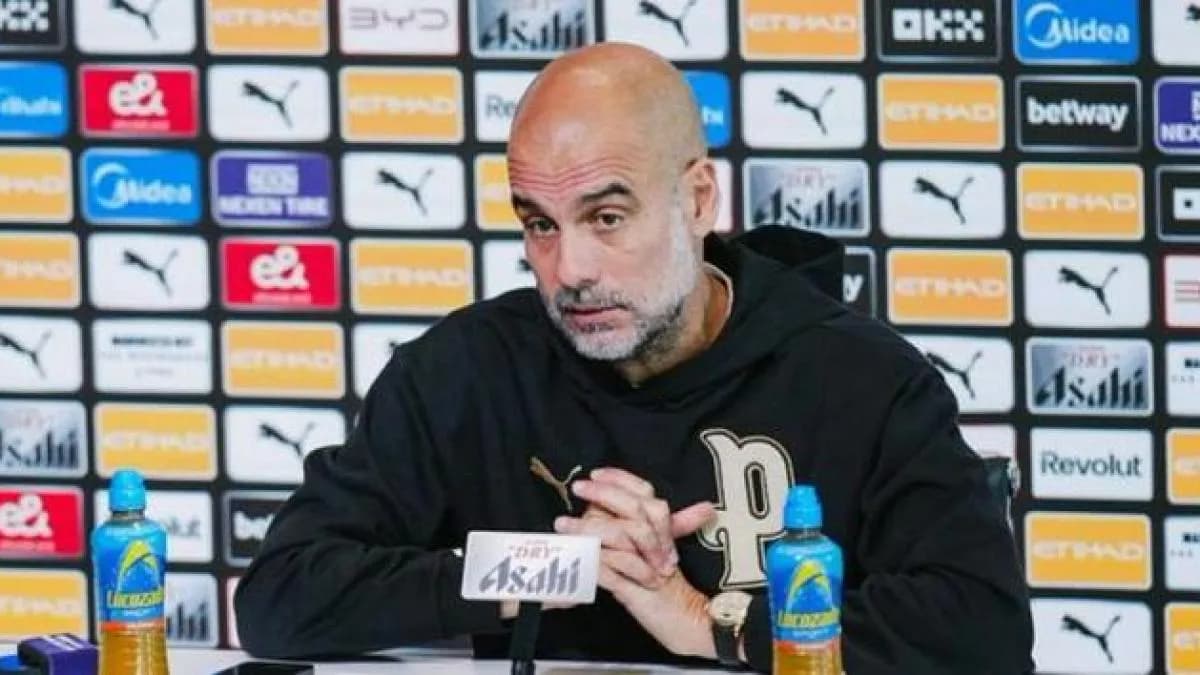
As the Premier League enters its crucial phase with the imminent 37th matchday, the title duel between Arsenal and Manchester City intensifies. Arsenal holds a lead of only two points over Pep Guardiola's club, but the context around the schedule has become a major topic. In a press conference, the Catalan coach pointed out a significant imbalance: "We had three days of rest and they had ten," he said, emphasizing the potential impact of this difference on his team's performance.
This situation highlights the difficulty for Manchester City to stay at the highest level against an Arsenal team that benefits from more time to recover and prepare for its matches. The tight schedule is a factor to consider in analyzing the title race, especially at this advanced stage of the season.
For Manchester City, the upcoming match against Bournemouth represents a crucial step. Guardiola knows his team cannot afford to drop points, especially with such a narrow margin in the standings. The coach acknowledged the difficulty of the opposition, led by Andoni Iraola, recalling that Bournemouth had already given them a hard time last year: "It was one of our worst performances last season. We'll see what happens tomorrow."
This statement reflects the vigilance and respect Guardiola has for his opponent, while underlining the importance of this confrontation in the context of the title race.
Recovery time is an often underestimated element in high-level competitions. Having ten days between two matches allows not only better physical preparation but also an in-depth tactical analysis of the opponent. Conversely, three days of rest require strict management of human resources and a higher risk of fatigue.
For a team like Manchester City, known for its intensity of play and high pressing, this factor can have a direct impact on the ability to maintain an optimal level. The seven-day difference in the schedule could thus influence the quality of player performances and, ultimately, the results that will decide the champion.
The tight fight between Arsenal and Manchester City is now played out on details, of which the schedule is a crucial component. While Arsenal was able to prepare its match against Burnley with ten days of recovery, Manchester City must cope with a more intense rhythm, which could tip the balance.
According to Mundo Deportivo, this situation makes the schedule a strategic factor in the final stretch, where every point counts. Guardiola, aware of the challenges, highlights an inequality that could influence the outcome of the championship.
The Historical Roots of the Title Duel
The rivalry between Arsenal and Manchester City is part of a long tradition of fierce competitions in the Premier League, where each season brings its share of twists and turns. Historically, Arsenal, a club with a rich history and several national titles, has often been a serious title contender, while Manchester City, under Guardiola's leadership, has become the dominant force in English football in recent years. This current confrontation thus takes place in a context where two football philosophies and two legacies intersect, making the battle for the title even more intense and symbolic.
The fact that the title race is played at such a high level of demand underlines the rise of the Premier League as one of the most competitive championships in the world, where details like the schedule and management of rest times can become decisive. This season thus promises to be a new chapter in the history of this rivalry, with high stakes for both clubs.
Tactical Perspectives Facing the Schedule Constraint
Pep Guardiola, known for his tactical intelligence and adaptability, will have to find solutions to compensate for the reduced availability of his players. This could involve smarter squad rotation, stricter management of efforts during matches, or adapting playing schemes to limit excessive physical expenditure. The challenge is all the greater as Manchester City relies on an intense and dynamic style of play, which requires optimal physical condition.
Moreover, the players' mental preparation will also be decisive. Having less time to recover can weigh on concentration and motivation, especially in such a critical phase of the season. Guardiola will therefore have to mobilize not only his tactical skills but also his leadership to maintain his group's commitment and cohesion in this context of increased pressure.
Potential Impact on the Final Standings
Schedule management could well be one of the key factors determining the outcome of the Premier League this season. With only two points separating Arsenal and Manchester City, every match and every minute now counts. A slip-up by Manchester City against Bournemouth, aggravated by fatigue and insufficient preparation time, could allow Arsenal to widen the gap and approach the final day with a more comfortable advantage.
Conversely, a convincing victory by Manchester City despite these constraints would demonstrate the team's resilience and adaptability, strengthening its chances of winning the title. In any case, this situation highlights the strategic importance of the schedule, which can directly influence the final standings and how the championship will be won or lost.
In Summary
Pep Guardiola's remarks on the schedule are not trivial. They illustrate how crucial the management of rest time and match planning are as essential levers in modern competition. By highlighting this difference, the Catalan coach invites a broader reflection on fairness and the impact of schedules in high-level football competitions.
Beyond the simple physical question, this also raises issues of mental and tactical preparation, which can prove decisive in the quest for the title. Manchester City will therefore have to face not only its opponents on the field but also manage this external factor intelligently to hope to turn the situation around.