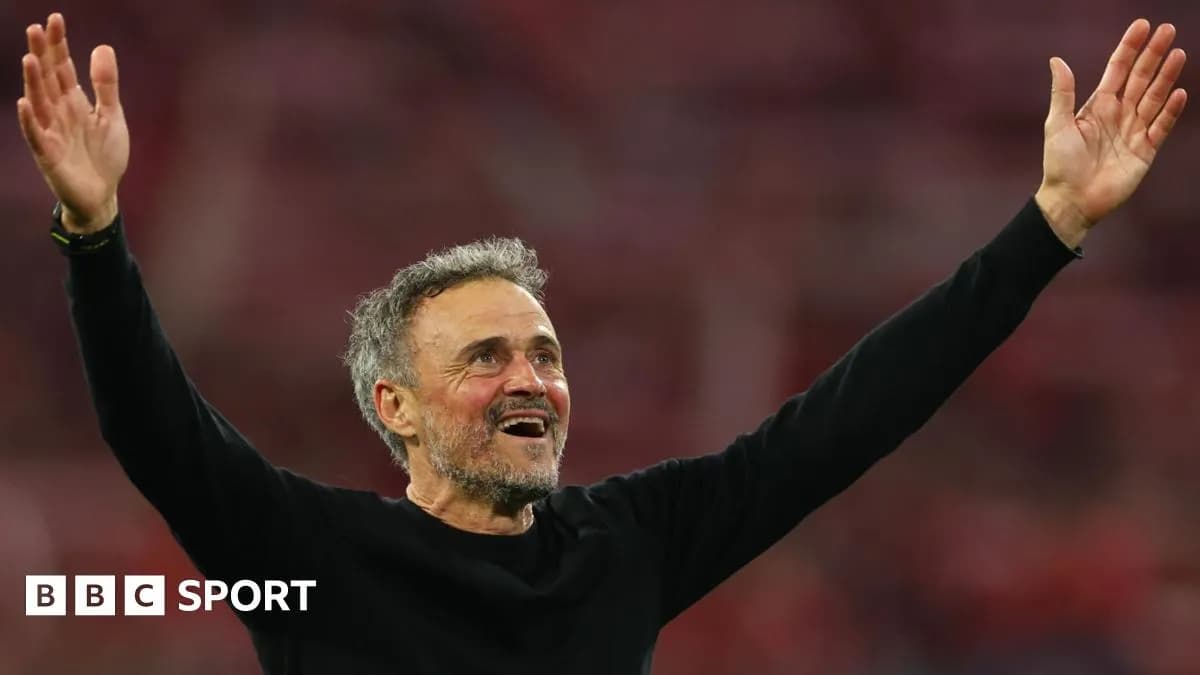
PSG 2026: How Luis Enrique Transformed a Self-Centered Team into a Complete Football Model
Luis Enrique has transformed PSG into a formidable collective, combining team culture and tactical excellence. This evolution makes the club the ultimate opponent in the Champions League final against Arsenal.
A Radical Cultural Transformation Under Luis Enrique
The Paris Saint-Germain, long criticized for a locker room dominated by individuals often deemed too self-centered, is now seen as a true "complete package." This metamorphosis is largely attributed to Luis Enrique's expertise, who not only rebuilt a team but above all established a new culture within the club. According to BBC Sport Football, Arsenal will have to face this Parisian formation described as a "complete package" in the 2026 Champions League final.
The challenge posed by this renovated PSG therefore goes beyond the simple tactical aspect. It is the ultimate test, combining collective rigor, defensive intensity, and offensive fluidity, all orchestrated by a coach renowned for his work on cohesion and group mentality. Luis Enrique's approach contrasts with previous team configurations, often perceived as a collection of stars rather than a united collective.
This new dynamic has allowed PSG to establish itself as a formidable opponent in Europe. The ability to combine attractive play with strict tactical discipline lies at the heart of this transformation. The impact is tangible in the results, although they are not detailed in the brief. The sporting architecture implemented by Luis Enrique favors player versatility and adaptation to the various demands of top-level football.
The Parisian club, as the title holder, approaches this Champions League final with increased confidence, supported by a clearly defined identity. This strategic positioning is all the more crucial against Arsenal, another major European team, which will have to disrupt this perfectly oiled machine to hope to win the trophy.
The mental dimension also plays a fundamental role. Luis Enrique has managed to instill a spirit of solidarity and collective ambition, reducing internal tensions that previously could harm overall performance. This regained alchemy translates into better management of key moments in competition.
Tactical Keys and Impact on Modern Football
On the tactical level, Luis Enrique's PSG combines physical intensity and technical creativity. The Spanish coach favors a structured possession game, supported by a solid defensive organization. This dual requirement allows PSG to control the tempo of matches and quickly adapt to different game situations.
The work on transition, both offensive and defensive, is particularly meticulous, offering PSG the ability to quickly switch between pressing phases and control phases. This tactical flexibility represents a major asset in very high-level confrontations, especially in the Champions League.
This approach illustrates an evolution in modern football where managing individual egos gives way to building a performant and resilient collective. PSG thus becomes a model for other clubs seeking to reconcile technical excellence and team cohesion.
Consequences for Arsenal and the Champions League Final
In the upcoming final, Arsenal will have to disrupt the Parisian machine that now combines individual talent and collective strength. The challenge is significant, as PSG no longer presents itself as a vulnerable team but as a complete opponent, capable of managing the tactical and mental demands of a top-level match.
This confrontation will highlight the Gunners' ability to react against a proven system and an experienced coach. Preparation will have to go beyond simple technical analysis to integrate the psychological and cultural dimension that has transformed PSG.
This final duel is therefore more than just a sporting confrontation: it symbolizes the victory of an ambitious reconstruction project, led by Luis Enrique, who has made PSG an exemplary team in European football in 2026.
A Lasting Revolution for PSG?
Beyond the final, this transformation could mark a turning point in PSG's recent history. The club now seems capable of combining European ambition and internal stability. This success could inspire other Ligue 1 and European clubs seeking to build sustainable projects around a strong team culture.
Luis Enrique's method, focused as much on the human aspect as on performance, appears as a relevant model in a football world where talent management must be accompanied by flawless cohesion. PSG thus asserts itself as a major case study to understand the tactical and managerial evolutions of contemporary football.
According to available data, the Parisian team, as the title holder, arrives at this 2026 Champions League final more united and complete than ever, embodying the balance between individualities and collective that Luis Enrique has been able to establish.
A Rich Historical Context and High Expectations
PSG is a club with a rich past, which has long sought to establish itself as a major power in Europe. Despite several attempts, continental consecration had so far eluded the club, often hindered by a lack of balance between stars and collective. This Champions League final therefore represents a crucial step in the club's history, an opportunity to confirm its rise and validate the reconstruction work undertaken by Luis Enrique.
The European competition is the stage for immense stakes, where the slightest weakness can be costly. For PSG, this event is also a test of its ability to maintain a high level of performance against the continent's best teams. The pressure is all the greater as they defend their title and must demonstrate that their previous success was not a coincidence but the result of a profound transformation.
Major Tactical Stakes and Challenges for Both Teams
On the tactical level, the final pits two ambitious philosophies against each other. PSG, with its possession game and defensive solidity, will have to cope with Arsenal's ability to exploit spaces and implement intense pressing. The coaches' duel will also be decisive, Luis Enrique facing an opponent who must find solutions to disrupt a well-oiled Parisian team.
The management of individual duels, mastery of rapid transitions, and collective discipline will be key factors. By mastering these aspects, PSG can impose its rhythm and limit the opponent's chances. Conversely, Arsenal will need to show great tactical intelligence and optimal mental preparation to counter this well-oiled machine.
Perspectives for European Football and Impact on Rankings
The confrontation between PSG and Arsenal in the final is not limited to a simple trophy. It could durably influence the hierarchy of European football. A Parisian victory would strengthen their status as a dominant club, capable of turning ambitions into concrete results, while demonstrating the effectiveness of a project based on cohesion and discipline.
For Arsenal, success would represent a reaffirmation of their return to the top of continental football, with positive implications for their attractiveness and position in UEFA rankings. Whatever the outcome, this final fits into a dynamic where tactical, mental, and collective quality is paramount to prevail at the highest level.
In Summary
Under Luis Enrique's leadership, Paris Saint-Germain has evolved from a team judged ego-centered to a "complete package," combining individual talent, collective rigor, and tactical discipline. This cultural and sporting transformation positions the club as a formidable opponent in the 2026 Champions League final against Arsenal. Beyond the simple match, this game symbolizes a major evolution in European football, where managing egos gives way to building a performant and resilient collective. This final is the culmination of an ambitious project that could leave a lasting mark on PSG's history and influence the dynamics of continental football.