PSG: How Supporters Repaired Yann Arthus-Bertrand's Vandalized Exhibition in 2026
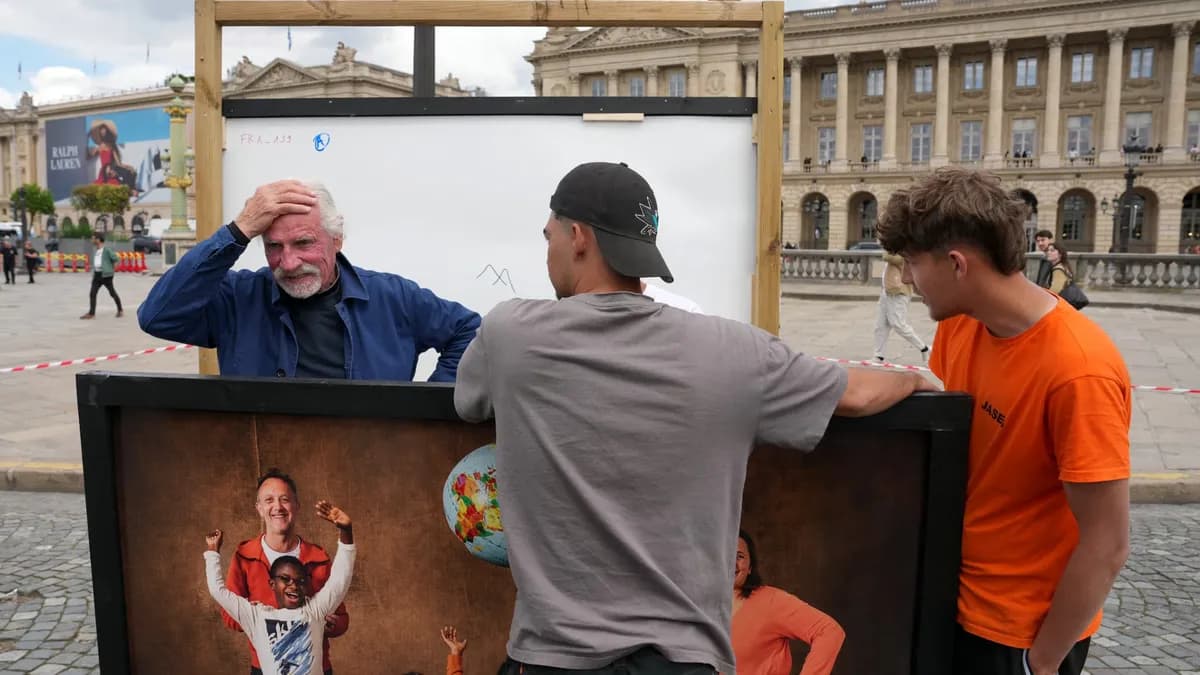
Yann Arthus-Bertrand's "Living Together" exhibition was damaged by PSG supporters after the club qualified for the Champions League final. An unprecedented wave of solidarity saw fans repair the damage, moving the photographer deeply.
An act of vandalism followed by an unexpected mobilization
On the night following Paris Saint-Germain's qualification for the Champions League final, Yann Arthus-Bertrand's photographic exhibition "Living Together," installed at Place de la Concorde, was the victim of an act of vandalism. PSG supporters, caught up in their celebrations, damaged several panels of this iconic exhibition, causing deep emotion for the renowned photographer.
Despite this initial devastation, a remarkable phenomenon quickly emerged. According to RMC Sport, dozens of people, including many PSG fans, spontaneously gathered to restore the exhibition. This collective gesture brought the damaged works back to life and demonstrates a profound respect for culture and art, even in the context of a sporting celebration.
"Living Together" is a photographic exhibition by Yann Arthus-Bertrand that highlights the values of unity and solidarity through powerful images. Installed in a strategic location in the capital, Place de la Concorde, it attracts a wide audience and engages with social and sporting current events. The attack on the panels by jubilant supporters shocked many, as it seemed to contradict the very spirit of the exhibition.
However, the quick intervention of supporters to repair the damage reversed this dynamic. More than a simple material restoration, this action embodied a form of adherence to the messages conveyed by Arthus-Bertrand, reminding us that the passion for football can also go hand in hand with responsibility and respect for cultural spaces.
The role of supporters in the post-vandalism phase
The support of PSG fans, often described with negative stereotypes in the media, took a positive turn here. Their commitment to restoring the exhibition was praised by Yann Arthus-Bertrand himself, who expressed his emotion at this unexpected wave of solidarity. This episode illustrates the complexity of the relationship between sport and society, where passions can sometimes overflow but also inspire constructive initiatives.
In context, PSG, one of the major clubs in Ligue 1 2024-25, is often at the center of intense media events. This particular situation, occurring the day after an important Champions League qualification, reflects the heightened tensions and joys of modern football in Paris.
A dynamic that questions the relationship between culture and sport
The responsiveness of supporters to repair the exhibition demonstrates that sport, and football in particular, can coexist with strong cultural values. This coexistence is crucial in a city like Paris, where sporting and artistic events regularly intersect. The incident also highlights the need for better public awareness about the importance of preserving spaces for artistic expression, even during moments of intense celebration.
Through this story, PSG finds itself once again at the crossroads of major issues: sporting performance, public image, and social responsibility. The fans' mobilization to restore the exhibition contributes to a positive image rebuilding, essential as the club aims for increased international recognition.
A message of hope for sport-culture relations
More than a simple news item, this episode reveals both tension and a capacity for regeneration between the worlds of sport and culture. Yann Arthus-Bertrand, highlighting the emotion caused by this gesture, invites us to rethink the interactions between supporters and public spaces. This approach can inspire other similar initiatives, where the passion for football becomes a vector of respect and cultural engagement.
Finally, as PSG continues its campaign in Ligue 1 and the Champions League, this story offers a different perspective on the role of supporters: beyond mere sporting support, they can embody positive change in Parisian and French society.
The historical context of PSG and its current challenges
Founded in 1970, Paris Saint-Germain has become over the decades one of the most emblematic clubs in French and European football. Thanks to major investments, notably since the arrival of the Qatari fund in 2011, the club has been able to attract international stars and establish itself as a regular contender for national and European titles. The recent qualification for the Champions League final illustrates the culmination of an ambitious project aimed at positioning PSG among the global elite.
This progression takes place in a context of strong competition in Ligue 1, where clubs like Olympique Lyonnais or Olympique de Marseille remain historic rivals. On the European level, the Champions League represents the pinnacle of competitions, and PSG, despite several attempts, is still seeking to win this prestigious trophy. Sporting success is thus a major challenge, both for the pride of supporters and the club's international visibility.
Tactical challenges and sporting impact of the qualification
On a tactical level, PSG has demonstrated remarkable flexibility and efficiency during this season. The balance between a formidable attack and a solid defense has allowed the club to navigate successfully through various competitions. The coach, often criticized for his choices, has been able to adjust his strategies against the toughest opponents, which was decisive in reaching the Champions League final.
This qualification also has an important impact on the locker room dynamic and players' morale, strengthening collective confidence as crucial matches approach. It also influences the Ligue 1 standings, where PSG aims to maintain or increase its lead to secure another national title, while preparing its squad for the dual intensity of national and European competitions.
Outlook for the rest of the season and beyond
As PSG approaches the final phase of the 2024-25 season, the stakes are multiple. The Champions League final represents a major objective, likely to mark the club's history and ensure enhanced global recognition. At the same time, managing media pressure and supporters' expectations remains crucial to maintaining balance within the team.
Beyond the current season, this qualification opens interesting prospects in terms of recruitment and sporting projects. The club will need to capitalize on this momentum to consolidate its position on the European stage while cultivating a strong bond with its supporters, as evidenced by the recent mobilization around the "Living Together" exhibition. This situation thus offers fertile ground for synergy between sporting performance and social responsibility.
In summary
The act of vandalism suffered by Yann Arthus-Bertrand's exhibition initially shocked, but the PSG supporters' solidarity reaction quickly restored hope. This story illustrates the complexity of the relationships between sport, culture, and society, where passions can sometimes overflow but also transform into positive actions. PSG, at the heart of this dynamic, demonstrates that beyond on-field performances, it also carries an important social and cultural responsibility. Qualification for the Champions League final strengthens the club's sporting ambitions, while the fans' commitment to restoring the exhibition reflects growing maturity and respect, heralding a promising future for the interaction between football and culture in Paris.