PSG: Lightened Schedule and Friendly Match Before the Champions League Final Against Arsenal
PSG enters a 12-day rest period after its latest defeat in Ligue 1. A friendly match is scheduled this weekend to prepare for the Champions League final against Arsenal, with a reduced football workload.
Extended Rest and Lightened Preparation for PSG Before the Final
After their 2-1 defeat against Paris FC in the last round of Ligue 1 on Sunday evening, Paris Saint-Germain enters a crucial phase of their season with a period without official matches lasting 12 days. This break, starting this Monday, is strategic to allow players to recover physically and mentally before the major event of the season: the Champions League final against Arsenal.
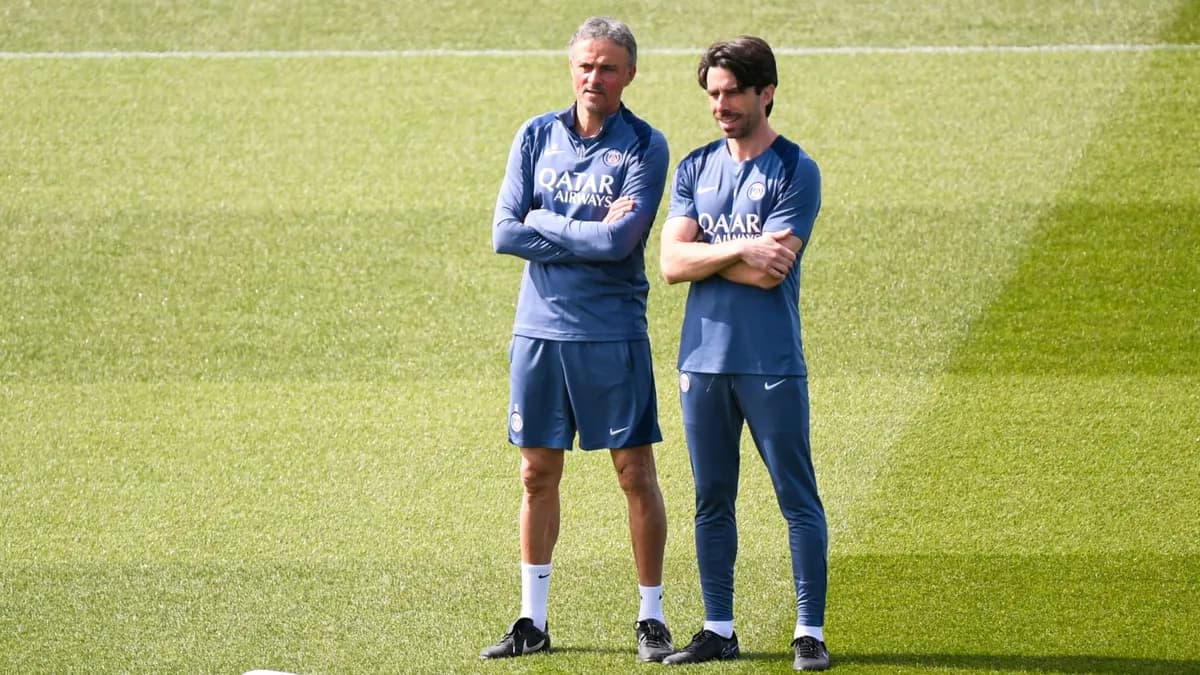
According to RMC Sport, this calm period is designed to limit the usual football workload. Indeed, coach Luis Enrique has decided to significantly reduce the frequency and intensity of training sessions to preserve the freshness of PSG’s key players ahead of the continental showdown.
Despite this break in the official calendar, a friendly match is already planned for this weekend. This game, with the opponent not yet confirmed, will serve as a full-scale test for the Parisian squad. The goal is twofold: to maintain a competitive rhythm and to assess the players’ physical condition after the rest period.
This strategy also allows Luis Enrique to fine-tune his tactical choices and manage playing time optimally, avoiding overexertion while maintaining collective cohesion. PSG’s medical and technical staff rely on these measures to optimize preparation ahead of the final, a crucial challenge for the club.
Tactical Context and Stakes of the Final Against Arsenal
The Champions League final against Arsenal represents the pinnacle of PSG’s season. After an intense European campaign, this match requires meticulous preparation, both physically and mentally. The decision to reduce the workload fits within a modern approach to squad management, where recovery is as important as training.
The Parisian club, which suffered a defeat in Ligue 1 in their last match, thus shows a clear desire to refocus on their European ambitions. This transition between the end of the national championship and the continental final is a key step to maximize the chances of success.
Analysis: A Thoughtful Choice in Managing the End of the Season
The program defined by Luis Enrique and his staff reflects a nuanced consideration of sporting and human factors. Opting for a friendly match rather than a series of official games demonstrates a desire to control variables related to players’ physical condition and freshness.
This approach could have a lasting influence on how clubs manage season endings, especially when competing on multiple fronts. PSG is thus betting on a balanced preparation, combining rest, match simulation, and performance optimization, to approach the final in the best possible conditions.
A Historical Context Weighing Heavily on PSG’s Shoulders
Since its creation in 1970, Paris Saint-Germain has continuously grown to become one of Europe’s most emblematic clubs. However, despite regular dominance in Ligue 1, the club has long struggled to conquer the continental grail. This season’s final therefore represents a historic opportunity for PSG to reach a major milestone and leave a lasting mark on the most prestigious competition in European football.
Over the years, the Parisians have often been eliminated in the final stages, sometimes cruelly, which has created additional pressure on the current squad. Managing this tension is a challenge that Luis Enrique and his staff must overcome to prevent old demons from resurfacing. The lightened preparation and the friendly match are thus tools to maintain the mental and physical balance necessary for this long-awaited achievement.
Major Tactical Stakes Before the Final
From a tactical standpoint, the final against Arsenal promises to be an intense battle. The Parisian coach will have to juggle the need to keep his players in optimal shape and the desire to refine his game plans. The scheduled friendly will notably serve to test different combinations and adjust each player’s roles in a flexible system capable of responding to the demands of a formidable opponent like the Gunners.
Managing playing time during this period is crucial, with particular focus on the recovery of key players. Luis Enrique will also need to work on offensive and defensive cohesion, improving transition fluidity and strengthening collective solidity, two key elements to counter Arsenal’s strengths. This preparatory stage is therefore essential to fine-tune the strategy without overloading the players’ bodies.
Impact on the Standings and Prospects for the Future
Although the defeat against Paris FC somewhat tarnished the end of the Ligue 1 season, PSG has already done what is necessary to secure its position in the standings. This final phase of the championship thus becomes secondary compared to the European challenge, fully justifying Luis Enrique’s desire to prioritize the Champions League final.
Beyond the current season, this pragmatic approach could have a lasting impact on the club’s management in the years to come. By placing priority on continental success, PSG asserts its ambition to establish itself sustainably at the highest level. If the final is won, it could open new prospects in terms of recruitment, reputation, and consolidation of its status on the global stage.
In Summary
Paris Saint-Germain is entering a decisive phase of its season with a carefully calibrated program balancing rest, a friendly match, and lightened preparation. This strategy aims to preserve the players’ physical and mental state before the Champions League final against Arsenal, a historic event for the club. Luis Enrique and his staff’s thoughtful approach reflects a modern and pragmatic squad management style, where recovery is valued as much as competition.
In a context where PSG seeks to surpass its European limits, this pause and specific preparation are essential to approach the final in the best possible conditions. The success or failure of this strategy could well influence the preparation methods of clubs engaged on multiple fronts in the future, while marking a potential turning point in the history of the Parisian club.