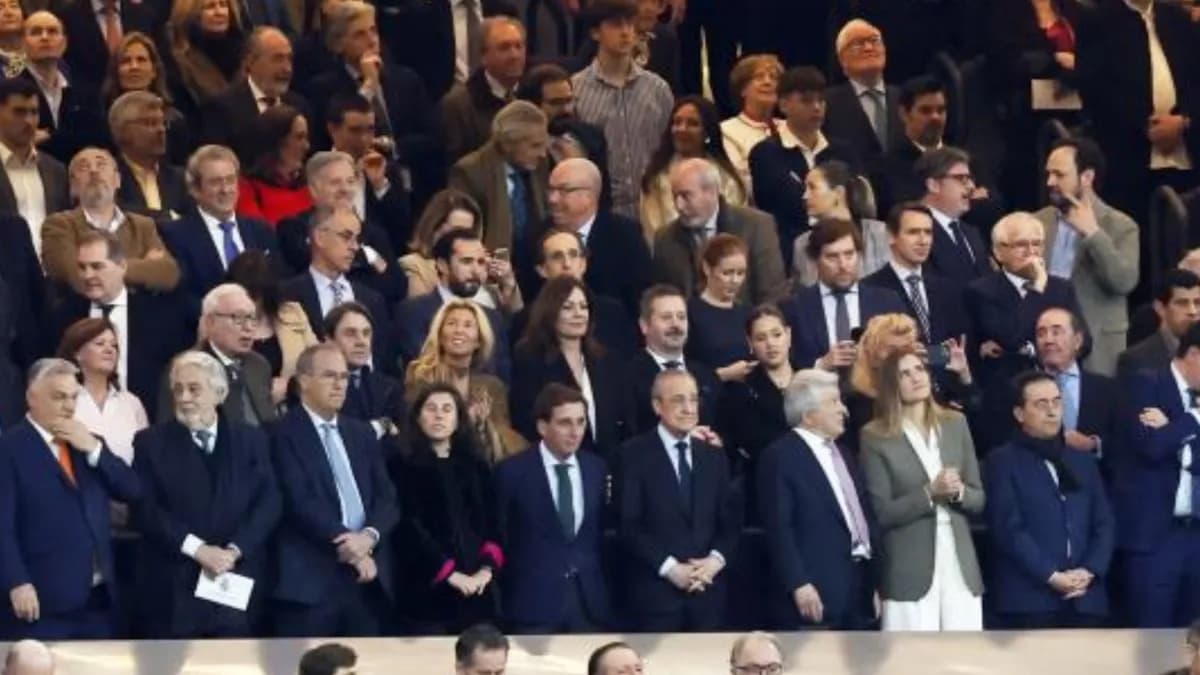
Real Madrid: Emerging Profiles for the Club's Presidency and Ownership
Real Madrid is seeing the emergence of credible first candidates for the presidency, signaling a possible evolution in the club's governance and ownership. A crucial step for the institutional future of the Spanish giant.
Serious candidates are emerging for the presidency of Real Madrid
While the question of Real Madrid's ownership remains at the heart of debates, several personalities are beginning to emerge as potential candidates for the club's presidency. This development marks an important step in the club's internal dynamics, traditionally managed under a unique associative model in European football. According to Marca, these profiles now meet the criteria required to lead the institution, opening the way for a possible transition in the governance model.
This evolution comes in a context where institutional stability is paramount to maintaining the club's sporting and economic competitiveness. The identification of strong candidates demonstrates a desire to prepare for the future by ensuring leadership capable of managing the financial, sporting, and strategic challenges facing Real Madrid.
A major issue: club ownership at the center of the discourse
The question of ownership is subtly present in the discussions around the candidates for the presidency. Historically, Real Madrid is a club owned by its socios, a model that distinguishes it from clubs owned by private investors. The evolution of this model could have major repercussions on the governance and management of the club. This point is central to the reflections, even though no official decision has yet been communicated.
This context raises questions about the sustainability of the associative model in the face of increasing economic pressures in modern football. The possible involvement of actors with a different vision on ownership could transform the club's structure. Attention is therefore focused on the real intentions of the candidates and their project for Real Madrid.
The fact that candidates meeting the required conditions for the presidency have begun to appear suggests that the club is preparing for a governance change. This process could involve a debate on the ownership structure and potentially an evolution towards a hybrid or private model.
This turning point would be significant, given Real Madrid's historical and symbolic weight in world football. Future management will have to reconcile tradition, sporting ambitions, and economic requirements in an ultra-competitive environment.
A change in Real Madrid's ownership or presidency would have repercussions beyond the club itself. As a leader in European football, decisions made in Madrid can influence governance practices in other major clubs. The balance between associative tradition and capitalist model is at the heart of debates in modern football.
In this context, Real Madrid's management is a case study to examine how a historic club can adapt without losing its identity. The observed institutional evolution could serve as an example—or a warning—for other clubs facing similar challenges.
Historical and institutional context of Real Madrid
Founded in 1902, Real Madrid has built a worldwide reputation thanks to a history rich in sporting successes and management based on the associative model, unique among the giants of European football. This model, which relies on the direct participation of socios, has long allowed the club to preserve its identity and independence in the face of economic pressures. However, the evolution of modern football, with its colossal financial stakes and the rise of private investors, puts this model under severe strain.
Until now, Real Madrid has managed to combine tradition and innovation by developing robust economic strategies while maintaining a strong connection with its supporters. This duality is at the heart of current reflections, notably on the question of ownership, which could mark a major institutional turning point. The challenge now is to find a viable balance between respecting the past and adapting to the demands of contemporary football.
Tactical and sporting issues related to governance
Beyond institutional aspects, Real Madrid's presidency directly influences the club's sporting and tactical strategy. Stable and visionary leadership allows for clear orientations in recruitment, training, and talent management. This also impacts the continuity of the sporting project, the playing philosophy, and the club's ability to remain competitive on the international stage.
Governance plays a key role in supporting technical teams and in decisions related to investments in the transfer market. A president aware of sporting realities will better respond to the needs of staff and players while ensuring coherence between sporting ambitions and financial constraints. This synergy is essential to maintain excellence on the pitch and continue competing with Europe's greatest clubs.
Perspectives and impact on ranking and competitiveness
The future presidency will have to manage not only internal organization but also the impact of these choices on Real Madrid's sporting ranking and competitiveness. A club of this caliber must constantly position itself among the best, both in La Liga and European competitions. Institutional stability is a determining factor in attracting the best players and top-level coaches, essential elements to maintain a high level of performance.
Moreover, how the ownership question is managed could influence the club's ability to mobilize sufficient financial resources to strengthen its squad. The challenge will therefore be to combine associative tradition and economic requirements to preserve Real Madrid's place among football's elite. Any evolution must be designed to guarantee sporting sustainability without compromising the club's historical identity.
Our analysis: a delicate balance to preserve
The rise of qualified candidates for Real Madrid's presidency is a new step in the club's governance. However, the question of ownership remains a major challenge. Maintaining the balance between the club's historical identity and the economic demands of elite football is a complex task.
According to Marca, this dynamic is still in its early stages but deserves close attention as it could redefine Real Madrid's institutional trajectory, with direct consequences on its sporting competitiveness and position in world football.
In summary
Real Madrid finds itself at an important crossroads in its institutional history. The emergence of candidates meeting the criteria for the presidency illustrates a desire to prepare the club for a potentially major change in its governance. The question of ownership, long stable in its associative model, is now at the center of debates and could evolve under the effect of economic pressures and the demands of modern football. This evolution, if realized, will have not only an internal impact but also a notable influence on European football as a whole.
Faced with these challenges, future leadership will have to successfully reconcile tradition and modernity to ensure the club's sustainability and competitiveness in the long term. Real Madrid remains a strong symbol in world sport, and any transformation must respect this identity while responding to current challenges. The football world will closely follow this transition, which could mark a milestone in the club's history.