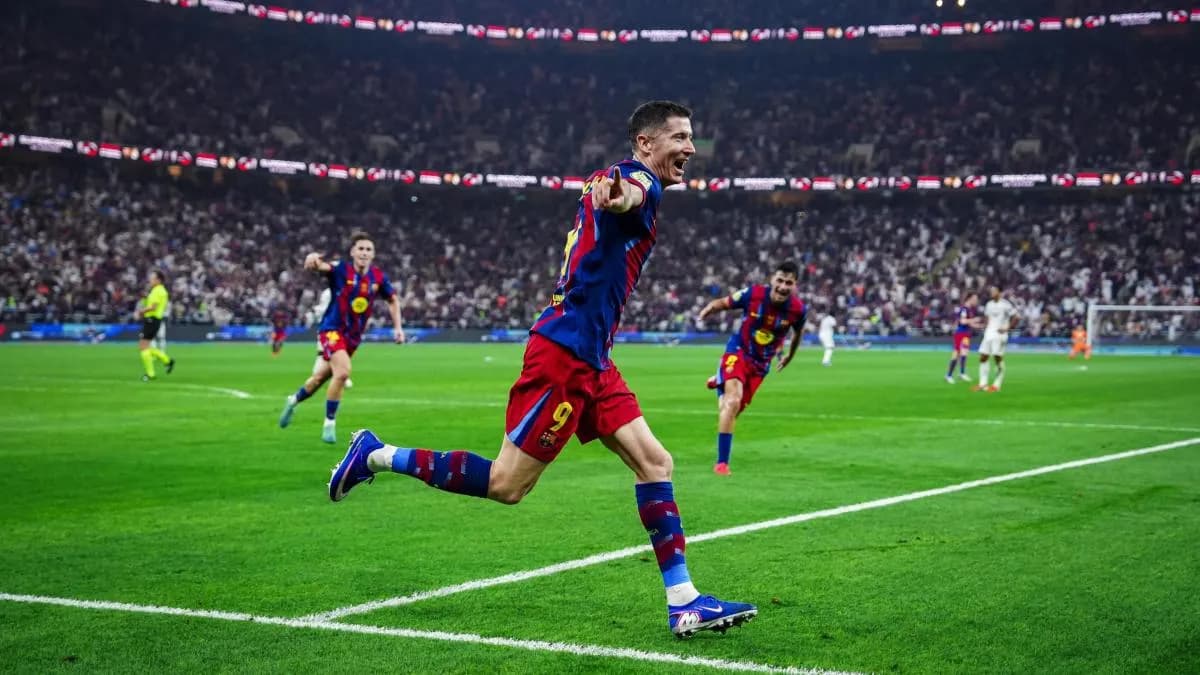
Robert Lewandowski: Towards a Last Clásico with FC Barcelona in 2026
At 37, Robert Lewandowski could play his final Clásico against Real Madrid wearing FC Barcelona colors. Under contract until June 30, 2026, the Pole must choose between extending at Barça or seizing other offers, including Juventus and the MLS.
On May 10, 2026, FC Barcelona hosts Real Madrid in a Clásico loaded with sporting stakes, but also personal ones for Robert Lewandowski. At 37 years old, the Polish striker seems to be starting according to Xavi Hernandez, which could mark his last appearance in this legendary duel wearing the blaugrana jersey. His current contract expires on June 30, 2026, and despite a Barcelona proposal for an additional season, Lewandowski's future remains uncertain. According to Mundo Deportivo, several tempting offers are on the table, notably from Juventus, AC Milan, as well as clubs outside Europe such as in Saudi Arabia and Chicago Fire, a major franchise in Major League Soccer.
This Clásico could therefore symbolize a decisive stage in the career of Barça's top scorer in recent seasons. After a thunderous arrival at Camp Nou, Lewandowski confirmed his status as a key player, but his advanced age and varied proposals force strategic reflection on the continuation of his trajectory.
A decision at the crossroads of sporting and financial ambitions
As the end of his contract approaches, Lewandowski must weigh several factors. FC Barcelona offers him the possibility to extend for one more season, which would allow him to remain at a prestigious club competing in La Liga and European competitions. Sporting stability and his leadership role in the squad could favor this option.
However, Juventus and AC Milan, two historic Italian clubs, represent attractive European destinations, likely to offer him a new challenge in a league renowned for its tactical rigor. Moreover, interest from Saudi Arabia and notably from Chicago Fire in MLS reflects a growing trend of experienced players joining emerging markets offering advantageous financial conditions and a franchise player role, especially in the United States.
This diversity of offers highlights the complexity of the decision for Lewandowski, who must reconcile personal goals, sporting ambitions, and economic considerations as his career approaches its conclusion.
The sporting context of FC Barcelona in 2026
FC Barcelona, still seeking to regain its former glory, relies heavily on its leaders to maintain competitiveness in La Liga and European competitions. Lewandowski, through his consistency in front of goal and experience, remains a central element in this strategy. His presence on the pitch against Real Madrid demonstrates the trust placed in him by coach Xavi, who prioritizes experience in this crucial clash.
The 2025-2026 season is marked by a tight championship, where the dynamics of the Clásicos can influence the final standings. In this context, the role of a world-class striker like Lewandowski is decisive for Barça. His possible extension could therefore have a direct impact on the Catalan club's ambitions in the coming months.
The tactical stakes of the last Clásico for Lewandowski
From a tactical standpoint, Lewandowski remains a reference in attack, capable of combining clinical finishing with link-up play and build-up. Facing a Madrid defense often organized and physical, his experience and positioning will be crucial. His role in the starting eleven shows that the Barcelona staff counts on him to influence the score and create spaces for his teammates.
The match on May 10 could also be a last opportunity for Lewandowski to demonstrate his influence in a high-intensity context and historic rivalry, which could weigh on his final decision regarding his future.
An end of career under several scenarios
According to Mundo Deportivo, Lewandowski is at a turning point where each option presents advantages and disadvantages. Staying at Barça would allow a last cycle at a European reference club, with a strong sporting and symbolic role. Joining Juventus or AC Milan would represent a new challenge in another major league, while offers from Saudi Arabia or MLS would offer a different environment, more oriented towards economic aspects and the promotion of football in growing markets.
This situation perfectly illustrates the complexity of experienced players' trajectories in modern football, where managing career ends must integrate both sporting dimension and international economic opportunities.
Our analysis
The Lewandowski case in 2026 illustrates a recurring phenomenon in professional football: the delicate management of veteran players with strong impact. The Pole remains a performing striker, but his age requires strategic reflection both for him and interested clubs. His last Clásico with Barça could be a symbolic moment, but the final decision on his extension or departure will have to consider multiple factors, including the sporting project, living environment, and financial conditions.
This profile of an experienced player with strong market and media value is now a key piece in recruitment strategies of European clubs as well as emerging franchises, notably in MLS. This dynamic contributes to redefining classic trajectories of players at the end of their careers and enriches debates on the balance between performance and economic management in contemporary football.