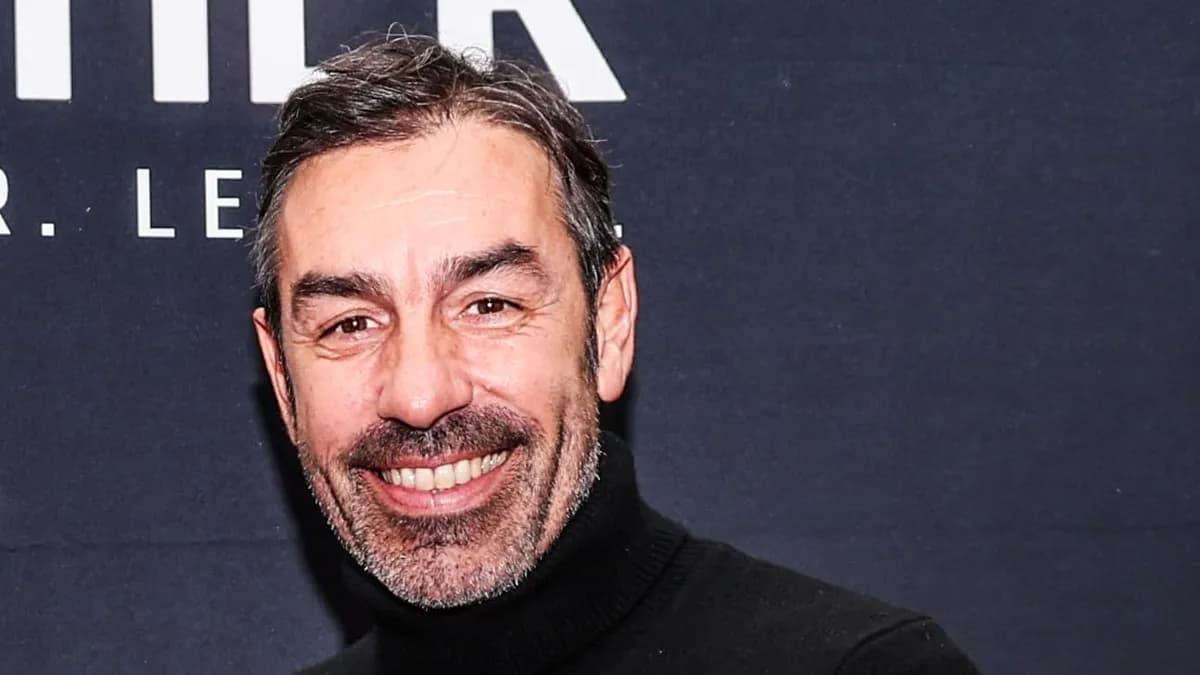
Robert Pirès vs a managerial return to Metz: what opportunity for the club?
Robert Pirès, 1998 World Champion and former iconic player, is considering a return to Metz as a manager. This comparison analyzes his profile and the potential impact of his return to a club seeking renewal.
This comparison highlights Robert Pirès, former French international and 1998 World Champion, and the possibility of his return to the club where he made his name, Metz, this time as a manager. This face-to-face focuses on the added value that such an association could represent for the grenat club.
As Metz seeks to strengthen its sporting and administrative project, the question of a return of its legends naturally arises. Pirès, a prominent figure in French football, opens the door to this option, which gives reason to examine his strengths and the stakes related to this prospect.
Robert Pirès distinguished himself as one of the most talented attacking midfielders of his generation. World Champion in 1998 with the French team, he notably made his breakthrough at Metz, where he laid the foundations of his exceptional career. His intimate knowledge of the club and its values is a major asset for a possible managerial involvement.
After a rich career, notably at Arsenal in the Premier League, Pirès has cultivated the image of a respected and experienced football man. His return would not only be symbolic but could also bring a fresh perspective on the management of the grenat club.
According to RMC Sport, Pirès indicated that a return to Metz in a managerial role is "a conceivable option," emphasizing his attachment to the club and his interest in a new mission.
The club of Metz: the portrait
Metz is a club with a strong identity, known for its training center and its ability to reveal talents, as evidenced by the emergence of Pirès in the 1990s. However, the club often struggles to establish lasting stability in Ligue 1, seeking to combine sporting ambitions and economic constraints.
The grenat club needs a solid project to maintain itself sustainably in the elite and progress. The arrival of a personality like Pirès could strengthen the credibility of the project and attract talents, while injecting new momentum within the sporting and administrative management.
Information not confirmed at this stage regarding the concrete details of the project nor on the precise form that this possible return could take.
The comparison point by point
Attachment to the club: Pirès, trained at Metz, deeply knows the culture and history of the club, an advantage over an external manager.
Football experience: As a former top-level player and world champion, he has a valuable capital of experience for sporting management.
Managerial skills: Information not confirmed at this stage, absence of precise data on his experience in management or administration.
Symbolic impact: His return would be a strong signal for supporters and players, reinforcing the club's image.
Sporting project: The club needs a clear project, and the presence of a local legend could facilitate the development of a coherent strategy.
Economic constraints: The club's ability to finance such a project and benefit from this association remains to be evaluated.
Context and nuances
It is important to note that Robert Pirès's return to Metz as a manager remains for now a possibility mentioned, without official confirmation or details on the modalities. The club's economic and sporting context could influence the realization of this option.
Moreover, Pirès, although rich in remarkable football experience, does not have a public history in club management, which could constitute a challenge. The club will therefore have to carefully evaluate the contributions and limits of this potential candidacy in a demanding competitive environment.
Tactical and sporting stakes for Metz
On the sporting level, Metz often navigates between Ligue 1 and Ligue 2, seeking to stabilize its level in the elite of French football. The club faces significant tactical challenges, notably in terms of recruitment and development of young players from its training center. A figure like Robert Pirès, with his international experience and knowledge of modern football, could bring an innovative vision on the club's sporting and tactical policy.
His potential role could include supporting the coach in defining a coherent playing style adapted to the club's resources, as well as structuring a training system capable of producing talents able to perform sustainably in Ligue 1. These tactical stakes are crucial to ensure increased competitiveness and avoid recurrent relegations.
Potential impact on ranking and medium-term prospects
Robert Pirès's return could also have an indirect impact on Metz's ranking in Ligue 1. By injecting new momentum both in sporting management and player motivation, he could help create an environment more conducive to performance. The club could thus hope to maintain itself more serenely in the elite and aim for more comfortable positions in the ranking.
In the medium term, the presence of an icon like Pirès in the organizational chart could also strengthen the club's attractiveness to young talents and sponsors, essential elements for Metz's sustainable development. This perspective fits into a context where every Ligue 1 club seeks to optimize its resources to compete with the championship's heavyweights.
Our verdict
The return of Robert Pirès to Metz as a manager represents an interesting opportunity, both symbolically and strategically. His strong link with the club and his international experience could energize an ambitious project for the grenat club.
However, the lack of confirmed information on his managerial skills and the club's economic context temper this enthusiasm. Metz will need to develop a clear and structured project to maximize the impact of such a coming, otherwise it risks remaining a mere flash in the pan. In short, Pirès could embody a valuable lever for Metz, provided that this collaboration fits into a well-defined global vision.
In summary
The hypothesis of a return of Robert Pirès to Metz, his training club, as a manager raises many questions but also great opportunities. His stature as a world champion and his intimate knowledge of the club are undeniable assets to strengthen Metz's identity and sporting project. Yet, uncertainties related to his management skills and the club's economic context impose some caution. This return, if confirmed, will have to be part of a clear and ambitious strategy so that Metz can fully benefit from this legend of French football.