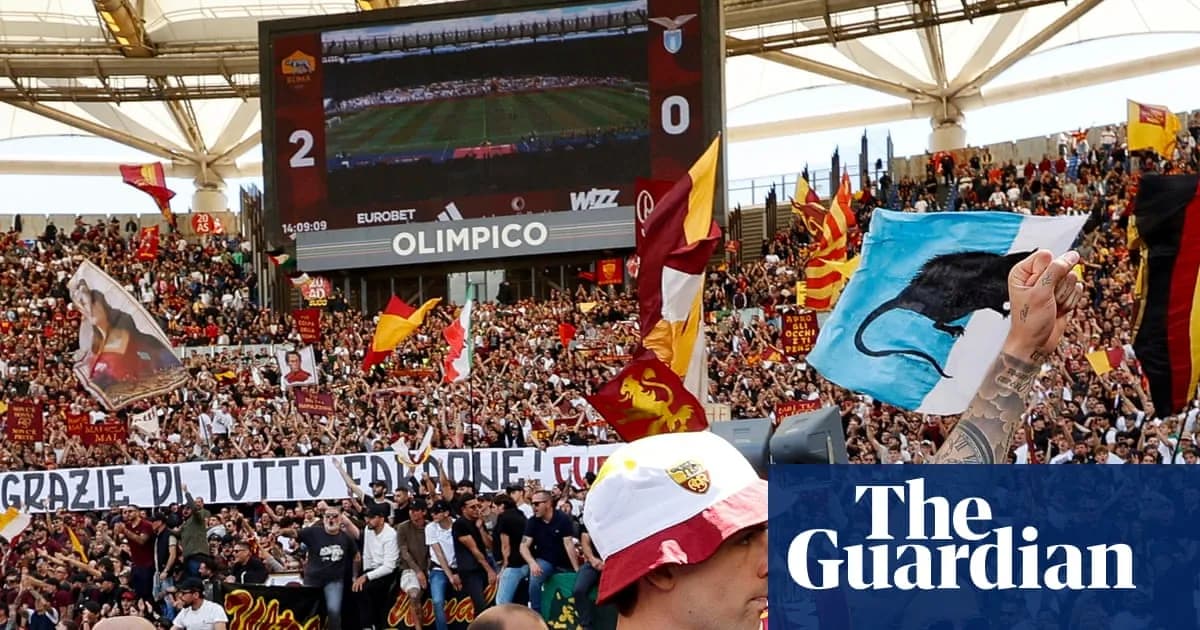
Roma-Lazio: Mancini Heroic in a Decisive Derby for the Champions League Race
In a crucial Rome derby in Serie A, Mancini enabled AS Roma to get closer to a historic return to the Champions League, amid intense rivalry and internal club tensions.
A Rome Derby Under High Sporting and Institutional Tension
The Rome derby, opposing AS Roma to Lazio, retains a rare intensity in Italian football, notably because the Scudetto is a rare trophy here. The two clubs have only five national titles combined, making local pride equally precious. Even more, this confrontation carries a major sporting stake this season, with AS Roma in the midst of the race for qualification to the Champions League.
According to The Guardian, this derby took place in a complicated context marked by internal tensions within the Roman club, notably a war within the board of directors. Yet, on the pitch, Mancini's performance galvanized the Giallorossi, who were still in sixth place at the end of April, five points from the qualifying spots for the Champions League.
While Lazio, ninth in the standings, seemed out of European objectives, AS Roma took advantage of the underperformance of Milan and Juventus to get back in the race. Mancini, a true local hero, scored the two decisive goals allowing his team to win this crucial derby. This success places the Giallorossi on the brink of a historic return to the Champions League, a competition they have not played in for several seasons according to available data.
Mancini's performance is all the more remarkable as it takes place in a context of passionate rivalry between neighbors, with a rich history of significant events, such as the famous photos of Francesco Totti under the Curva or Senad Lulic's winning goal in the cup. These exploits are often accompanied by strong tensions between supporters, underlining the symbolic and emotional importance of the derby.
Scheduling the Rome derby on the eve of the last day of Serie A creates additional pressure on both teams. The tight calendar and high sporting stakes amplify the importance of every point. This timing accentuates the rivalry and tension around this match, which far exceeds the scope of a simple local derby.
For AS Roma, this victory not only brings the club closer to a major European qualification but also somewhat calms internal conflicts by offering a reason for celebration and unity around the team. The context of institutional troubles contrasts with the cohesion displayed on the pitch, embodied by Mancini's inspired performance.
AS Roma's success in this derby has a direct impact on the fight for European places in Serie A. With Milan and Juventus losing momentum at the same time, the situation has changed in the race for the Champions League, offering the Giallorossi a concrete opportunity for qualification. According to available data, this sequence of results significantly alters the traditional hierarchy of the Italian championship.
Moreover, this dynamic could influence the recruitment strategy and financial stability of the Roman club, which could benefit from a return to the Champions League to strengthen its attractiveness and resources. Conversely, Lazio will have to rethink its sporting project to get back into the race for European places, currently out of reach.
Final Analysis: A Derby That Transcends the Simple Result
This Rome derby perfectly illustrates the dual sporting and social dimension of Serie A. Beyond the score, it reveals how a player like Mancini can become a symbol of resilience and hope in a club going through internal difficulties. The late scheduling of the match increased the pressure but also the significance of this victory.
AS Roma, now close to a return to the Champions League, must capitalize on this momentum to stabilize its project and continue its progress. Conversely, Lazio will have to reinvent itself to rejoin the top of the standings. This derby reminds us that Italian football, with its intense local rivalries, remains an exciting theater where every match can upset the season.
A Rich Historical Context That Fuels the Rivalry
The Rome derby is part of a tradition deeply rooted in the history of Italian football. Founded respectively in 1900 for Lazio and 1927 for AS Roma, these two clubs represent not only different neighborhoods of the capital but also distinct social and cultural identities. Lazio, historically associated with a more conservative supporter base, and Roma, often seen as the club of the people and the working classes, embody an opposition that goes beyond the simple sporting framework.
Over the decades, this rivalry has given rise to memorable confrontations, both on the pitch and in the stands, sometimes with episodes of violence that have left a mark. Each derby is thus charged with a strong symbolic dimension, where victory is combined with local supremacy and identity pride. This historical heritage partly explains the crucial importance given to this match, even when no major title is at stake.
Tactical Stakes and Match Management
On the tactical level, this derby was a true laboratory for AS Roma's coach, who managed to adapt his team to the demands of a high-tension match. Facing a Lazio less ambitious in the championship this season, Roma adopted a controlled offensive strategy, seeking to exploit the speed and creativity of key players like Mancini. Defensive discipline was also crucial, allowing containment of the opponent's attacks and securing the result.
The management of tempo and transitions demonstrated important tactical maturity, notably in key moments of the match when pressure was rising. This thoughtful approach allowed Roma to impose themselves while limiting risks, a delicate balance in this type of confrontation where the slightest mistake can be costly. The ability to manage tension and convert chances was decisive in the final success.
Perspectives for the End of the Season and Beyond
This victory in the derby offers AS Roma valuable momentum for the last days of Serie A. With a Champions League qualification in sight, the club can consider a more serene end of the season, which could also ease the internal tensions that have marked recent months. The positive dynamic generated by this success could also strengthen the group's confidence and the cohesion necessary to achieve the set objectives.
Looking ahead, a return to the Champions League would represent a major turning point for Roma, both sporting and financial. It would open the door to more ambitious recruitment and better attractiveness in the transfer market. For Lazio, this defeat is a wake-up call: they will need to rethink their sporting strategy and find solutions to become competitive again in the fight for European places, so as not to drift away from the top of the table for a long time.
In Summary
This Rome derby was much more than a simple sporting encounter: it crystallized AS Roma's internal tensions while offering a historic opportunity to reconnect with the Champions League. Mancini's performance, a local hero, transcended institutional difficulties and rekindled hope among Giallorossi supporters. In a context where Serie A sees its traditional hierarchies shaken, this victory could well mark a decisive turning point for the Roman club and its rivalry with Lazio.