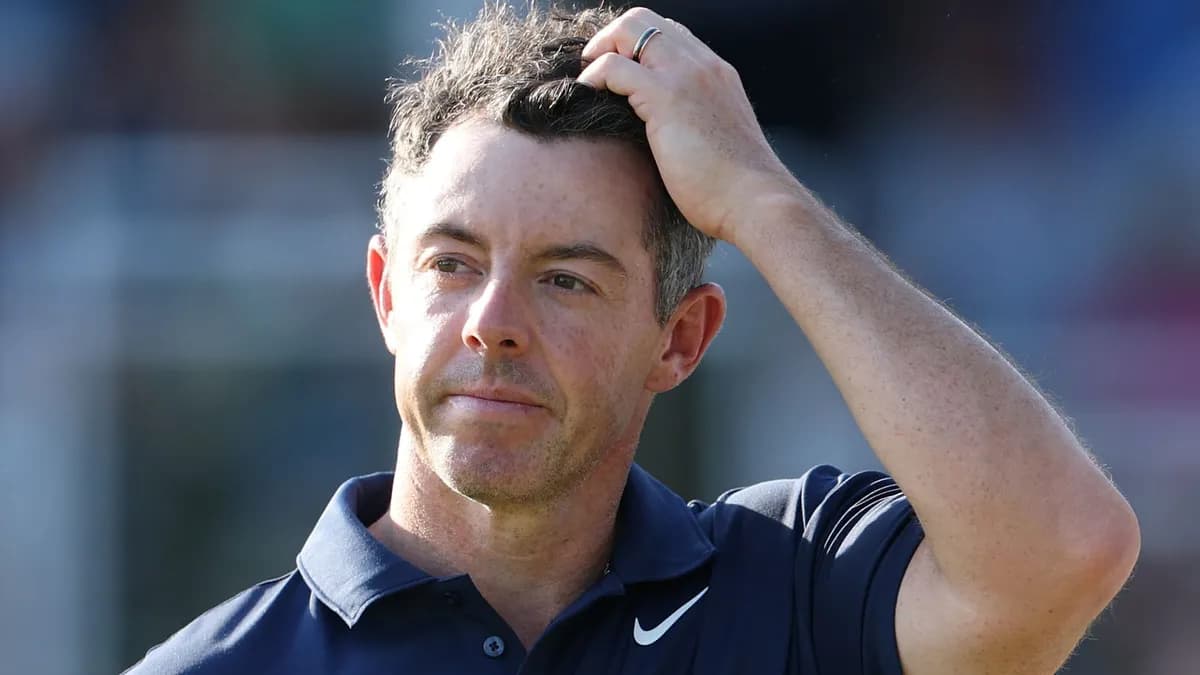
Rory McIlroy and Scottie Scheffler Miss Opportunity to Challenge Aaron Rai at the PGA Championship
At the PGA Championship, Rory McIlroy and Scottie Scheffler missed crucial chances in the final holes, allowing Aaron Rai to prevail. Scheffler called his putting performance a "bitter pill to swallow," hindering their major ambitions.
Decisive missed opportunities for McIlroy and Scheffler
During the recent PGA Championship, Rory McIlroy and Scottie Scheffler experienced a frustrating tournament finish, failing to exert enough pressure on Aaron Rai, who ultimately won the major title. According to Sky Sports Transfers, the last three holes were particularly critical, with several missed opportunities that compromised their chances of turning the tide.
Scottie Scheffler described his putting performance as a "bitter pill to swallow," highlighting the difficulty encountered during this decisive phase of the tournament. This weakness in putting hindered both his ambitions and those of McIlroy, who hoped for a realistic comeback in the race for the major title.
The PGA Championship is one of the most demanding competitions in professional golf, where the slightest mistake can be costly. Rory McIlroy, accustomed to major battles, had the opportunity to get closer to a major victory, but the inability to capitalize on the greens during the final holes was decisive.
Scottie Scheffler, for his part, openly acknowledged that mastering putting during crucial moments could have changed the course of the tournament. This admission highlights the importance of consistency and stress management in key moments against an opponent like Aaron Rai.
The technical impact of putting under final pressure
Putting is often the differentiating factor in major tournaments, where precision and confidence on the last holes take on vital importance. Scheffler’s performance, in particular, illustrates how a drop in efficiency on these shots can ruin an otherwise solid overall strategy.
This situation shows that even top-level players must constantly work on their mental game and specific techniques to maintain constant pressure on their opponents until the very last moment.
Despite this disappointment, the two golfers remain among the world’s best, and their overall performances at the PGA Championship demonstrate that they are still formidable competitors. According to available data, this experience will serve as a lesson to optimize their stress management and putting skills for upcoming events.
Their technical teams should now focus on improving mental and technical stability in decisive moments, a crucial aspect to hope to challenge major titles again against challengers like Aaron Rai.
A turning point in the dynamics of major tournaments
Aaron Rai’s victory over prestigious rivals like McIlroy and Scheffler highlights the rise of competitors capable of seizing opportunities at the end of tournaments. This new dynamic promises tighter and more unpredictable competition in future major championships.
For McIlroy and Scheffler, it is a harsh reminder that the margin for error is minimal and every shot counts, especially in the final phases. Improving consistency on putting and managing high-pressure moments will be essential for their quest for major titles.
The historical context of the PGA Championship and its prestige
The PGA Championship is one of the four major tournaments in professional golf, enjoying immense prestige and a rich history dating back to 1916. Organized by the Professional Golfers' Association of America, this championship has always been an unmissable event where the best golfers in the world compete under often very demanding conditions. The course, carefully selected each year, tests all facets of the game, from driving to putting, and requires great tactical mastery. In this context, Aaron Rai’s victory marks a significant moment, as it fits into the tradition of feats achieved by players capable of managing the extreme pressure of the final round.
For McIlroy and Scheffler, who have already tasted major successes, participating in this championship represents double pressure: defending their rank among the elite while seeking to add another major title to their record. Their confrontation with a new opponent like Rai also symbolizes the rise of a new generation of competitors, making the tournament even more unpredictable and fiercely contested.
Tactical stakes and managing the final round
The last holes of a major tournament are often the scene of crucial tactical choices. Risk management, reading the wind, and adapting to the green’s relief are all elements that can tip the final result. For McIlroy and Scheffler, the inability to convert their putting chances can also be explained by increased stress and decisions made under pressure, which affect the quality of their shots.
The tactic adopted in these delicate moments must balance boldness and caution, especially depending on opponents’ positioning. Aaron Rai capitalized on every opportunity, demonstrating great clarity in his choices, which made the difference. This tournament thus reminds us that success in majors depends not only on raw talent but also on fine management of strategic and psychological aspects, especially in decisive phases.
Impact on the world ranking and future prospects
While the PGA Championship is a key moment in the golfing calendar, its results also significantly affect the world rankings of players. Aaron Rai’s victory could strengthen his position and offer him new momentum for the rest of the season, while McIlroy and Scheffler will need to capitalize on this experience to avoid losing ground to their competitors.
In the medium term, these events can impact players’ confidence and their approach to upcoming major tournaments. For McIlroy and Scheffler, it is a strong signal indicating priority areas for improvement, notably consistency in putting under high pressure. Their ability to integrate these lessons will be decisive for their return to the top and their ambition to win new major titles in an increasingly competitive golfing landscape.
In summary
This misadventure at the PGA Championship reveals the subtleties of very high-level golf, where technique alone is not always enough without perfect mental control. Scheffler’s assessment of his putting performance is an example of the importance of balancing physical and psychological skills.
In the future, these elements could make the difference in the race for majors, especially against opponents capable of capitalizing on the slightest weaknesses. McIlroy and Scheffler have the necessary talent to bounce back, but their progress will depend on their ability to turn these lessons into concrete results.