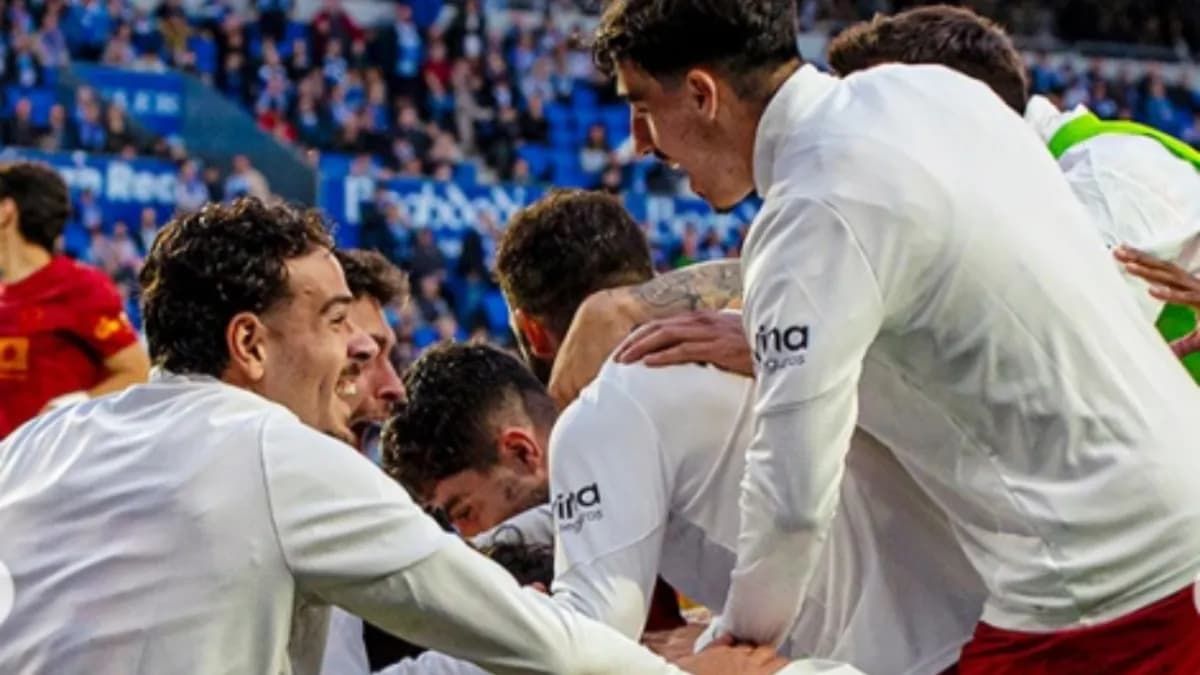
Valencia: Analysis of the Impressive Progression in the Second Half of the Liga Season
Valencia accumulated 29 points during the second half of their Liga season, a sign of a revival under José Ángel Corberán. This performance, although remarkable, remains below the exceptional momentum of the same period the previous year.
A tangible but improvable revival for Valencia in Liga
Valencia shows notable progress during the second half of the season, with a total of 29 points earned by the end of this phase, with one last match still to be played. This result, highlighted by Marca, confirms the turnaround achieved under the leadership of José Ángel Corberán, the club's new coach. This momentum notably allows the players to dream of European qualification, an ambitious goal given their initial position in the league.
However, this revival remains below the performance achieved during the same period last season, when Valencia managed to gather 33 points. This figure indicates that there is still room for improvement for the team, which must further refine its collective mechanisms and consistency to compete with the best clubs in the Liga.
Since Corberán took office, Valencia has managed to reverse a negative trend that heavily weighed on its sporting ambition. The coach instilled a new mindset and a more solid tactical organization, favoring increased performance in results. This transformation takes place in a demanding competitive context where every point counts to secure qualification for European competitions.
The club has shown consistency in its performances, reflected by a fourth place in the partial ranking of the second half of the season. This progression highlights better collective and individual mastery, as well as an adaptation to the high demands of the Liga.
Comparison with the previous season: a demanding benchmark
The reference from last season, with 33 points scored during the second half of the championship, remains a high standard for Valencia. This historic performance shows that the team is capable of intense and effective phases of play over time, able to compete on multiple fronts.
However, the comparison highlights that the current group still needs to optimize certain aspects of the game to regain this level. The figures indicate a slight drop in performance, but the trajectory remains positive and promising.
Implications for the race to Europe and the club's strategy
With 29 points already accumulated, Valencia positions itself as a credible contender for European qualification. This situation highlights the work of the technical staff and the cohesion of the group, while also emphasizing the necessary areas for improvement, particularly in terms of consistency and management of key matches.
This momentum is also a lever for the club in its recruitment and development strategy, as it strengthens the attractiveness of the sporting project to players and partners.
Tactical issues and adjustments under Corberán
José Ángel Corberán's tactical approach played a decisive role in Valencia's revival in Liga. By favoring a more rigorous structure and a reinforced defensive organization, the coach managed to stabilize a team that previously struggled to find its balance. This change helped reduce individual errors and improve the transition between lines, while promoting better exploitation of counterattacks.
Moreover, Corberán has been able to highlight the versatility of certain key players, adapting his schemes according to opponents and game situations. This tactical flexibility translated into better match management, especially in crucial phases where concentration and discipline are essential. However, there are still areas for improvement, notably in offensive finishing and the ability to maintain pressure over time.
The club's historical context and its regained ambitions
Valencia, a historic club in Spanish football, has gone through a period of uncertainty in recent years marked by inconsistent results and structural difficulties. Known for its past exploits in Liga and European competitions, the club had to rethink its strategy to regain its former glory. The second half of the season under Corberán fits into this desire for rebirth, combining youth and experience to build a competitive team.
Valencia's gradual return to the race for European places reflects a regained ambition, a reflection of a more coherent sporting policy and better resource management. This historical context strengthens the motivation of the club and its supporters, who see in this momentum an opportunity to redefine their football identity on the national and continental stage.
Perspectives and impact on the final standings
With 29 points already earned in this second half of the season and one last match to play, Valencia is in an enviable position that could allow them to reach or even exceed their initial objectives. This progression positively impacts the overall standings, bringing the team closer to qualifying spots for the Europa League or the Conference League, major competitions for the club in terms of exposure and revenue.
The upcoming fixtures will be decisive to confirm this trend and validate the strategy implemented. Valencia's ability to manage pressure, maintain consistency, and capitalize on its gains will determine its immediate future. In a highly competitive league like the Liga, every point gained is crucial, and the battle for Europe remains open until the final days.
Our analysis: encouraging progress but challenges remain
Valencia's second half of the season under Corberán illustrates a tangible revival that makes sense in the competitive landscape of the Liga. The team has been able to capitalize on a change in technical direction to improve its results and get closer to European places.
That said, the comparison with the previous season reminds us that excellence is within reach but still requires greater consistency and optimal use of available resources. The club's ability to maintain this trajectory will determine its future positioning in the Spanish championship.