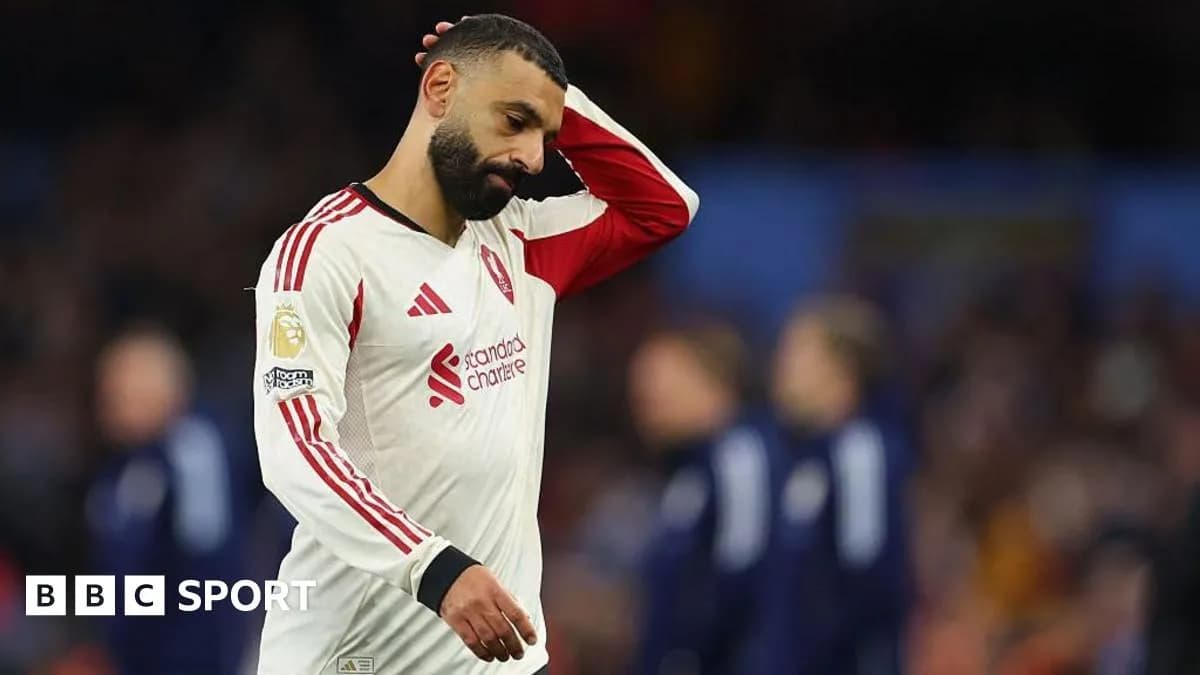
Wayne Rooney criticizes Mohamed Salah and recommends his exclusion for the final at Anfield
Wayne Rooney believes Mohamed Salah should be excluded from Liverpool's last match due to his criticisms deemed "selfish" towards the club. This stance raises a debate about the Egyptian player's future in the Reds squad.
Rooney calls to exclude Salah from the final at Anfield
Wayne Rooney, former star of Manchester United and the England team, recently expressed his view regarding Mohamed Salah and his place in Liverpool's squad for the last match of the season. According to Rooney, the Egyptian player's public criticisms of the club are "selfish" and would justify his exclusion for this crucial match at Anfield.
This statement comes in a context where Salah, an emblematic figure of the Reds, has made critical remarks about the management or atmosphere within the club, which has sparked diverse reactions in the media and among supporters. Rooney believes that such behavior is not compatible with the team spirit necessary at the end of the season.
Liverpool's season is coming to an end with a final home match, an event often charged with emotions and tensions, especially when sporting and institutional stakes are involved. The potential absence of Salah, a key attacker for the team, could have a significant impact on the Reds' game dynamics.
Salah, known for his technical qualities and offensive influence, has been a pillar of Liverpool's tactical system in recent years, greatly contributing to the club's successes. The exclusion of such a player for disciplinary or internal cohesion reasons represents a decision with heavy consequences for the coach and club management.
This situation also raises questions about talent management in big clubs and the limits of players' freedom of expression during sensitive periods. Rooney insists on the need to prioritize collective interest over individual aspirations, especially at a crucial moment of the season.
Analysis of the criticisms and group management
Salah's criticisms of the club, described by Rooney as "selfish," seem to reflect internal tensions that are not unprecedented in professional football. Managing stars like Salah involves a delicate balance between valuing their sporting importance and maintaining strong team cohesion.
Beyond the simple sporting question, this case illustrates the contemporary challenges faced by clubs in the Premier League, where players are also public figures and media influencers. Coaches and managers must navigate between on-field performance and managing public image.
Potential repercussions on the transfer market and squad
Rooney's stance could influence future decisions regarding Mohamed Salah, particularly concerning contract extensions or transfers. The player, who remains a major asset, could see his role reassessed depending on internal tensions and sporting results.
For Liverpool, managing this situation is a major short-term challenge, but also a strong signal sent to other players regarding expectations in terms of behavior and collective commitment. The impact on the squad beyond the current season remains to be seen, especially in terms of recruitment or tactical adjustments.
A debate on the balance between individual performance and team spirit
The controversy around Salah illustrates a recurring issue in modern football: how to reconcile the personal ambitions of stars with the collective objectives of a club? Rooney, as an experienced former player, emphasizes the importance of this balance, particularly at decisive moments like a home final.
This situation invites reflection on clubs' internal communication methods and the role of team leaders in maintaining a positive dynamic. It also highlights the media and public pressure weighing on players, sometimes amplifying internal conflicts.
A historically charged context for Liverpool
For over a century, Liverpool FC has established itself as one of the most prestigious and decorated clubs in English football. The pressure surrounding every match at Anfield, especially on the last day of the championship, is immense, as supporters' and institution's expectations are always high. This tradition of competitiveness and excellence imposes a strict framework where cohesion and discipline are paramount to achieving goals.
In this context, managing internal tensions takes on vital importance, especially when a key player like Salah seems to question the group's dynamic. The club has often demonstrated its ability to overcome crises, but each challenge is a test for the team's stability and the staff's ability to maintain the harmony necessary for success.
Tactical stakes and consequences on the field
From a tactical standpoint, Mohamed Salah's absence for this final at Anfield would pose a real headache for the coach. Salah is an essential element in the Reds' offensive system, capable of destabilizing opposing defenses with his speed, technique, and ability to score at key moments. His exclusion could force the team to revise its game plan and seek other offensive options, sometimes less effective.
This situation could also favor a redistribution of responsibilities within the group, offering other players the opportunity to stand out. However, losing Salah's presence and experience in a high-stakes match could weaken collective confidence and negatively influence the fluidity of offensive play, making the decision even more delicate for the technical staff.
Perspectives for the ranking and the club's future
As the season draws to a close, every point and performance counts for the final standing, potentially impacting European qualifications or other strategic club objectives. Managing this controversy around Salah could affect the team's dynamic during this last match and, by extension, the players' morale for what follows.
Beyond the immediate, this case could also influence the club's medium-term prospects, particularly regarding talent management and sporting policy. How Liverpool manages this internal crisis will be closely watched by supporters and football stakeholders alike, as it could serve as a model or example for other clubs facing similar situations.
In summary
Wayne Rooney's recommendation to leave Mohamed Salah out of Liverpool's last match is a strong stance highlighting tensions between individuality and collective in elite football. The final decision of the leaders and technical staff will be decisive for the rest of the season and could have broader repercussions on the club's sporting and managerial future.
According to BBC Sport Football, this controversy occurs in a season-end context where every choice is scrutinized and where group balance is more fragile than ever.