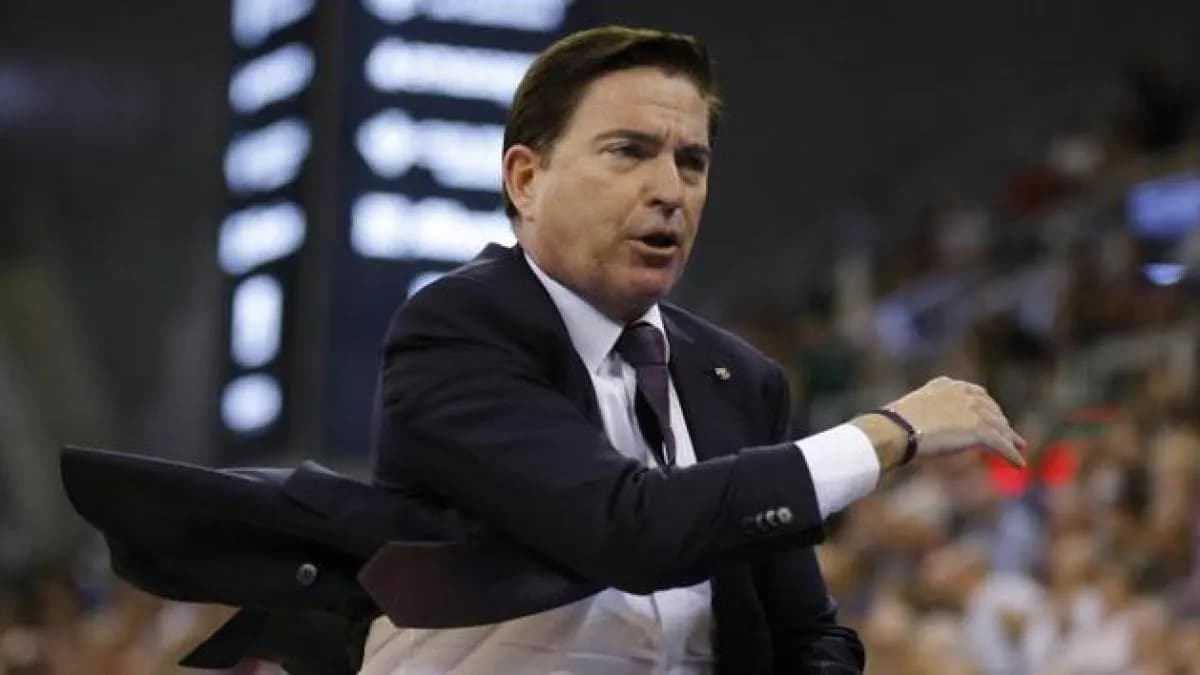
Xavi Pascual leaves FC Barcelona for the Dubai franchise in the EuroLeague
Xavi Pascual will no longer be the coach of FC Barcelona next season, ending a collaboration marked by unfulfilled promises. He joins a Dubai franchise with a substantial budget aiming for victory in the EuroLeague.
Just three days after denying a departure, FC Barcelona sees its emblematic coach, Xavi Pascual, leave the club. This decision, revealed exclusively by Mundo Deportivo, confirms that Pascual will not be on the Palau bench next season. This departure marks the end of a collaboration marred by frustrations, notably related to unfulfilled promises during his recruitment last November, to turn things around after difficulties under the leadership of Cubells and Navarro.
According to the same source, Pascual is signing with a franchise based in Dubai, participating in the EuroLeague under geographically unclear conditions. This team, with a significant budget, aims to win the competition. The Catalan coach, who was earning a salary now deemed insufficient, sees his contract bought out with a termination clause of 300,000 euros, an amount the Gulf club is ready to cover without difficulty.
A Dubai franchise in the EuroLeague: an atypical challenge
The arrival of Pascual at a Dubai franchise raises questions about the geographical organization of the EuroLeague, a major European competition where the presence of a Middle Eastern team remains unconventional. This choice also illustrates the rise of clubs with extraordinary financial means, capable of attracting experienced coaches by offering salaries three times higher than those practiced in Europe.
This situation highlights the growing disparities in European basketball, where FC Barcelona, despite being a historic club, struggles to retain its technical staff against lucrative offers from other regions. Pascual's departure also illustrates the financial and sporting deadlock in which Barça's basketball section has found itself in recent years.
Recruited in November to improve the disappointing results accumulated under the presidencies of Cubells and Navarro, Xavi Pascual left frustrated. The dissatisfaction mainly stems from numerous unfulfilled promises upon his arrival, both on the sporting and financial levels. This accumulation of disappointments accelerated his decision to leave the club, not by dismissal, but by personal choice, ending a relationship deeply rooted in the club of his life.
The context of this separation reflects the difficulties faced by FC Barcelona in stabilizing its sporting project and providing an environment conducive to the development of its coaches and players. Losing a technician of Pascual's stature could have significant repercussions on the club's competitiveness in the EuroLeague.
Sporting and financial consequences for FC Barcelona
Pascual's departure creates a technical void within FC Barcelona at a crucial moment. The coach had been hired to correct the course after a turbulent period, and his sudden departure could further destabilize the team. The club will now have to find a successor capable of meeting upcoming sporting challenges while managing a constrained budget that contributed to losing its technician.
Financially, the necessity to pay the 300,000-euro termination clause highlights Barça's budgetary difficulties compared to Gulf clubs, where financial resources are significantly greater. This imbalance could worsen the Catalan club's challenges in future recruitment and its ability to retain talent.
A sign of the times in European basketball
Xavi Pascual's transfer to Dubai symbolizes an emerging trend in European basketball: the flight of talent towards clubs with colossal budgets, often located outside traditional circuits. This dynamic raises questions about competitive balance and the sustainability of historic clubs in Europe.
The move to atypical destinations, motivated by attractive financial conditions, could redraw the map of European basketball in the coming years, with a direct impact on competitions like the EuroLeague. For FC Barcelona, the period ahead will require profound reorganization to remain competitive in the face of these new challenges.
Our analysis
Xavi Pascual's departure from FC Barcelona to the Dubai franchise reveals the economic and sporting tensions affecting European basketball. Despite his attachment to the club, Pascual chose a financially more attractive offer, illustrating Barça's limited means. This transfer also highlights the rise of clubs outside traditional Europe, capable of attracting major talents thanks to very high budgets.
For FC Barcelona, this loss represents a severe blow that could affect its immediate competitiveness in the EuroLeague. The club will need to find a new coach capable of meeting sporting challenges in a constrained financial environment. More broadly, this departure underscores the need for historic European clubs to rethink their model to withstand growing financial competition from abroad.