Yann Arthus-Bertrand Moved by PSG Supporters' Solidarity After the Vandalism of His Exhibition in 2026
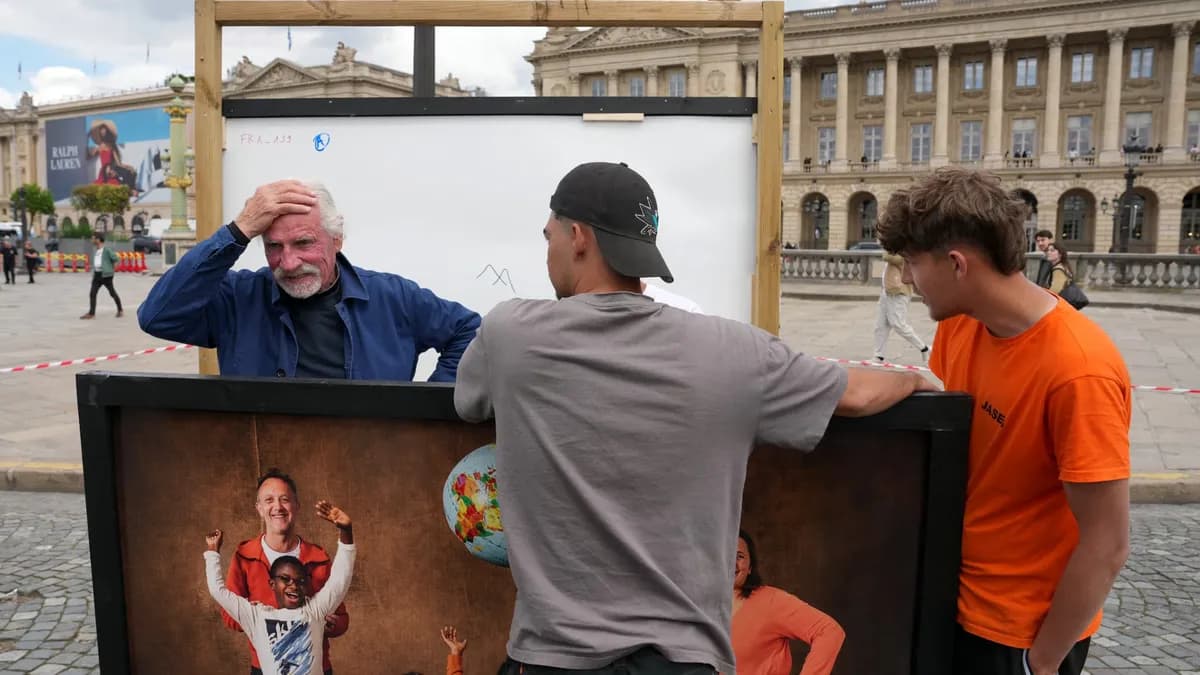
Following the damage to his exhibition at Place de la Concorde after PSG's qualification for the Champions League final, Yann Arthus-Bertrand praised the surge of solidarity from the club's supporters, a gesture that deeply touched him.
On the night from Wednesday to Thursday, Yann Arthus-Bertrand's photographic exhibition installed at Place de la Concorde in Paris suffered significant damage. These degradations occurred following the Paris Saint-Germain qualification for the Champions League final, a landmark event for the Parisian club in 2026. The photographer, known for his committed images on the environment, spoke about this situation on the show "Anaïs Matin" broadcast on RMC this Saturday.
Despite the extent of the damage, Yann Arthus-Bertrand chose to focus on a positive aspect: the massive support from PSG supporters who mobilized to help restore his exhibition. He stated that this movement of solidarity "touched him at heart," thus expressing his emotion in the face of this civic and passionate reaction.
The vandalism of the exhibition could have overshadowed the event, but the response from PSG fans reversed the dynamic. Several supporters organized immediately after the damage to offer their help, whether through cleaning actions, donations, or increased media coverage of Yann Arthus-Bertrand's project. This mobilization was relayed by the media and helped create a wave of sympathy around the photographer and his work.
For Yann Arthus-Bertrand, this support reveals a human dimension often forgotten in the excesses related to major sporting events. He emphasized that this episode allowed him to see beyond the acts of vandalism to perceive the passion and generosity that drive a portion of PSG fans.
Yann Arthus-Bertrand is famous for his photographic works that highlight the beauty and fragility of the planet. His exhibition at Place de la Concorde fits within this framework, aiming to raise public awareness of major environmental issues. The choice of this emblematic location in Paris underlines the importance of his message, but the extent of the damage also recalls the tensions that can arise during intense sporting moments.
According to RMC Sport, this incident occurs while PSG is engaged in a major sporting momentum, with a finalist spot in the Champions League, a competition where the Parisian club seeks to assert its European stature. The event around the exhibition thus intertwined strong emotions related to sport and art.
The reaction of PSG supporters to this incident greatly changed the media narrative. Rather than focusing solely on the acts of vandalism, the media relayed this gesture of mutual aid and respect towards culture and the environment. This positive dynamic can strengthen the image of the Parisian club, often criticized for the excesses of certain supporter groups.
Moreover, this situation highlights the ability of sports communities to engage in societal causes, going beyond the simple framework of football. Yann Arthus-Bertrand, by welcoming this support, opens a window on a possible collaboration between sport, culture, and civic engagement.
Perspectives for the Exhibition and Artistic Project
At present, the precise state of the damage has not been publicly detailed, but the rapid mobilization should allow a quick restoration of the exhibition. This support could also encourage Yann Arthus-Bertrand to continue and expand his project, possibly integrating partnerships with sports actors to enhance the visibility of his messages.
Finally, this affair illustrates the challenges related to organizing cultural events in highly frequented public spaces, especially during major sporting moments. It invites rethinking protection measures while promoting synergies between different audiences.
A Strong Historical Context for PSG in the Champions League
Paris Saint-Germain, a club founded in 1970, has established itself over several years as a major power in French and European football. Its regular participation in the Champions League is the result of significant investments and an ambitious sporting policy. Since its rise, the club has sought to take a step forward to establish itself sustainably on the European stage, a goal that remains a crucial challenge in 2026.
This year, qualification for the Champions League final represents a historic moment, reflecting the tactical and collective progress made by the team. This journey has amplified the fervor of supporters, who see in this competition a unique opportunity to shine at the highest level and write a new glorious page for the club.
Tactical and Sporting Stakes of the Final
From a tactical standpoint, PSG has adapted its game to meet the challenges posed by the best European teams. The coach emphasized a balance between defensive solidity and offensive creativity, exploiting the talent of key players. This approach allowed the club to overcome formidable opponents and reach the ultimate stage of the competition.
The Champions League final is therefore much more than a simple match: it is the culmination of an ambitious sporting strategy and a collective effort. For PSG, winning this trophy would be a crowning achievement, reinforcing its status and offering undeniable legitimacy on the continental stage.
Impact on National Ranking and Future Prospects
Beyond the European dimension, PSG's performance in the Champions League has repercussions on the national championship. Such success can galvanize the team and its supporters, positively influencing results in Ligue 1. Furthermore, this increased visibility also attracts talents and partnerships, consolidating the club's position in world football.
The prospects for the coming seasons are therefore promising. The club will nevertheless have to manage the pressure linked to its ambitions while continuing to meet sporting and extra-sporting expectations, notably in terms of image and civic engagement, as evidenced by the recent mobilization around Yann Arthus-Bertrand's exhibition.
In Summary
The vandalism of Yann Arthus-Bertrand's exhibition at Place de la Concorde, which occurred after PSG's qualification for the Champions League final, revealed an unexpected and touching movement of solidarity from the supporters. This positive reaction gave new meaning to the event, going beyond acts of vandalism to highlight passion and civic commitment. At the same time, PSG's sporting momentum in 2026 gives this story a particular resonance, blending sport, culture, and social responsibility. As the club prepares to contest a crucial final, this affair also illustrates the challenges and opportunities linked to interactions between different audiences in emblematic public spaces.