Mallorca: When a Striker with More Than 20 Goals Is Not Enough to Avoid Relegation in La Liga
With 22 goals scored by Vedat Muriqi, Mallorca risks joining a rare list of clubs relegated despite having a prolific striker. This phenomenon raises questions about collective efficiency beyond individual performances.
A Statistical Paradox in La Liga: Elite Strikers in Relegated Teams
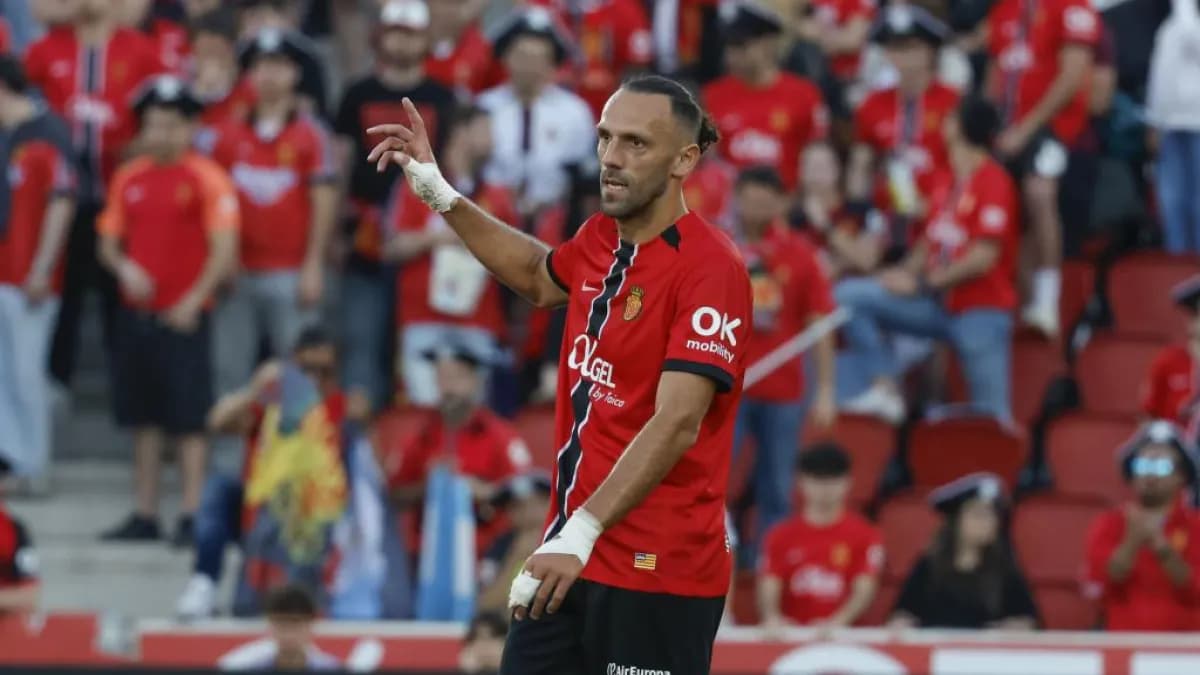
Vedat Muriqi, the Kosovar player of Mallorca, has scored 22 goals this season, a remarkable total that might still not be enough to ensure the club's survival in La Liga. According to an article published by Marca, Mallorca could be added to a short list of teams that have been relegated despite their top scorer exceeding the 20-goal mark. This case, far from isolated, highlights a frequent paradox in Spanish football: the presence of a prolific "pichichi" (top scorer) does not guarantee survival in the first division.
This situation raises questions about the overall team dynamics. Indeed, a performing striker alone cannot compensate for defensive weaknesses, tactical difficulties, or a lack of collective cohesion. The example of Mallorca thus illustrates the complexity of modern football where individual performance must be accompanied by collective solidity to avoid relegation.
Historical Precedents That Question Overall Efficiency
The "Muriqi cases" are not unique in the recent history of La Liga. Other teams have seen their top scorer exceed 20 goals without avoiding relegation. This underlines that football remains a team sport where the complementarity between players and defensive quality play a major role. The offensive success of an individual is not enough if the team as a whole fails to achieve positive results.
For Mallorca, this reality has direct consequences on its future sporting strategy. Investing in a world-class striker is valuable, but it must imperatively be accompanied by strengthening the defensive lines and a coherent tactical structure. This observation could guide recruitment and training decisions in the coming months.
The case of Mallorca also raises questions about the sports management of mid-table or lower-table clubs in La Liga. The temptation to heavily rely on a star striker to ensure survival is understandable, but this approach shows its limits when it is not integrated into a balanced overall strategy. Clubs must consider a more coherent distribution of efforts between attack and defense.
This can be achieved through better analysis of collective performances thanks to technological tools and advanced data. Statistical analysis helps identify structural weaknesses and optimize tactical choices. Thus, even with a player capable of scoring more than 20 goals, the team can maximize its chances of success by improving its defensive solidity and organization.
A Revealing Trend of Current Challenges in Spanish Football
Beyond Mallorca, this issue reflects a broader challenge in La Liga, where budget disparities and structural constraints complicate the task of clubs fighting to stay up. The fact that a prolific player is not enough to save his team reflects the need for a more holistic vision of the game and sports management.
Clubs must therefore combine offensive talents and collective cohesion to navigate an increasingly demanding competition. This observation could influence the orientations of La Liga clubs, especially those aspiring to remain competitive while managing their resources.
The Historical Context of Mallorca in La Liga
RCD Mallorca, a historic Spanish football club founded in 1916, has experienced ups and downs over the decades. Although rarely among the giants of the championship, the club has managed to forge a solid identity, oscillating between Primera and Segunda División. This season, with Vedat Muriqi as the leading scorer, Mallorca has tried to rely on its offensive strengths to ensure survival, a recurring objective in its recent history. However, the fragile balance between sporting ambition and limited resources often complicates the club's task, which sometimes has to rely too much on individual talents to shine sustainably in La Liga.
In a championship where competition is fierce and the slightest weakness can be costly, clubs like Mallorca often face strategic dilemmas. Experience shows that the occasional success of a star player is not necessarily enough to compensate for collective shortcomings, especially in a context where the pressure of survival weighs heavily.
Tactical Issues and the Weight of Defense
From a tactical standpoint, the case of Mallorca highlights the crucial importance of a solid defensive organization. Having a striker capable of scoring more than 20 goals is an undeniable asset, but if the defense concedes too many goals, this offensive advantage is quickly nullified. Teams relegated despite a prolific striker often illustrate a tactical imbalance where offensive aggression is not accompanied by rigorous defensive discipline.
For coaches, this poses a real challenge: how to build a team capable of producing play while remaining impermeable at the back? The answer often lies in a holistic approach integrating physical preparation, coordination between lines, and tactical adaptability against opponents. Mallorca will have to learn from this season to better balance its strengths and correct its weaknesses.
Impact on the Standings and Medium-Term Perspectives
The possible relegation of Mallorca despite Muriqi's exploits would have a significant impact on the overall La Liga standings and the club's dynamics. Losing a club with such a prolific striker changes the complexion of the competition and reinforces the need for lower-table teams to review their strategic approach. For Mallorca, it would also represent a difficult transition period requiring a complete reorganization both on the sporting and administrative levels.
In the medium term, the club will need to focus on rebuilding a balanced squad capable of combining offensive efficiency and defensive solidity. The "pichichi alone" model has shown its limits, and management will probably have to rethink its priorities regarding recruitment and the development of young talents to sustainably regain its place in La Liga.
In Summary
The case of Vedat Muriqi and Mallorca highlights a paradox of modern Spanish football: an exceptional striker does not guarantee survival in the first division. This reality underlines the importance of a collective and balanced approach, where defense and tactical organization play a role as crucial as the ability to score. La Liga clubs, especially those fighting to stay up, must integrate this lesson to build competitive and sustainable teams. Mallorca, with its 22 goals by Muriqi, perfectly illustrates this challenge, offering valuable insight for the future of Spanish football.